
Literary pilgrimages here and there, and Sylvia Plath in Chalcot Square

Share

Mells, Somerset

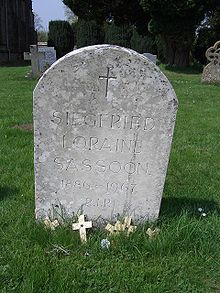
Okay. I’ll admit it’s a habit. When I travel, I often check out literary landmarks — the place where a favorite author was born, died, wrote, or was buried.  I’ve seen Mikhail Bulgakov‘s digs in Kiev, Elizabeth Bishop‘s glorious hideaway outside Samambaia, C.P. Cavafy‘s modestly exotic flat in Alexandria, Siegried Sassoon‘s grave in Somerset — I even visited Boris Pasternak‘s idyllic dacha in Peredelkino.

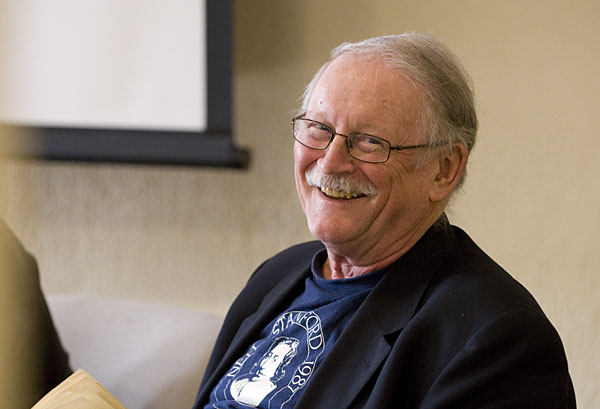
Milton scholar Martin Evans shares my enthusiasm.

His journeys to London are sometimes literary pilgrimages — he’s intrigued by the fact that his beloved John Milton and (my beloved) John Donne were both born on Bread Street.  He wants to show you these and more literary coincidences for your next trip.  Hence his new website,  Authorial London.  Please, do not be daunted.  It’s not complicated at all.  It’s  a really easy site.  And if you’d rather read about it than look at it, try Corrie Goldman‘s description of the site and how it came about here.

One passage intrigued me:

Nice man, odd habit (Photo: L.A. Cicero)

Readers may be surprised to learn that Sylvia Plath once lived in the same modest house in Primrose Hill in which W.B.Yeats lived many years earlier. In Plath’s time, it was a working class area beset with blue-collar workers and struggling artists. These days, glamorous socialites like Kate Moss and Sienna Miller have been dubbed by the British tabloids as the “Primrose Hill set.”

The website explains that Plath’s apartment consisted of a small bedroom, a kitchen, a living room and a bath. “Plath loved it, at least at the beginning,” the website explains. Here, Plath wrote her great social commentary of mental illness, The Bell Jar.
I was among the readers not surprised by this revelation — in fact, Plath moved to this flat precisely because Yeats had been a previous tenant.

I remember a trip to London — oh, over a decade ago — when I was writing a piece for the San Jose Mercury on the British reception of Sylvia Plath (a bare-bones, unillustrated version of it is here; the August 20, 2000 piece has disappeared from the Mercury‘s website).

The article opened:

Yeats lived here, too

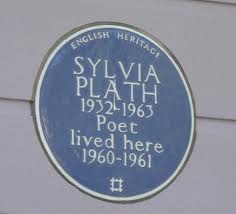
IN THE Primrose Hill area of London, where Gloucester Road and Prince of Wales Road wind back on each other in a hopeless bend, one arrives at 3 Chalcot Square, a turquoise door on a five-story building painted the color of raspberry sorbet.This summer, a simple plaque was added to the building’s facade:

Sylvia Plath
1932-1963
Poet
lived here 1960-1961

Question: Why has it taken Britain nearly 40 years to offer this first, minimalist postmortem recognition for the American poet who spent her last five years in London?

One answer: The British hardly see the need for it. When it comes to Plath, one of America’s most celebrated female poets, the British just don’t get it.
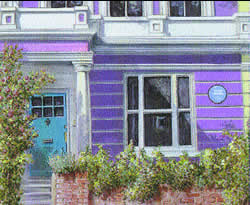
Alas, since the painting of the building has disappeared over the years, we are left with these newer images.  The torquoise door remains — but raspberry sorbet?  I think not.
John Milton: Architect of authors’ rights?

Share

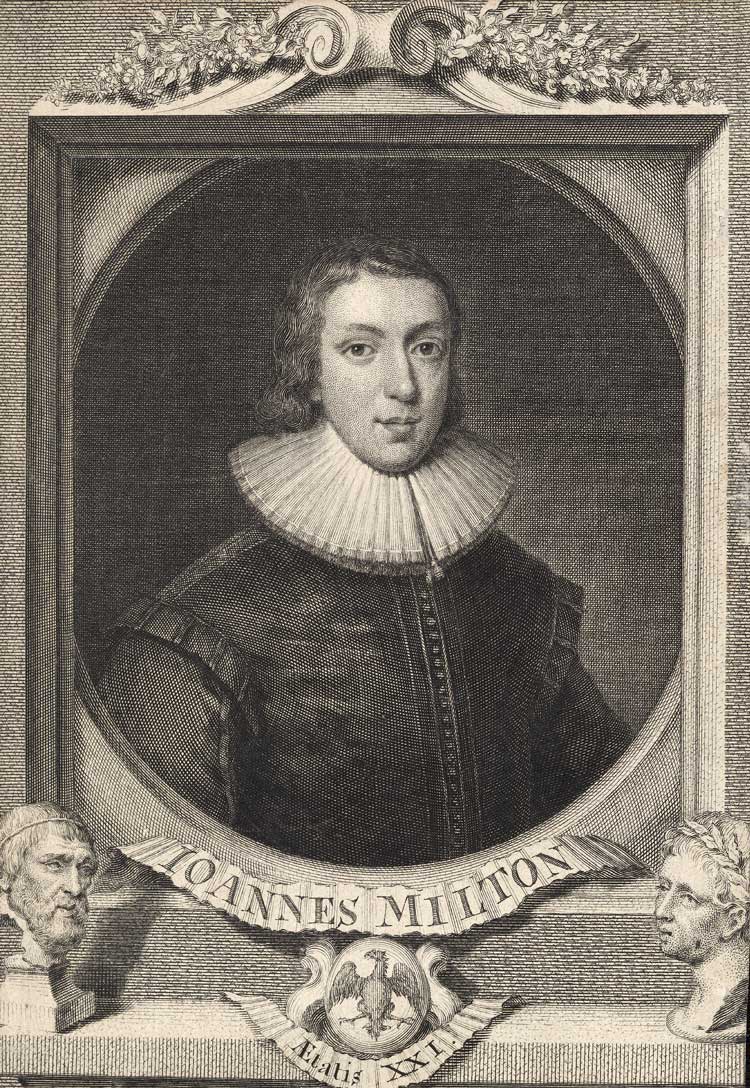
In 1727, Voltaire fixed an image of the hardscrabble John Milton that would prove hard to dislodge: he wrote that the poet “remained poor and without glory; his name must be added to the list of great geniuses persecuted by fortune.”

A few days ago, I mentioned Milton’s famous — nay, notorious — contract giving him for £5 for Paradise Lost. Preeminent Miltonist Martin Evans had told me something about this contract a couple years back, and I wrote him to refresh my memory.  Almost by return email, he pointed me to a December 2010 article by his former student, Kerry MacLennan, on precisely this topic in the Milton Quarterly.  It’s online here.

Far from being a patsy, MacLennon insists that “Milton was an expert navigator in the capitalist landscape around him.”

What’s known:  the contract, signed on April 27, 1667, with printer Samuel Simmons, awarded Milton £5 on signature, and £5 on later retail sale for each of three contemplated editions of 1,300 copies each.  Hence, the real value of the transaction was £20.

Still small potatoes, right?

There’s more:  According to MacLennan, “For a writer to be paid in cash at all by a publisher was not customary at the time: seventeenth-century authors typically provided manuscripts to their printers in exchange for a small number of complimentary copies of the published work.”

This was not a royal work commissioned for an aristocratic audience.  Paradise Lost was a “risky speculative venture,” dependent upon “small press runs on speculation, displayed in bookshop windows, and awaiting discovery by readers with the interest, impulse, and either the cash or credit to buy them.”  In short, this contract marks the beginning of the decline of the aristocratic patronage system, to be replaced by a capitalistic, republican framework for writers.

MacLennon reviews Milton’s contact and determines that Milton was entitled to a share of the epic’s earnings — nearly two centuries, remember, before the advent of the term “royalty.”  She finds that while £20 might be slim pickings for the poem canonized as the most famous single poem in English, “recharacterizing the payment as a royalty of between 2.6% and 5.1% should extinguish any lingering indignation on Milton’s behalf.”

“I propose that we consider the likelihood that Milton was the architect, indeed the author, of the contract for Paradise Lost, as much as he was the creator of its poetry … Milton’s father’s professional skills as a scrivener may have directed him how to anticipate, and circumvent, contractual loopholes and trapdoors.”

She concludes:

The contract for Paradise Lost champions and models the rights of artists to manage and control the commercial aspects of their creative production. But rather than writing a pamphlet on the rights of authors, Milton’s polymath mind instead invented, and left us, a template.

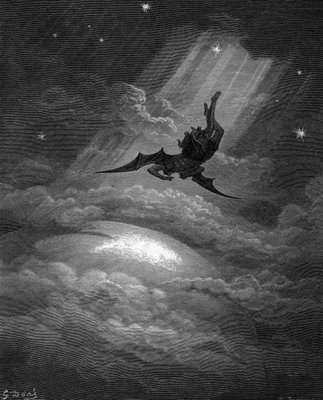
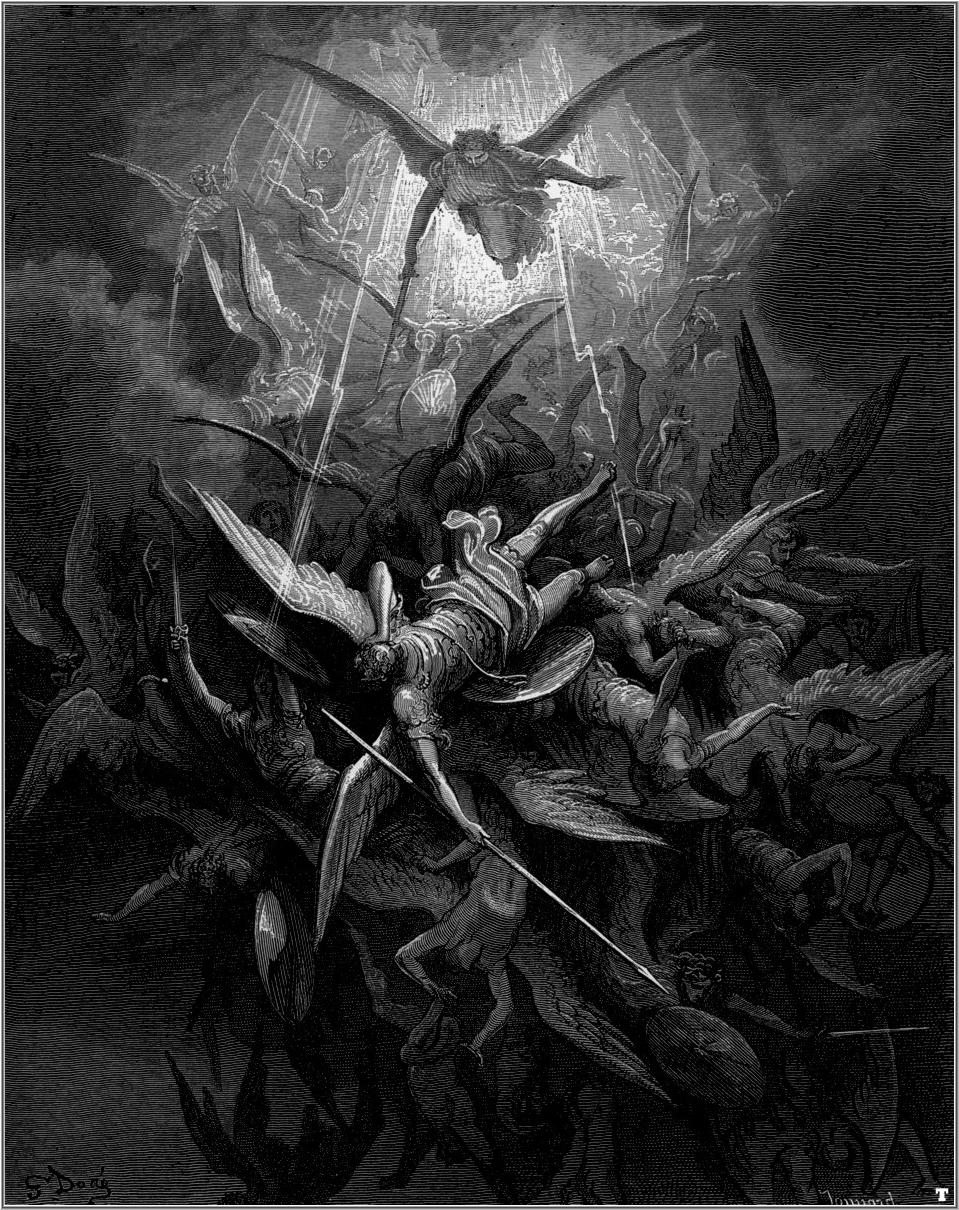
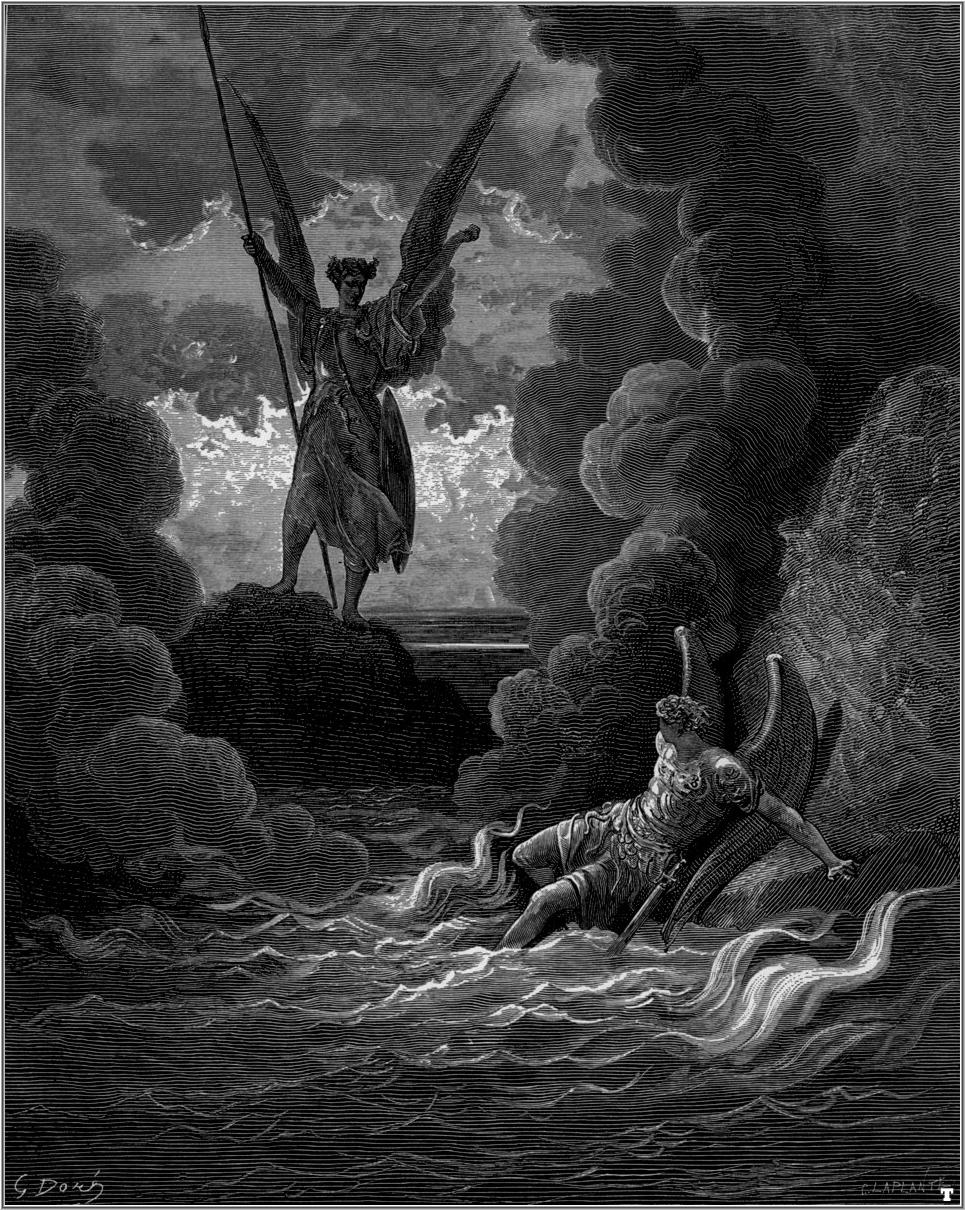
(Paradise Lost images provided, of course, courtesy Gustav Doré.)

Hey writers, you’re one in a million! Literally!

Share

Working for peanuts

For writers, the subject of remuneration for our humble services is always a subject of endless fascination, at least for us.  So I was naturally intrigued by an interesting article in on the McSweeney’s website, written by a young colleague.

The article reminds me of what a great career I might have made by, say, becoming an airline stewardess.  Or perhaps an insurance actuary.  Or even an aromatherapist.  The upshot:  writers don’t make much money.  As the article reminds us, “never have, never will.”

The statistics it cites make me wonder:  Do the numbers mean anything?  And who collects these little suckers anyway?

The witness in the dock appears to be the U.S. Bureau of Labor Statistics.  And they get their numbers … where?  Nobody talked to me.  One obvious source might be IRS reports.  But the professional identifications on the IRS forms are not supported by anyone else:  for example, are there any penalties for identifying yourself as a writer on your IRS form if 75 percent of your income in fact comes from waitressing tips?  And does the bureau’s statistics for writers include, say, advertising copywriters?  Does the category for authors include faculty members, who constitute a substantial percentage of today’s authors, yet are likely to list their profession as “professor” rather than author?  In any case “authors and writers” are not interchangeable – many writers are not authors, and vice versa (cookbook authors, for one).

According to the bureau, as of 2005, 185,276 out of 216.3 million American adults claimed those titles.  That makes us less than one out of a million.  I can’t believe that.  I, personally, believe I know more than 185,276 writers.  Look at my Facebook page.

Here’s another reason why I question what the bureau’s numbers:

In May 2009, the Bureau of Labor Statistics found the median annual wage for authors and writers had risen to $53,900, up $3,100 from the medium income average for the past decade. In 2008, 70 percent of writers and authors were self-employed and in 2009, the upper quartile of writers earned $75,740 or more.

But technical writers might be making a whole lot more than this; a starving poet considerably less.  For every Dan Brown there’s a hundred self-published authors writing on their lunch breaks at Costco.  Again, who calls themselves a writer?  Who an author?

Moreover, many, many writers are supported by a spouse or a family income.  A low level of income may not reflect their penury, but rather that they have the freedom to write what they please on their own timing.

The Census Bureau also has  some dismaying news:  it estimates the number of writers and authors will increase by 20,000 by 2018.  With reservations, I concur with Nicolás Gómez Dávila that “literature does not die because nobody writes, but when everybody writes.”

In any case, when everyone writes, no one will make any money doing it. Tim Rutten has already panicked about the influence of the HuffPo/AOL acquisition and the effect that “the merger will push more journalists more deeply into the tragically expanding low-wage sector of our increasingly brutal economy.” As Frank Wilson writes over at Books Inc., what we really need are plumbers.  Really.

As for John Milton’s famous £5 for the first edition of Paradise Lost, I remember that there’s a story behind that.  Can’t recall what it is.  Martin Evans told me, and perhaps I will check back with him.

In any case, check out the intriguing article at McSweeney’s here.