

“How times have changed!” – philosopher Michael Sandel on “Solidarity”

Share
Fan of the Andrews Sisters

Fan of the Andrews Sisters

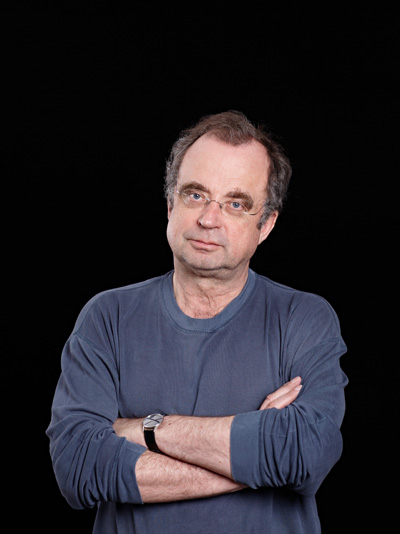
Well, naturally I couldn’t make it.  But I did appreciate the invitation to return to Vienna for the memorial for the institute’s founder, the Polish philosopher Krzysztof Michalski (we wrote about his death here).

Some weeks ago, the Institut für die Wissenschaften vom Menschen sent me an elegant invitation to its April 5 commemoration ceremony for Krzysztof Michalski at Vienna’s Museum of Applied Arts. Harvard’s Michael Sandel spoke at the event on “Solidarity.”

Because I could not stop for them, they kindly stopped for me:  the institute sent me a link to the video of the event, below.  After Cornelia Klinger‘s introduction to the talk, Sandel praised Michalski’s “unsparing eye for quality and for cant” – and, incidentally, also spoke of his delight in “hokey 40s’ harmony” of the Andrews Sisters, discovered inadvertently when he borrowed Michalski’s BMW in Tuscany and couldn’t turn the CD player off.

Sandel discusses the modern reservations about Solidarity, and considers the obligations (and limits of the obligations) we owe each other.  He recalled  Solidarity’s heyday in the 1980s, with an encyclical from John Paul II that treated the subject, as well as the works of philosopher priest Józef Stanisław Tischner. “How times have changed,” Sandel said.  “In recent years, solidarity has been in retreat, in theory and in practice. In fact, today Solidarity has a quaint, almost archaic ring.”

“The suspicion of Solidarity that flows from an argument of moral philosophy rests on the idea that all obligations that count morally and civically must spring form an act of will, of one kind or another,” he said – yet “certain obligations may claim us, unrelated to a choice or act of will.”  The moral force of the Solidarity vision may define who we are as well as allowing us embrace each other as fellow citizens, and accept the responsibility for actions of the distant past as well as the present.  He suggests the “spiritual resonance” of Solidarity for these important Polish religious and moral leaders may rest on the understanding that everything that matters is not traceable to individual will or freedom.
Au revoir, Krzysztof Michalski (June 8,1948 – Feb. 11, 2013)

Share

“…the shadow of death falls on my knowledge…”

“Somewhere out beyond all my concepts lies the unfamiliar, dark side of life. It is from there that the shadow of death falls on my knowledge … this is where despair and the longing that time entails originate,” wrote Krzysztof Michalski in last year’s The Flame of Eternity (Princeton University Press).

The death would not have shocked me quite so much had I not, curiously enough, written him yesterday afternoon – about midnight, Vienna time.  He was dying when I pressed the “send” button, and I had no idea.

I did not communicate with him often, but I have exchanged a few letters since my stint as a Milena Jesenská Fellow at Vienna’s Institut für die Wissenschaften vom Menschen, which he founded in 1982, and where he served as rector.

I was studying Cold War Poland, contemporary Polish writers, particularly Czesław Miłosz, and he, of course, has been called Poland’s foremost living philosopher.  So I stopped into his office for a long chat over coffee, and learned he had also been a friend of another Nobel laureate, Joseph Brodsky.  There were a number of points of connection, then, but he was a bigshot and I am a very, very littleshot, so I can’t say I was entirely at ease, despite his courtesy.

Among his other numerous awards and honors, was decorated with the Officer’s Cross of the Order of Merit of the Republic of Poland, with the Officer’s Cross of L’Ordre National du Mérite of the Republic of France as well as with the European Cultural Prize (1998).  When he was awarded the Theodor Heuss Prize in 2004, the jury statement read:

“Since the 1980s, the Polish philosopher Krzysztof Michalski has played an important role in the deepening of the political and cultural dialogue between East and West. Before 1989 he contributed to the liberation from Communism, and in the 1990s he supported the development of a democratic civil society in the countries of Central and Eastern Europe. Michalski and his Vienna Institute combine the highest intellectual standards with policy-oriented approaches and the promotion of young researchers.”

His newest book was a reexamination and new interpretation of Nietzsche’s philosophy and the central role that the concepts of eternity and time.  Time had been an ongoing preoccupation for him: his earlier books include Logic and Time: An Essay on Husserl’s Theory of Meaning.  In 2010, he published Zrozumiec przemijanie (To Understand Time) in Poland.

Today I’ve been trying to glean the news from the foreign newspapers, mostly Polish and German.  It appears he died of cancer.  There’s nothing in English yet.

Nothing, except the last note I got from him was in May 2011, “Good to hear from you. A pity we missed each other in Cracow. Hopefully we will not do it again, next time.”

Au revoir, then, Krzysztof.

Postscript on 2/14:  Finally. Something appeared in the U.S. yesterday.  This from Boston University’s Daily Free Press, where K.M. taught:  Provost Jean Morrison said “Dr. Michalski’s contribution to cultural exchange and to the teaching and study of philosophy — both here and throughout central and eastern Europe — was substantial.”  David Roochnik, philosophy department chair and professor of philosophy, said Michalski’s legacy extends beyond Boston, as The Institute for Human Sciences was an extremely important institution and played a small role in the fall of communism in Europe.  More here.

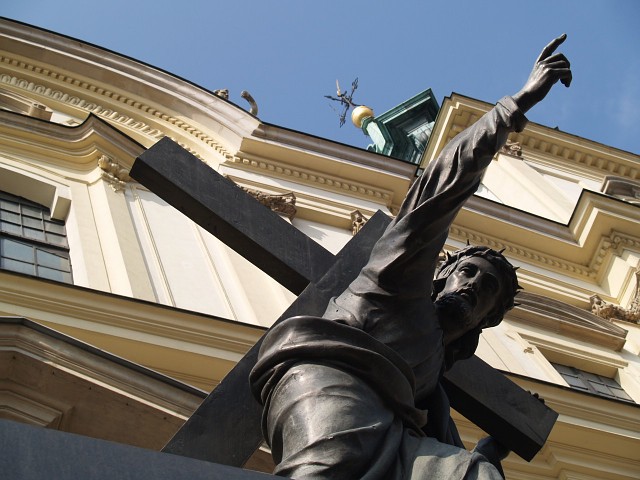
Postscript on 3/6:   The memorial service and funeral took place on February 22,  in Warsaw at the Church of the Holy Cross (Bazylika Świętego Krzyża w Warszawie), with the burial following at the Cemetery Cmentarz Bródnowski.  I remember that church well during my walks through Warsaw, with it’s looming, impressive “Sursum Corda” by Pius Weloński.  Alas, I could not attend, except in spirit, nor will I be able to attend the commemoration for Krzysztof Michalski on April 5 in Vienna.  American Philosopher Michael Sandel, member of the Instiutut’s Academic Advisory Board and dear friend of Krzysztof Michalski, will give a lecture in his memory. I’ll post what I can.