

“Our privileges exacerbate the horrors of others”: Junot Díaz on race, privilege, and J.R.R. Tolkien

Share

Junot Díaz, Pulitzer-winning author of 2008’s The Brief Wondrous Life of Oscar Wao, always gives a scorching good show, and he did so again during a visit to Stanford earlier this month.

He did it all off the cuff:  “Guess what?  No fucking lecture,” he announced at the outset.

Díaz has a special license to mention the unmentionable – or what he says is the unmentionable.  His sensibility is divided between Dominican Republic, where he was born, and New Jersey, where he was replanted as a child.

Little of the Caribbean side was in evidence in Palo Alto: he wore preppy pullover and white collar, jeans and running shoes – and altogether more slender than he had appeared when I wrote about him in 2008.  The spellbinding author spoke about J.K. Rowlings, he spoke about H.P. Lovecraft, and he spoke most of all about J.R.R. Tolkien.  (Whether he especially favors writers who use only their initials is not known.)

“I write about race – by extension, I write about white supremacy,” he said, cutting to the chase.

He deplored the “rhetorical legerdemain” of “deforming our silences to fit in with the larger silences of society.” It’s a betrayal, especially, of the people “at the racially sharp end of the stick.”

“Our privileges exacerbate the horrors of others,” he said.

The idea of a post-racial society is a “happy delusion,” he said. “We are as hyper-racial today as we were two hundred years ago.”

He said that describing oneself as beyond race was as delusional as a man saying he isn’t sexist.  “These languages do not go away.  Heterosexual masculine privilege never goes away.”

How deep is the denial?  He recalled observing to a group of male peers that they were all dating white women or women lighter-skinned by themselves.  The predictable response:  “Oh, but it was love… we just met… it was random.”

No one ‘fessed up: “I date who I date because I was told people who are light-skinned are better.”

“Who wants to embrace that?” he asked.  Under such circumstances, “How the fuck do we bear witness to ourselves?”

“The default setting of universality” is white, he said.  Though writers of color often resist that categorization, he said he’d never encountered a writer who said, “You know what?  I don’t want to be a white writer.”

Díaz, flanked by Packer and Barry (Photo: Toni Gauthier)

People outside that default setting live in a “delusional space” of “specifying without signifying.” He referred to President Obama’s double message: “I’m not that black, but I will code some shit so you know I’m black.”

He, too, was asked to “signify without specifying” – “I ran from that as hard as I could.”  He wondered, as a writer, whether it was possible to capture in writing all the layers of denial and truth, avoiding the pitfall that would have been deadly for the writer, one in which “I’m going to blind myself so no one notices I’m not noticing.”

The Brief Wondrous Life of Oscar Wao was his attempt to use “all the nerd stuff” to portray “the hemispheric madness through the Dominican Republic.”

Science fiction and fantasy was an obvious source of inspiration. “Coloniality is the dark subconscious of the speculative genre,” he said.

For example, he commented on the different treatment of the ring in Wagner’s Rheingold and Tolkien’s Lord of the Ring.  In Wagner, “the ring just makes stuff go bad for you,” but in Tolkien, “the ring produces slavery” and functions racially, he said.  Tolkien was a survivor of World War I, and his Middle Earth is a post-apocalyptic world, said Díaz.  The Dark Lord Sauron is “a being that comes from outside Middle Earth,” from a race that dominates Middle Earth.

While the Harry Potter series pits “bad guys versus good guys, my power versus your power,” Tolkien’s p.o.v. offers a different take:  “Fighting power with power you lose.  Power breeds corruption,” he said.  “The more power, the more opposition.”  René Girard, of course, would add that you become the thing you oppose – which ought to be a major deterrent, but isn’t.

In the end, said Díaz, “power never destroys power.”
From a lawyer in Hawaii … more on the state of litcrit today

Share

The photo says it all?

My post on “More Heat than Light: Life is Too Short to Read Crappy Books” didn’t please everyone, and Anis Shivani‘s ability to piss people off seems pretty bottomless.  (He’s at it again today with “17 Literary Journals That Might Survive the Internet.”)  Jezebel responded with “Literary Critic Hates Vaginas, “Ghetto Volume” (also picked up by HuffPo here).

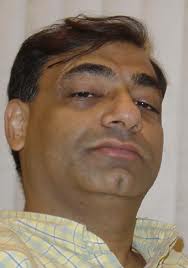
The debate over the post happened not in the comments section of this blog, but on my Facebook page.  This, from my friend Paul Achitoff in Hawaii: “I don’t know enough about him to know what he risked by writing a pissy, supercilious rant, but I’m not sure I agree it took guts. It got him what he wanted–a lot of attention, which he well knew would include a lot of negative attention. Sneering at allegedly poor writing takes little talent, and one can always roll one’s eyes at those who imagine the disparaged writing is worthwhile (his photo suggests just such a tendency). Writing even a second rate novel requires more skill than is displayed by his somewhat clumsily written column.”

From Hawaii

Someone has to weed the garden. Looking back, I often feel I have pulled too many punches in the misguided effort to be kind. This doesn’t serve the reader and throws the burden on someone in asbestos with a blowtorch to do a controlled burn. It’s hardly just me who wimps out. The whole reviewing gig has become largely gutless — critics don’t want to diss a colleague in their MFA program, or someone from whom they might need to get a blurb for their next book.

I don’t think any good writer has been broken by bad reviews. But many inflated, trendy writers have pushed good writers to the side for a generation or so.

This biting exchange between Dana Gioia and James Wood on Slate is 11 years old. This was before Dana was chair of the NEA, and before Wood joined the New Yorker.

In their epistolary columns, D.G. writes to J.W.:

From the New Yorker

And if you think that most new poetry is–what is the polite word?–“uneven,” then just look at the criticism. The innocent reader of fiction cannot comprehend how dull, esoteric, and pandering poetry reviewing has become. Most critics never give a negative review. After all, in the small world of American poetry the critic will eventually meet the author. And who knows what writers will be sitting on the next prize committee? It is safer to declare everyone a genius. Reading the smarmy acclaim that fills most literary journals, one would think we live in an age of unprecedented poetic achievement. Welcome to Potemkin Village, Mr. Wood.

It may bring gentlemanly tears to your eyes to learn that even so tenderhearted and soft-spoken a critic as yours truly is often castigated for giving books negative or mixed reviews. The assumption is that contemporary poetry is such an endangered art that no one should criticize it in public. That Chamber of Commerce claptrap doesn’t even constitute an adequate philosophy for public relations, not to mention literary criticism. I believe that one reason poetry has such a small readership, even among the literati, is that current criticism is so bad. There is almost no really engaging or reliable public conversation about new poetry–just paid publicity and unpaid hype. Academic criticism has become so parochial in its concerns that it no longer has much relevance to the general literary reader, and the little journalistic criticism that remains rarely goes beyond log-rolling.

From the NEA

The exchange is interesting and, of course, witty.  I reread it occasionally to keep my standards up, in a world where so much garbage is being treated like crème brûlée.

Paul liked it, too.  He wrote me:  ” Cynthia, thanks for forwarding that Woods/Gioia dialogue. I’m only halfway through it, but am enjoying it. I wouldn’t compare it to the other piece; they explain very clearly and specifically what disappoints them about the poets, with less arrogance than sadness. They make the critique about the poets, rather than about themselves.”

But Paul’s comments made a further point:  Has the drive to whacked-out, souped-up internet-style writing pushed aside the criticism the average reader might crave — reviews where the writing is elegant and takes its time, where claims are buttressed more substantially than hit-and-run internet journalism offers?   Must every line be a punch to keep the reader’s attention?

Isn’t this the very thing Shivani was criticizing in Junot Díaz?  Isn’t this the litcritic equivalent of someone who, as he wrote,  “replaces plot in stories and novel with pumped-up ‘voice’”?