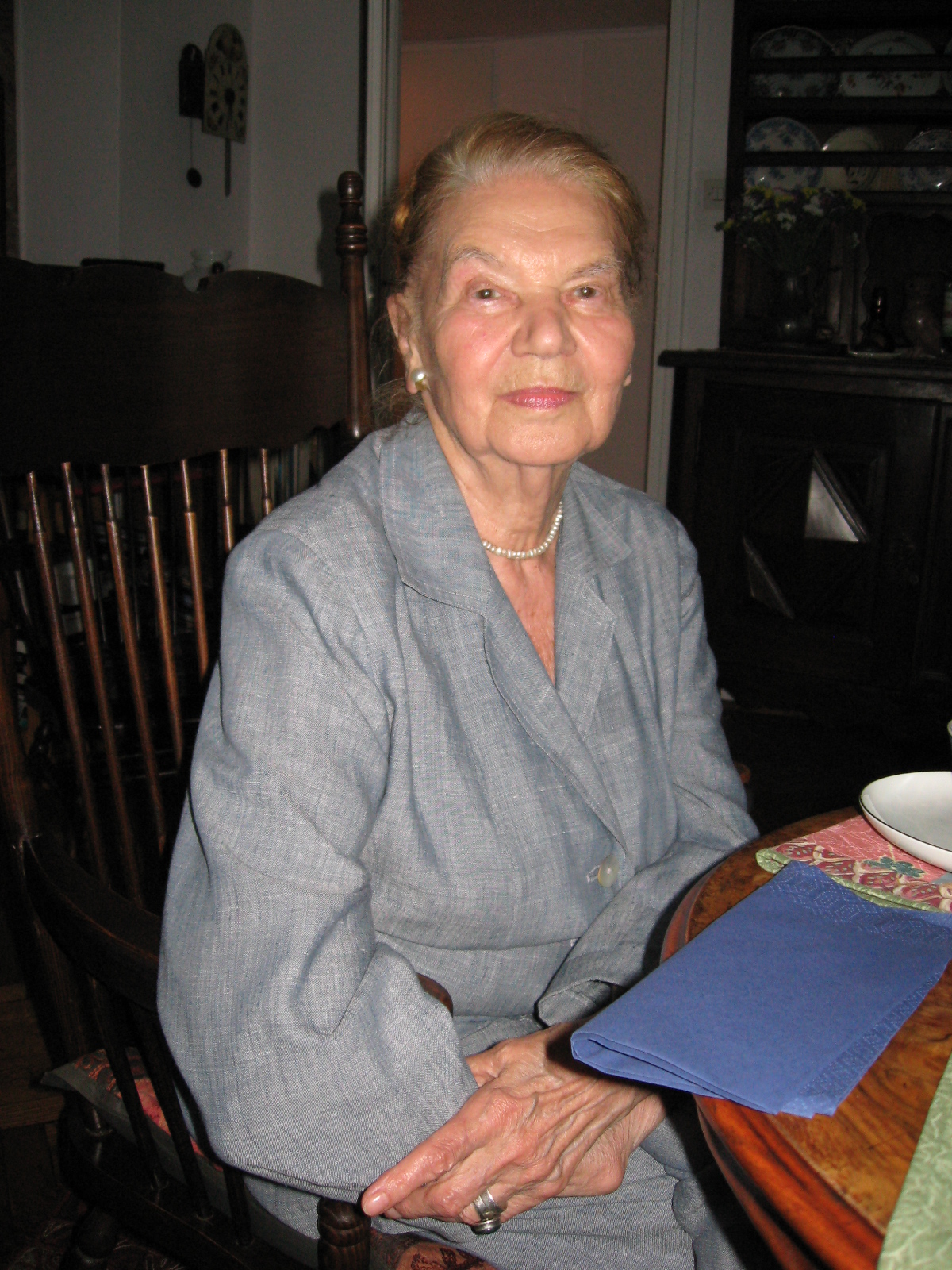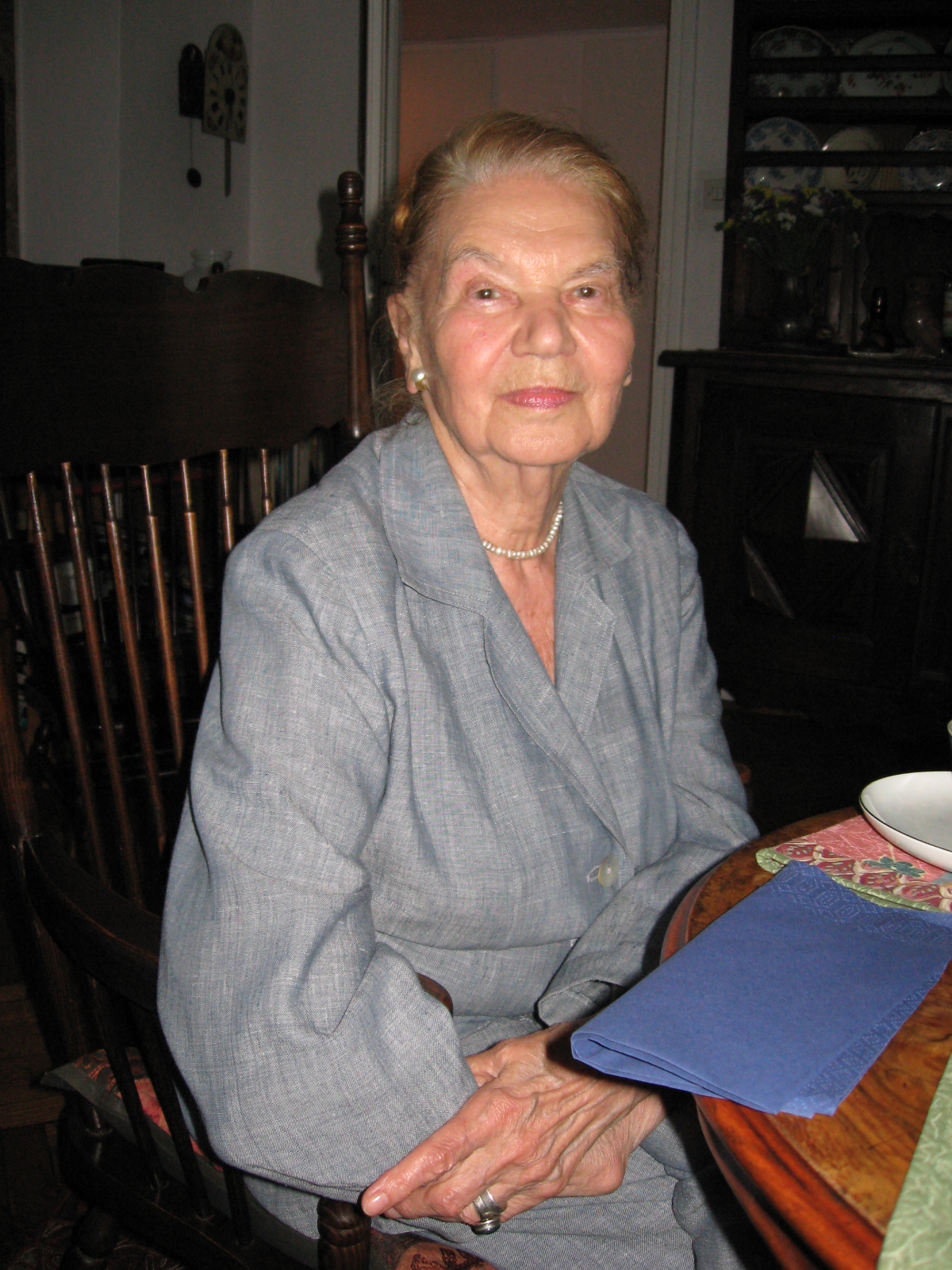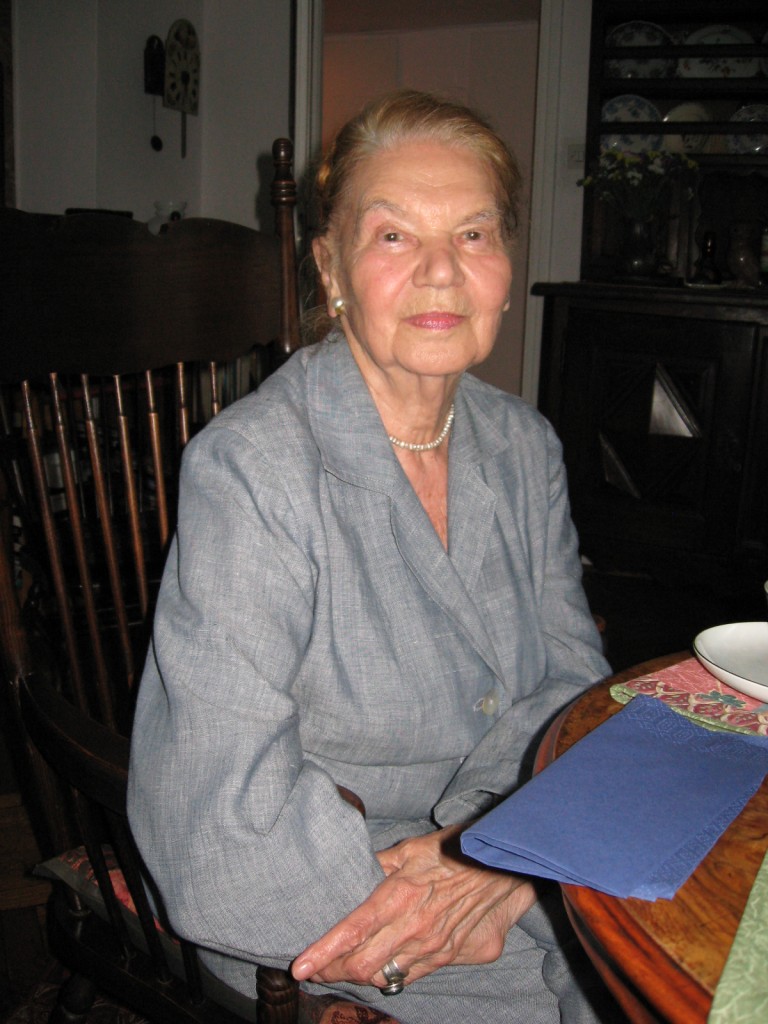
The birthday girl in Warsaw (Photo: C.L. Haven)
I wrote about the Polish poet Julia Hartwig some months ago on the Book Haven here – but now there is an special occasion for celebration. The poet turns 90 on August 14th.
It’s rare that a poet’s supreme moment of recognition should occur so late in life – rarer still that the poet’s productivity is unimpeded by age. However, the Grande Dame of Polish poetry is clearly an extraordinary woman.
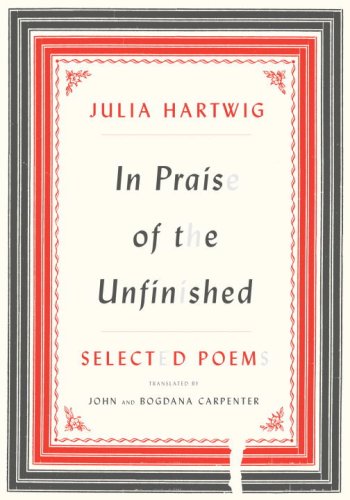
I made sure to celebrate my own way, with an article in the July/August issue of World Literature Today. It’s not online, alas, but here are a few excerpts to familiarize the West with a poet who received as much applause as Nobel winner Wisława Szymborska when they shared the stage last May in Kraków’s medieval St. Catherine’s Church.
“My way of poetry is a long way,” Julia Hartwig told me on a hot August night in her Warsaw apartment.
Her comment is at once enigmatic and precise. Precise because the poet, who turns ninety this year, has been writing for eight decades, since she was ten. She has been publishing collections of her poems since the 1956 thaw over half a century ago. Yet her long career is still in glorious late flower.
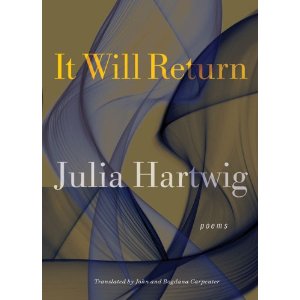
Enigmatic, too: her range of vision roams through centuries, continuing a conversation with her recently dead colleagues, literary forebears, and friends throughout time. All great poetry does that, really—but in Hartwig’s case the search is direct and unambiguous. Titles of poems in her newest collection in English, It Will Return, reference Arthur Rimbaud, John Keats, and Joseph Brodsky as well as Vincent Van Gogh, Mstislav Rostropovich, and Henri Rousseau.
Her life was largely a quiet and orderly one, after the national upheaval of war, when she worked as a runner for the Home Army, and studied in Warsaw’s underground university (the Gestapo’s attentions forced her into hiding for a time). After the war, she went to Paris on a scholarship and never lost her love for France. She wrote about Guillaume Apollinaire and Gérard de Nerval and translated Rimbaud:
 “What is striking about French literature is the range of scale: the Hugo-style genius of the French spirit and the Rabelaisian bawdiness, de Musset’s charm and Apollinaire’s thrilling melody, Lautréamont’s madness, the inexhaustible passion of Rimbaud’s poetry, the latent sensitivity of Reverdy’s cubism, the inventiveness of the lyrical paradox in Jacob’s work,” she wrote. “Old and new, separate and shared, like the root, stem, leaf, and flower in one plant.”
In 1954 she married the eminent poet, writer, and translator Artur Miedzyrzecki (1922–96), who had served the Polish Army in Italy. She published her first book during communism’s brief 1956 thaw, when she was in her mid-thirties.
“I waited for good poems, it’s true,” she said. “But still the attention was . . . it was remarked.”
I find the frequent comparisons to Szymborska to be a bit offensive, as if there were only one slot were available to a female poet per generation. I aired my grievances … well, a little, anyway:
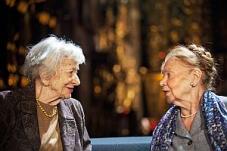
May in Kraków – must they be compared?
She is often compared to Wisława Szymborska. One wonders if the association would come less easily if Szymborska were not a woman of the same generation. But it’s not entirely the comparison of poetess with poetess—both have a light, deft touch and a taste for whimsy.
But Hartwig’s terroir extends into a different psychological landscape. She has called her way “reality mysticism,” extending her acceptance of the world to all its horrors, then moving beyond to transcendence. Of the world, she wisely told her translator Bogdana Carpenter, “One cannot set oneself apart from it and be alone like an underground man or a misanthrope.”
But it’s more than that. Reality mysticism doesn’t abstract or withdraw from the present, or use it for a jumping-off point for dreamy speculations, but holds us steadily there, using it to increase our attention, our presence, and our appreciation.
For example, “Return to My Childhood Home” begins with wonder and loss, moving to consolation and light:
Amid a dark silence of pines—the shouts of young birches calling each other.
Everything is as it was. Nothing is as it was. …
To understand nothing. Each time in a different way, from the first cry to the last breath.
Yet happy moments come to me from the past, like bridesmaids carrying oil lamps.
 Many more happy moments in your beloved Warsaw, Julia – a thousand lamps to greet you on your way!

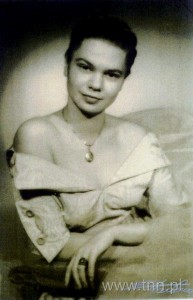 One of the misfortunes of late-blooming fame is that people remember you old.
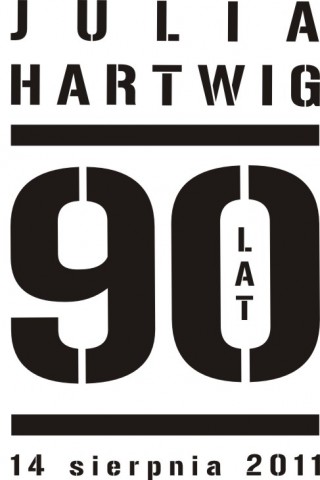 Happy birthday, Julia.