
Tonight at Kepler’s: Palumbi tells of the heroes of Monterey Bay — Ed Ricketts, too

Share

“I go all over the world giving talks about how much trouble the ocean is in,” Steve Palumbi told Lou Bergeron a few months ago in an article here.  “Then I find myself back here, going along the shore of Monterey Bay to my office, and the contrast between how stunningly beautiful this bay is and what I see going on in the rest of the world is stark,” he said.

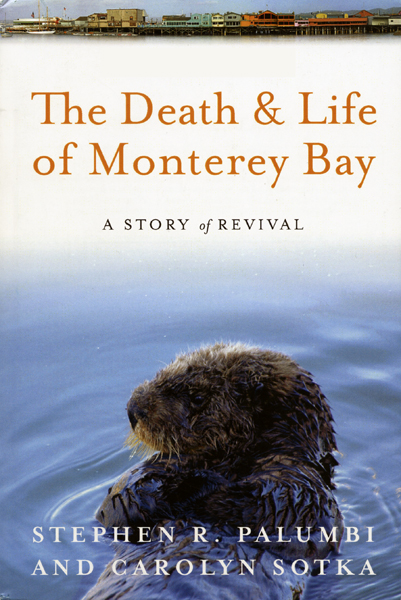
Monterey now has one of the most celebrated shorelines in the world.  But Palumbi, now director of Stanford’s Hopkins Marine Station in Pacific Grove, knew that the Monterey bay was once “an industrial hellhole” and had suffered the same problems as other shorelines around the world. So how was this region able to recover? He began digging into the past and found the story so fascinating he ended up writing his new book (with co-author Carolyn Sotka), The Death and Life of Monterey Bay: A Story of Revival.

He’ll tell the story tonight at 7 p.m. at Kepler’s in Menlo Park.
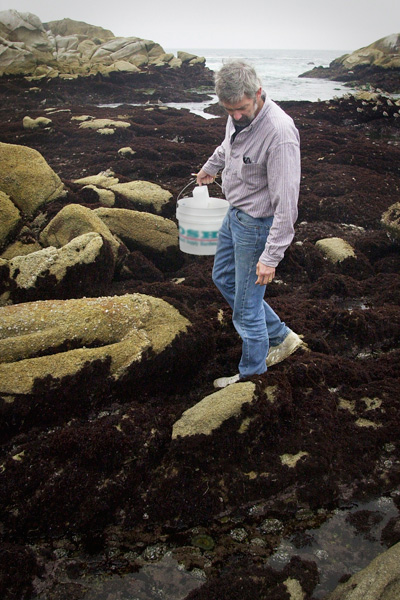
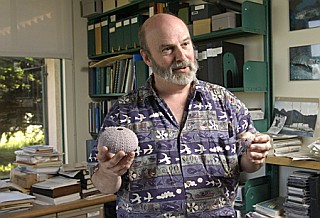
Palumbi on the bay (Photo: L.A. Cicero)

Monterey began as a natural paradise, but became the poster child for industrial devastation in John Steinbeck’s Cannery Row.  The cast of characters for Palumbi’s book includes an eccentric mayor who wasn’t afraid to use pistols, axes, or the force of law to protect her coast; fishermen who love their livelihood; scientists who are fascinated by the sea’s mysteries, and philanthropists and community leaders willing to invest in a world-class aquarium.

But one character in particular fascinates us.  Remember last June when we posted a few stories (here and here and here) about the crazy Steinbeck auction?  Ed Ricketts‘ briefcase was the most mysterious and contested item.  Ricketts figures into Palumbi’s narrative.  Bergeron writes:

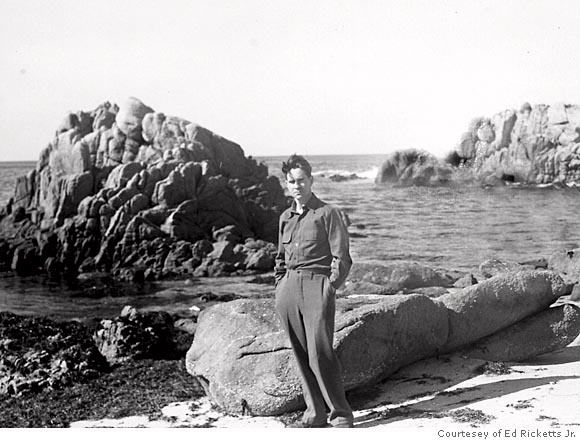
No story about Monterey Bay in the era of the canneries would be complete without Ed “Doc” Ricketts, the eccentric, pioneering biologist immortalized in John Steinbeck’s novel Cannery Row.

“Ed Ricketts taught John Steinbeck enough ecology so that he could write the first great ecological novels, such as The Grapes of Wrath,” Palumbi said. But while Steinbeck went on to write about the Oklahoma Dust Bowl, Ricketts ended up living through what Palumbi called “the dust bowl of the sea” in Monterey Bay.

Kind of a cult figure (Photo: Ed Ricketts Jr.)

“Ricketts knew exactly what was going on decades before anybody else, but he could never really get anybody to pay attention to him,” Palumbi said.

Along with Steinbeck, Ricketts became friends with Joseph Campell, who would later become a well-known scholar of legend and storytelling, writing books such as The Power of Myth.

Although Ricketts, Steinbeck and Campbell often engaged in philosophical discussions, Palumbi said their get-togethers generally weren’t too dry. “They had some pretty amazing parties in the late 1920s in Pacific Grove,” he said.

The proof in the pudding

Share
“A journey is like marriage. The certain way to be wrong is to think you control it.”– John Steinbeck

John Steinbeck’s comment (discovered above, after three days of writing about the Steinbeck auction) adds another slant on last week’s New York Times review of Adam Ross’s Mr. Peanut, a thriller about marriage.  Bestselling author and practicing lawyer Scott Turow writes an insightful review of what sounds like a haunting book.  The review is here.  An excerpt with a local twist:

Nearly 40 years ago I was a fellow at the Creative Writing Center at Stanford. The director, Richard P. Scowcroft, who had helped his revered friend Wallace Stegner establish the program, told those of us in the advanced fiction seminar that the one subject he had always feared writing a novel about was marriage, because it still seemed to him the most complex and frequently unfathomable of human relationships, notwithstanding his own long and successful marriage.

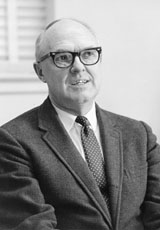
Scowcroft

Turow doesn’t mention that he endowed the Richard Scowcroft Fellowship in Creative Writing.  He has said that not only was Scowcroft, who died in 2001, “a distinguished professor of English and a fine scholar, but his works, such as Back to Fire Mountain, have been undervalued. Above all, his gifts as a teacher of creative writing are beyond dispute. He knew exactly when to bring you yet closer to being a good writer.”

Turow would seem to be proof.

By the by, Turow works most of his cases pro bono (including a case 15 years ago where he won freedom for Alejandro Hernandez, who spent over a decade on death row for a murder he did not commit).

“Ed Head” alert: an update on the Steinbeck auction

Share

Jerry Garcia of American science (Photo: Ed Ricketts Jr.)

Just got an update from Joe Wible of the Hopkins Marine Station Library about the mysterious sale of Ed Ricketts’s briefcase at the NYC Steinbeck auction earlier this week (I wrote about it here and here):

I did hear today from someone who knows the person who made the winning bid for the Ricketts briefcase and manuscripts. It did go to a private collector from southern California and is not likely to end up in a library or museum. Bummer.

Now I understand why a marine librarian would be interested in Ricketts — the only scientist to have 15 animal species and a nightclub named after him (I’ve never read Cannery Row):

Wible ... he told me so

“‘Ricketts is like a cult figure,’ says Joseph Taylor, professor of environmental history at Simon Fraser University in Burnaby, B.C. Of all the scientists who ran marine research stations along the Pacific Coast, Taylor says, ‘he was by far the most colorful.'”

The quote is from a five-year-old San Francisco Chronicle article on Ricketts here.  I finally googled Ricketts, just as   Wible told me to do — and found this description:

“He is the Jerry Garcia of American science — a beer-drinking, bearded guru who ignored the social and scientific orthodoxies of his time, a progenitor of the counterculture, an enigmatic ecologist whose pioneering work was initially rejected by the scientific establishment.”

“And the winner is…” More on the Steinbeck auction

Share

National Steinbeck Center (Photo: Stuart Schwartz)

News is drifting in about the results of the Steinbeck auction earlier this week, and the big winner is … the National Steinbeck Center in Salinas.

How is that for good news?  You can read about it here and here.

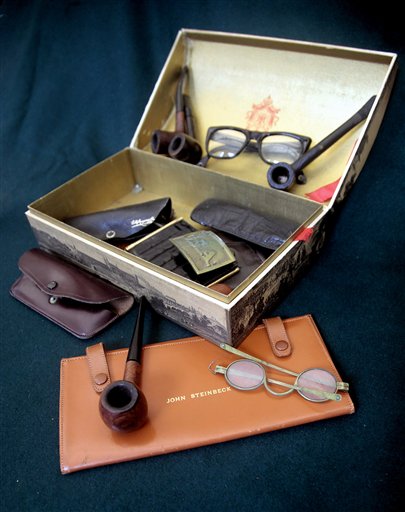
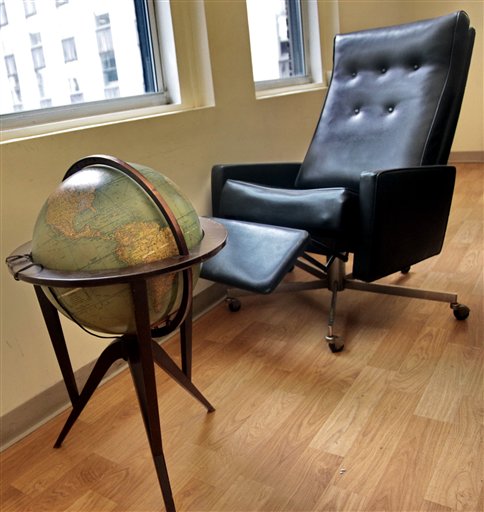
They are the ones who acquired the desk chair and globe.  They are the ones who acquired the pipes and glasses.  They are the ones who acquired manuscripts and correspondence, film and audio recordings.

“We got everything we wanted and then some,” said Gail Steinbeck,  wife of the author’s son, Thom Steinbeck.

The Steinbeck Center people aren’t the only winners, of course.  And some players were working at a disadvantage.

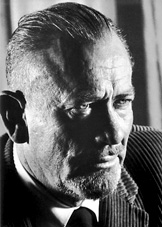
Steinbeck in 1962

Academic libraries have it tough when it comes to auctions:  They don’t have a big pot of gold, and they can’t act on a whim.  They must get authorization for expenditures from their institutions, and that process doesn’t easily allow for the give-and-take, push-and-shove of an auction — where upping the bid a buck,  after intuitively sensing that a competitor has hit his limit, or deciding to forgo some objects so you can go-for-broke on another — could make the difference between having the winning bid or walking away empty-handed.  Moreover, their budget cycle tends to end with the academic year in June – so they are at the bottom of their financial barrel at this time of year. Nevertheless, the Stanford University Libraries did come away a winner, on both the items it bid for.

Not surprisingly for a university, they went after documents rather than glasses, pipes, or briefcases.  Stanford already has significant holdings in its Steinbeck collections, including manuscripts, notes, correspondence, photographs, and ephemera. The libraries will add to its Steinbeck holdings “Lot 205. Documents relating to 1956/1960 Elections,” including typed signed letters from William Faulkner, Adlai Stevenson, Harry Truman and others.

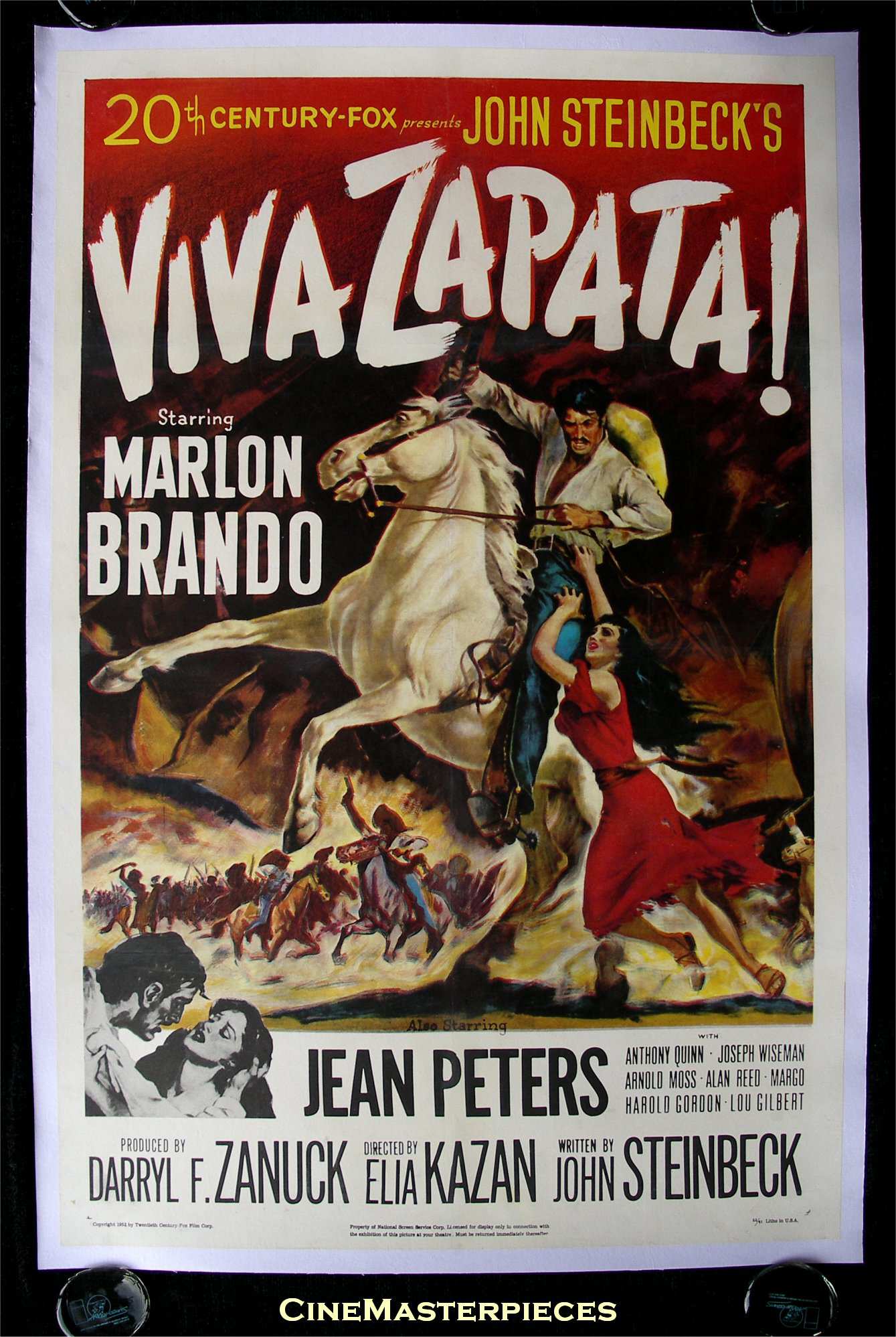
They also acquired “Lot 222.  Film and script documents. ‘Zapata’ Revisited,” including correspondence from Darryl Zanuck, Elia Kazan, and others.

“We don’t have much political material,” said Annette Keogh, successful bidder for the Stanford libraries in what she termed the “swift and surprising” auction — hence the interest in the first lot.  “There was some interesting film stuff about Zapata – we do have other film-related materials, thought would be a good compliment.”

“They struck me as something researchers a rather than collectors would be interested in,” said Keogh.

But who got the briefcase that had belonged to Edward Ricketts, a longtime Steinbeck friend and collaborator?  The mysterious lot went to an undisclosed bidder for $18,000.

Why did everyone want it, and why did it go so high?  According to Joe Wible, head librarian and bibliographer at the Hopkins Marine Station Library, who made an unsuccessful bid:

There are a lot of “Ed Heads” out there who would be potential buyers for the Ricketts materials.  Search “Ed Heads” and “Ricketts” in Google and you get over 500 hits.  I wish the auction house had separated the briefcase from the papers it contained into separate lots.  I suspect the bidding went so high because of the briefcase.  Other than maybe the telegram notifying Steinbeck of Ricketts being hit by the train, I don’t think the papers would have sold for such a large sum of money.  I was only interested in the manuscripts and correspondences that were inside the briefcase so that historians studying Ricketts would have access to those documents.

I am very curious to know who had the winning bid.  Unfortunately, if it was a private collector we may never know.

Meanwhile, drop the Book Haven a line if any more news surfaces.

Hasty and half-hearted Steinbeck auction raises questions

Share

His glasses and pipes

If you weren’t at Bloomsbury Auctions in NYC today, you missed a great recession-era auction — half of the John Steinbeck items went below estimated prices, or failed to sell at all.

Steinbeck’s chair and terrestrial globe sold for $1,800 — below the $2,000 to $3,000 pre-auction estimate.  One manuscript, Steinbeck’s acceptance speech for his 1962 Nobel Prize for Literature, was among 26 lots (out of 50) that didn’t sell at all.

According to the Associated Press story:

His chair and globe

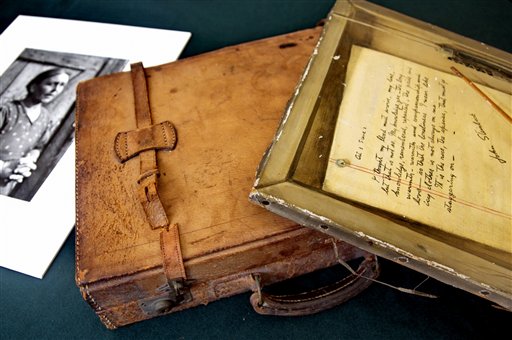
The most spirited bidding went for a briefcase that had belonged to Edward Ricketts, a longtime Steinbeck friend and collaborator who was the inspiration for the character of the lonely biologist ‘Doc’ in “Cannery Row” and “Sweet Thursday.”

Estimated at $9,000 to $12,000, it sold for $18,000, one of the few items that went higher than expected.

One would-be buyer told me that the Steinbeck Center at San Jose State University was not bidding on any of the lots.  The National Steinbeck Center in Salinas bid on a few, and the Monterey Public Library made a bid for the briefcase, but dropped out.

The Ricketts briefcase

Nobody seems to know where this stuff is going — or where it went.  It’s too bad, as a major concern for many public-spirited bidders was that Steinbeck’s personal items might be sequestered into personal collections and therefore be lost to the public. Speaking in an Oakland Tribune article here, Executive Director Colleen Bailey of the National Steinbeck Center in Salinas said:

“All of these things should be preserved and available for everybody to see, and not stuffed in a closet somewhere in somebody’s personal collection,” Bailey said. “It’s an opportunity for the world to gain access to his private world.”

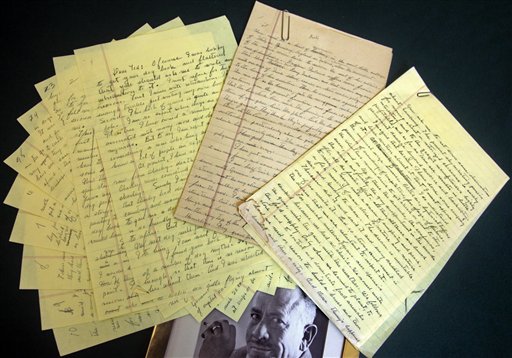
Autographed manuscripts

“There’s such a fascination with the private lives of people who have done such wonderful things.”

Apparently, some were caught off guard by news that John Steinbeck memorabilia was to be auctioned — including the author’s son and daughter-in-law, Thom and Gail Steinbeck, who were quickly raising money to bid for items and take them back to Salinas.  As of Monday, they had raised $4,600 of a hoped for $15,000.

Meanwhile … has anyone heard anything?