
“God Bless Us, Every One!” — NYT, Ian Morris, and a postscript to the Berkeley concert

Share

"Hey, mom!"

At Berkeley’s “Slavic Choral Concert Christmas in Kraków”, described yesterday, I had to scour the rows to find a vacant chair, even as a singleton.  It seemed that the entire Slavic population of the Bay Area was in the crowded Hillside Club.  Naturally, I went to the front, first: I never underestimate people’s unwillingness to be close to the action.  Two African-American matrons, dressed to the nines for the occasion, were holding down the front seats in the lefthand corner.

“Well, you don’t look Polish!” I said to them.  They laughed.

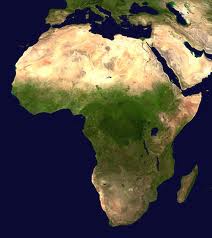
“We’re all part of Mother Africa!” said one.

It’s true.

Don’t believe me (or her)?  Listen to Ian Morris, who received a very good review in yesterday’s New York Times Book Review (Orville Schell calls him “a lucid thinker and a fine writer,” with the tone of “an erudite sportscaster”):

“Historians like giving long, complicated answers to simple questions, but this time things really do seem to be straightforward. Europeans do not descend from superior Neanderthals, and Asians do not descend from inferior Homo erectus.  Starting around 70,000 years ago, a new species of Homo — us — drifted out of Africa and completely replaced all other forms.  Our kind, Homo sapiens (“wise man”), wiped the slate clean: we are all Africans now.  Evolution of course continues, and local variations in skin color, face shape, height, lactose tolerance, and countless other things have appeared in the 2,000 generations since we began spreading across the globe.  But when we get right down to it, these are trivial.  Wherever you go, whatever you do, people (in large groups) are all much the same.”

So, as Tiny Tim said, “God bless us, every one!

Or, in the words of the cheerful African-American woman at the Slavic gig:  “We’re everyone!” she said, waving toward the crowd on the darkening Thursday evening among the Christmas lights, the mulled wine, and the decidedly un-African decor.

Postscript on 12/15:   was named one of the top ten books of 2010 by the New York Times.  Tk it out here.
More good news for Ian Morris … and a quick world tour through time

Share

Not only is Why the West Rules — for Now the bedside reading of Niall Ferguson, but The Economist has just named Ian Morris‘s weighty tome  as one of the top books of 2010:  “An entertaining and plausible book by a British historian at Stanford University that shows how debates about the rise of China or the fall of the West are ultimately a sideshow, as nature will bite back savagely at human society.”  (We wrote about it here and here.)

The Economist reviewed the book last October:  “Ian Morris, a polymathic Stanford University professor of classics and history, has written a remarkable book that may come to be as widely read as Paul Kennedy’s 1987 work, The Rise and Fall of the Great Powers.”

Also receiving The Economist‘s best-of-the-year praise — in fact, right above the Why the West Rules, is Timothy Snyder‘s Bloodlands: “How Stalin and Hitler enabled each other’s crimes and killed 14m people between the Baltic and the Black Sea. A lifetime’s work by a Yale University historian who deserves to be read and reread.”  (Bloodlands was discussed on The Book Haven a few weeks ago, with Norman Naimark‘s Stalin’s Genocides, and again here.)

In the spirit of Morris’s book, if you’d like to watch ten centuries roll by in five minutes — click “play” below.  We think it’s kind of fun.

Top global thinkers read Ian Morris’s Why the West Rules — For Now … and an odd blunder

Share

Archaeologist Morris digs for the secrets of the ages

Foreign Policy has published its Second Annual Top 100 Global Thinkers List — “a unique portrait of 2010’s global marketplace of ideas and the thinkers who make them” — and there are inevitably some surprises.

The one that pleased us most is that nestled in Niall Ferguson‘s recommended reading list of three books (Ferguson comes in at #80) —  Ian Morris‘s Why the West Rules — For Now.  We’ve written about Morris, the man who knows everything, here and here.

Other names mentioned in these pages appear on the list — Christopher Hitchens, Liu Xiaobo, Mario Vargas Llosa, Clay Shirky, David GrossmanAyaan Hirsi Ali made the cut, and so, ironically, did the man who has derided her — Ian Buruma finishes the list at #100.  (Tariq Ramadan follows immediately after at #62).  But what’s curious about her blurb is this bizarre understatement:

“The first time you heard about Ayaan Hirsi Ali, it was likely the story of a brave Muslim woman fleeing her forced marriage in Somalia to become an outspoken critic of Islam. But her flight didn’t stop there; after more than a decade living in the Netherlands, she left Europe and its painful debates over assimilation for more comfortable ground: conservative America.”

Well, no.  Not quite.  They neglect to mention that she fled Holland because a fatwa called for her death, her colleague Theo van Gogh was murdered, and the Netherlands not only failed to protect her, but turned on her, questioning her immigration status. Big difference.

Why did no one at Foreign Policy flag this boo boo?  I guess all the copy editors have been laid off.

Ian Morris: The man who has an answer for everything

Share

Ian Morris has an answer for everything.  And you’ll be able to hear it all tonight at Kepler’s at 7 p.m.  Or, for the Cliffs Notes version, see my video interview above.

I wrote about Ian some time ago, well before the launch date of his new book, Why the West Rules — For Now — which is out this month.  In a world of cautious scholarship, Ian is going way, way out on a limb with his grand récit, a story about how everything came to be in the history of the world.  Remember crazy James Burke in The Day the Universe Changed, the man who could somehow connect the drift of continents with the invention of spaghetti?  Ian Morris grabs the other end of the telescope.

It’s an unusual publishing choice for Farrar, Straus & Giroux, who usually publishing premiere literary works.  I understand the top publishing house wants to expand its repertoire.

Friedrich Keyl's painting of Looty. The collar with bells in the foreground is the only remant of his earlier royal life.

When I wrote my own article, I began it with a small dog that has a big story:  a yapping Pekingese named Looty.  (It guaranteed me a readership among Pekingese fanciers.)

I wrote:

After the sacking and destruction of Beijing’s summer palace in 1860, the Chinese empress’ Pekingese – the appropriately named Looty – was whisked to the royal family at Balmoral, bringing the previously unknown breed to the West.

But why Looty to Balmoral, instead of the other way around, with Queen Victoria’s beloved Skye terrier, Islay, going to the emperor in Beijing?  Why was it the British, and not the Chinese, who dominated?

Stanford Classics and History Professor Ian Morris puts forth some bold answers in his ambitious new 750-page book, Why the West Rules – For Now (Farrar, Straus & Giroux).  And that places Looty in a longer story going back to the last ice age.

Looty’s story is sadder than I made it sound.  Though he lived a long and contented life in Victoria’s lap, after an initial period when he was beat up by the British dogs, here’s his unexpurgated story, as told in Jolee magazine:

One British soldier who arrived too late to share in the plunder of the Palace, discovered in a corner of the Garden of Clear Ripples four little dogs and their attendant, a lady of the Court who had committed suicide rather than be taken prisoner by the barbarians. Gathering up the four little dogs, he put them in his gunnysack and later whilst rejoining his regiment at muster prior to embarkation on Her Majesty’s ship “Odin” for the return to England, the four dogs would not stay still. One of the officers noticed movement in the soldier’s gunnysack, and was ordered to disgorge the contents of his sack – and out poured the four dogs which were immediately confiscated from the aberrant soldier by his officers.

The dogs should have been returned to the Summer Palace but were not.  One dog and a bitch were taken by Lord John Hay and later given to his sister the Duchess of Wellington. The other dog and bitch were taken by Sir George Fitzroy and given to his cousin the Duchess of Richmond. And of course “Lootie” was given to Queen Victoria by Captain Dunne.

After reviewing my own paragraphs, copyeditor Barb Egbert came back and cheerfully corrected me, “Shouldn’t we say the last ice age?”  Silly me.  I was confusing the last ice age with all those other ice ages.

Now that’s an editor.

Barb Egbert took away the 800-page book (with index) — otherwise I would include an excerpt.  Soon she will know everything about everything.  Sometimes I think she already does.