
 I remember reading about an university art student who, on a test, was asked to describe a painting of the Adoration of the Magi. The painting, she replied, was of a mother and newborn child in an ancient era. The men are bringing gifts, because everyone is happy at the birth of a child.
Nothing to indicate that she recognized that this was a particular birth, and a particular child.
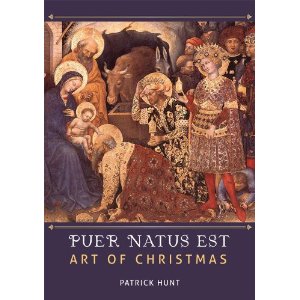
Archaeologist Patrick Hunt is out to change all that. Last week at the Stanford Bookstore he gave a talk on his newly published Puer Natus Est: Art of Christmas, a book “deciphers the many layers of formula and accumulation of stories added to Christmas.”
“It doesn’t matter what one’s faith is – it’s a talk about art,” he told the group. “It’s a religious story, but also a story about continuing life, great hope, and great expectations. This story has something that we all need, regardless of our religion, something that is central to all human experience – hope.”
As he writes in his preface:
“Art is often the voice of the people rather than the voice of the powerful. Christmas art is no exception. Even if the subject of Christmas Art appears a sacred cow with a hands-off label, it is not above scrutiny. The life and death of Jesus continues to elicit deep and even explosive reaction—no matter how often it is reinterpreted by each generation, running the gamut from skeptical reflection and scorn to reverence and worship. What many call the greatest story ever told—always able to stir up emotions and controversy—has as much raw appeal in its beginning as in its ending. Dogma is not fond of real examination. But art can be looked at from almost an infinite variety of angles, and is in no way lessened by multiple reference points or interpretive approaches.”
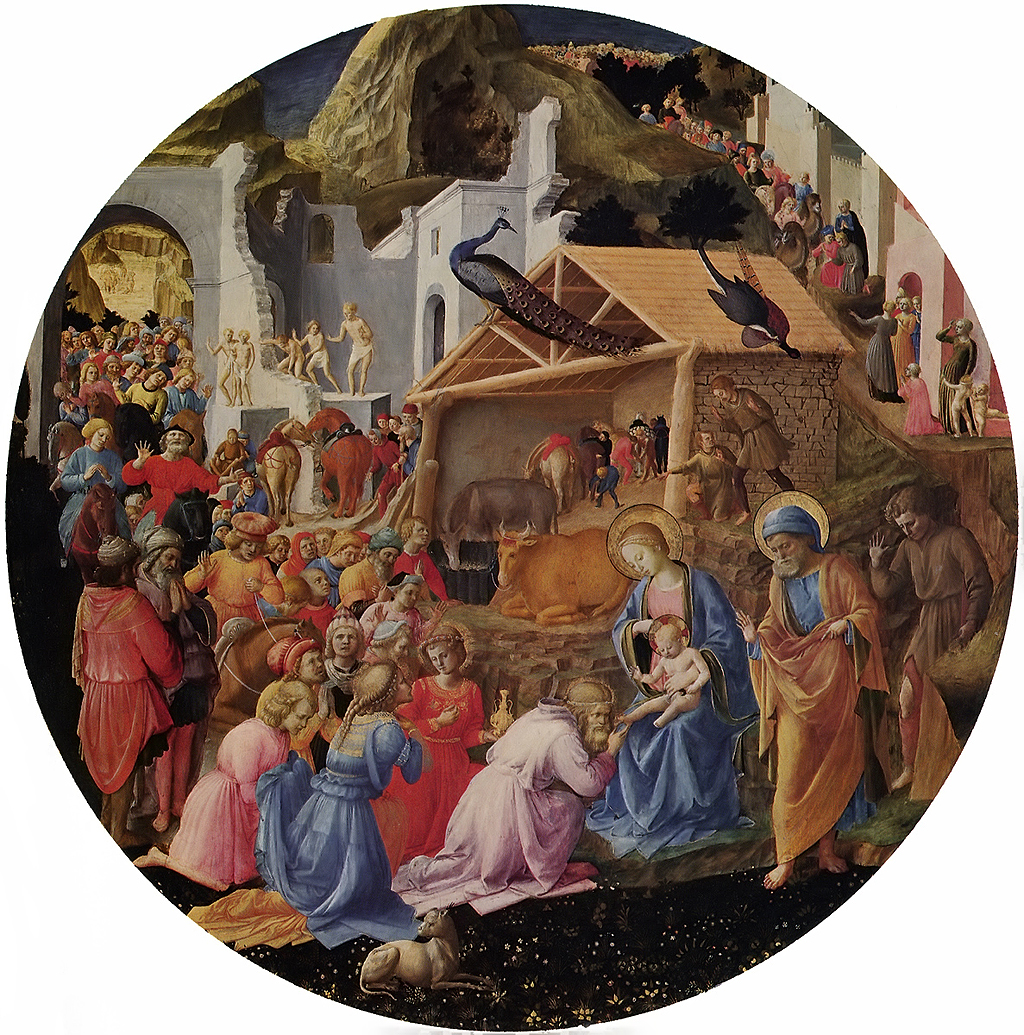
Fra Angelico: "while magpies joke and peacocks preen"
According to Patrick, the texts of Luke and Matthew are merely starting points:
“Apocryphal texts added color and vigor, folklore, popular themes, puns, and sometimes magical details to the bare skeleton provided in the scriptures. Talking beasts; exotic and extravagant tapestries of costumes, crowns, and turbans; fragrant spices; and all the language of miracle and medieval allegories augment the text. Countless bright angels dressed in every silken damask and wing hue hang above frightened shepherds or rickety stable rafters to signal heaven and earth are momentarily one. Wicked, bloodthirsty tyrants like King Herod compete with Joseph’s peasant cunning. Bridled camels and pet leopards plod along in unusually mobile starlight while magpies joke and peacocks preen. Even humble plants like chamomile give off their allegorical fragrance, symbolic of Christ when trampled by all the retinue of this huge Christmas cast. … Yet, each participant in this Christmas pageant has at least one meaning to be fleshed out, and no symbol is too shadowy for the microscope and the zoom lens of this project.”
It all rather reminds me of the exchange between Charles Ryder and Sebastian Flyte in Evelyn Waugh‘s Brideshead Revisited:
“But, my dear Sebastian, you can’t seriously believe it all.”
“Can’t I?”
“I mean about Christmas and the star and the three kings and the ox and the ass.”
“Oh yes, I believe that. It’s a lovely idea.”
“But you can’t believe things because they’re a lovely idea.”
“But I do. That’s how I believe.”