
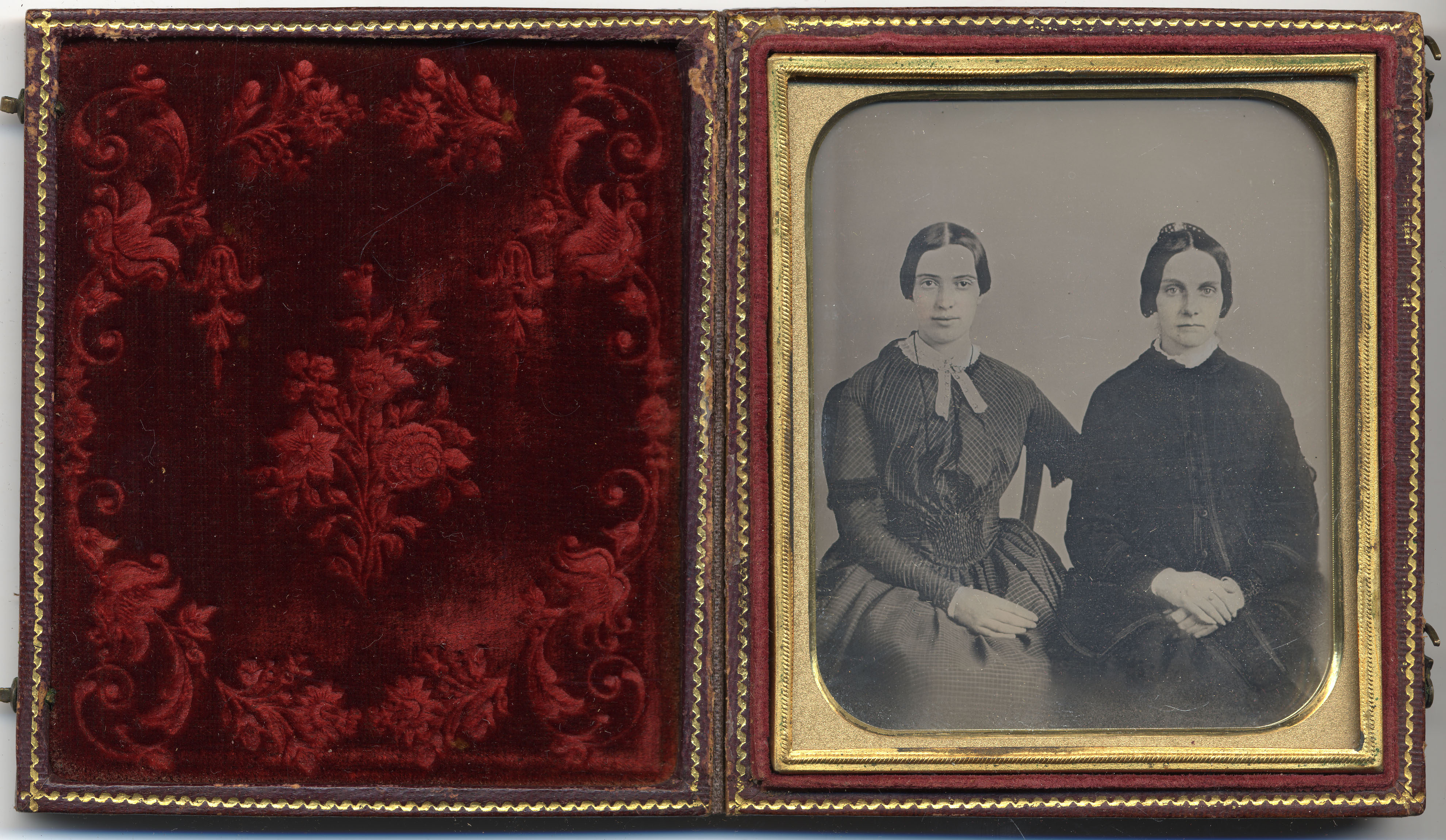
No, no, this is the real Emily Dickinson…more photos, more theories

Share


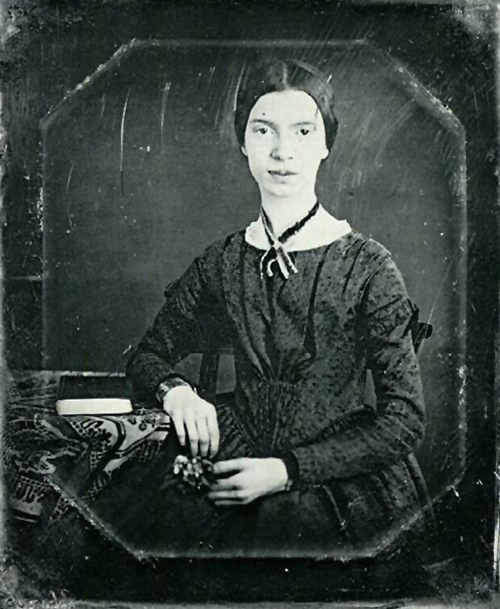
I have joined the “world’s top thinkers” at last.  A few days ago I discussed the investigation into whether the woman on the left in the portrait above is Emily Dickinson, with her friend Kate Scott Turner at right.  The post received several comments, more tweets, and some other pick-up.
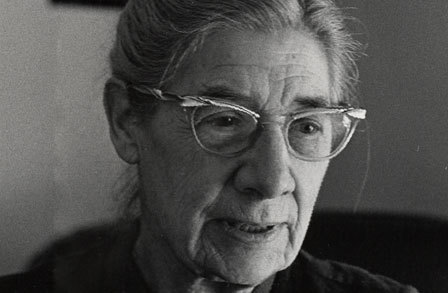
Janet Lewis, as she looked about the time I met her.

Yesterday, the post was mentioned on BigThink, which describes itself as “Blogs, Articles and Videos from the World’s Top Thinkers.”  I’m grateful to the post for something other than the promotion, however:  Thanks to my fellow “linkees” cited in the article, I found the putative portrait of Emily Dickinson, circa 1860, that I had tried to find several times in the past without success.

Here’s why:  Sometime in the 1980s, I made a visit to the Los Altos home of Janet Lewis, the poet, author, and widow of Yvor Winters.  The immediate reason for my interview I cannot recall – in any case, the article was never published, and remains somewhere in my garage on a 5″ floppy, along with the interview notes. I knew too little about the octogenarian writer at the time, but I am glad now I had the opportunity for the meeting, for whatever the reason – and yes, I remember the Winters’s legendary loquat tree.
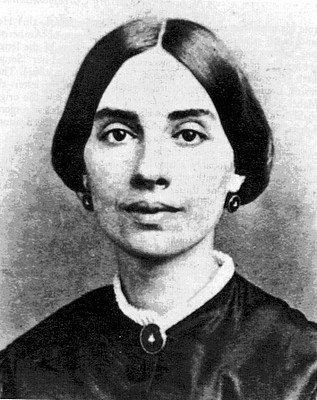
"a gypsy face"

I also remember gazing up a photo in her kitchen, displayed high on the wall. Janet Lewis followed my gaze, and asked, “Do you recognize who that is?”  I didn’t.  “That’s Emily Dickinson, grown up.”  It was a matchless photo, attentive and sensual.  She told me it was included in the Richard Sewall biography of the poet, and that she had torn it out from the book and put it on her wall.  Years later I ordered the biography online precisely to recover that portrait.  But it had apparently been debunked in the meantime, and removed from later editions.

Now the photo has a new champion, poet Daniela Gioseffi, and author of a new biographical novel about Dickinson. From the comments section of an article about her book she writes (with some light editing on my part – it needs more):

The foreword to my book Wild Nights, Wild Nights, The Story of Emily Dickinson’s Master (at http://www.Amazon. com and plainviewpress.com) explains exactly how I researched the photo to include it. There is no doubt in many Dickinson scholars’ minds that it is Emily Dickinson at thirty years, as the features match when sized against that old 17-year-old photo that every one knows above, when the images are sized alike and put one over the other. What many non-scholars of Dickinson who have not read as fully as I have do not understand is that the well-known photo of her was taken when she was a sickly 17-year-old just arisen from a sickbed. She herself in later years is described by those who saw her a bright-eyed, clear-skinned, attractive and womanly. Yes, she was diminutive all her life, but she described herseld as having “a gypsy face” and this photo fits her own description of herself that her sister Lavinia agreed with.

I want the portrait to be true because I like it, and because it connects me, in an odd sort of way, with Janet Lewis.  To admit such a biased and unscientific judgment in writing, however, risks my removal from a blog for the “world’s top thinkers.” I am in something of a quandary.
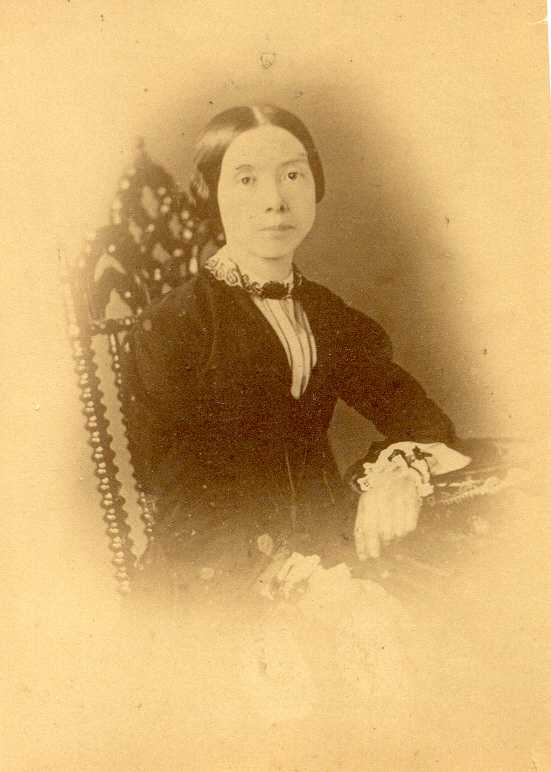
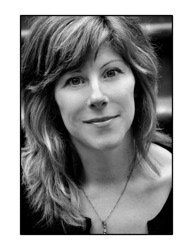
"small, like the Wren..."

So let me throw in another red herring – the portrait at right that would date to about the 1850s.  Its defense is here, and the image would appear to fit Emily’s self-description: “[I] am small, like the Wren, and my Hair is bold, like the Chestnut Bur – and my eyes, like the Sherry in the Glass, that the Guest leaves.”

And what about the new discovery above?  According to Austin Allen, one of the world’s top thinkers over at BigThink:

Of the two women, Kate is the one with a thousand-yard stare. (She’d been recently widowed.) But look closer at her friend: there’s something peculiar about that gaze. The pupils are asymmetrical, as they are in the known photo—Emily may have suffered from both astigmatism and iritis—but they’re also large, dreamy, and a little amused. Dickinson once compared her eyes to “the Sherry in the Glass, that the Guest leaves”; the woman in the picture just about lives up to the simile. …

Look: the mystery woman has even thrown an arm around her friend, a gesture we can hardly imagine the Recluse of Amherst making. If she was on the cusp of crisis, it doesn’t show yet. In my heart of hearts I doubt it’s Emily—that chin just doesn’t match up—but pending further reports on clothing samples, image records, nasolabial folds, etc., I’ll keep believing and disbelieving at once, which, as Emily said, “keeps Believing nimble.”

At least I’ve recovered the photo of “my Emily” at last.

Postscript on 9/5:  Some nice pick-up from the Poetry Foundation here.  I’m not only a W.T.T., but an “amateur sleuth” as well.
“It will change our idea of her”: Is this the grown-up Emily Dickinson?

Share

Is she?  Or isn’t she?

Amherst College Archives and Special Collections have uncovered a new daguerreotype that it figures is the real Emily Dickinson, all grown up.

The Emily we know, at age 16

So far, the evidence tallies in its favor, “including computer work with detailed scans of the original daguerreotypes (1847 and 1859) and an ophthamological report facilitated by Polly Longsworth in March, 2010.”

Certainly the addition of a second sitter of whom there are multiple images in existence helps the case: if one can show that it’s Kate Turner, a known friend of Dickinson, then it increases the chance that the other sitter who looks like Dickinson is Dickinson. One sure point of contention is the clothing: people will note that the dress “Dickinson” wears seems to be out of date for a late 1850s photograph. However, that evidence may be of less significance when one considers the 23-year-old Dickinson’s comment to friend Abiah Root in 1854, “I’m so old fashioned, Darling, that all your friends would stare” (Johnson letter 166).

Kate Scott Turner, who would have visited the poet in Amherst about 1859, seems to match another one found of Kate as a young woman. Anyone with information, fir or agin’ the supposition that this is Emily D., is invited to contact Amherst.

If the daguerreotype is eventually accepted as Dickinson, it will change our idea of her, providing a view of the poet as a mature woman showing striking presence, strength, and serenity. She (whoever she is) seems to be the one in charge here, the one who decided that on a certain day in a certain year, she and her friend would have their likenesses preserved. In fact, even if this photograph is not of Dickinson and Turner, it has still been of use in forcing us to imagine Dickinson as an adult, past the age of the ethereal-looking 16-year-old we have known for so many years.

Oh, you’re wondering which one is Emily?  She’s the one on the left.  Her friend Kate, a recent widow, was in mourning.

Read more here.

Postscript on 9/5:  More photos, more theories, more possibilities here – including the poet Janet Lewis‘s vote.

Ken Fields, 113 crickets, and “the sound of life”

Share

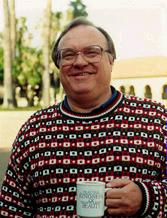
Lunch-mate

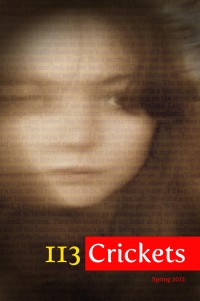
“Digital humanities,” of course, is the buzzword du jour here in Silicon Valley – but that’s hardly the only drive to blend high-tech and the non-tech.  The brand-new quarterly journal 113 Crickets offers a new take on combining books and bytes. It attempts to “promote connections between the disciplines of technology and literature through the publication of both technology-orientated books and works of fiction.”  The journal is part of Hillary Johnson‘s “genre-agnostic” publishing venture called “Dymaxicon” (dynamic + maximum + content), explained in the Huffington Post here. The journal is hoping to build a relationship with the Stanford Creative Writing program in its subsequent issues.

113 Crickets came into my hands via poet Ken Fields, during a long lunch on the patio of the Faculty Club.  He handed the spring issue to me.  “The Stanford connection is me,” he said.  The editor of 113 Crickets is  Ken’s friend, Tobias Mayer. Here’s another connection:  Ken has some poems in the debut issue.  Five poems in the series “West of Amherst” conjure the shade of Emily Dickinson.  He saved the best for last, though.  The excellent “Meditation,” stands alone and is the final work in the volume, dedicated to the Franco family, in memory of Doug Franco.

“Doug Franco took several classes from me when I first started teaching.  A math major, he was interested in poetry and painting.  He remained in Palo Alto as a business man, with a strong sense of community.  He, his wife Betsy, and three sons, one of whom is the actor James Franco, are all artistic,” Ken wrote to me later.  “I saw Doug often, and his wife Betsy, a writer, sat in on a couple of my classes.  Doug was a memorable man who died this year, far too young.”

Here’s the poem:

Meditation

for the Franco family

Breathe in. Breathe out. This is the sound of life –
Music and sex, the cry we enter with,
The sigh as we leave.  We are a swinging door
Through which the wind blows, even in sleep.
Hum it, and cherish it, and let it go,
Syllable floating on the empty deep.

In Memory of Doug Franco

Literary resolutions for 2012 … and a review of 2011, a “Festival of Sleaze”

Share

We all feel a little burned out after New Year’s celebrations, and I’m no exception. So here are some notable literary resolutions to fortify and inspire you for the coming year:

No commas, please

Ben Greenman, author of the short story collection What He’s Poised to Do: “I want to reread all the Emily Dickinson poems, in order, at a slow enough rate that I understand them but a fast enough rate to keep it exciting. It’s not as easy at it sounds. And I also plan to think about why, in a time of reduced attention spans, short stories aren’t getting more traction.”

Elissa Schappell, author of the short story collection Blueprints for Building Better Girls: “It’s the Russians. It’s always the Russians. Oh yes, I’ll read the Russians in the summer months. Two summers ago, I developed such a bad case of Tolstoy‘s elbow from hauling around War and Peace I could barely flip through a magazine. The summer before Crime and Punishment doubled as a drinks tray at a lawn party, and when I got spooked staying alone at a friend’s summer house, I kept it by the door as a weapon. This year, however I’m more hopeful–I’m starting, more appropriately, in winter. Beginning tomorrow I’m going to make Anna Karenina my new BFF.”

The Russians are coming

James Hannaham, author of the novel God Says No:  “This year I want to figure out why, when an author says the phrase ‘working on a story collection,’ as in ‘I’m working on a story collection,’ everyone in publishing reacts as if they have instead heard the phrase ‘molesting several children.’ And I will continue to pray for the demise of e-books, or at least the demise of the stupid fear that they will replace printed books.”

Richard Lange, author of the 2013 novel Gather Darkness (Mulholland):  “I’m going to reread Moby Dick, Crime & Punishment, and The Scarlet Letter. Every time I go back to books that I loved as a kid, I learn more about myself as a writer now.”

Marisa Silver, author of the short story collection Alone With You: “Read more poetry. Use fewer commas.”

Read the rest at the Los Angeles Times here.

Meanwhile, Dave Barry reviews 2011: “It was the kind of year that made a person look back fondly on the gulf oil spill”:

Multiple committees, strongly held views

This was a year in which journalism was pretty much completely replaced by tweeting. It was a year in which a significant earthquake struck Washington, yet failed to destroy a single federal agency. …

But all of these developments, unfortunate as they were, would not by themselves have made 2011 truly awful. What made it truly awful was the economy, which, for what felt like the 17th straight year, continued to stagger around like a zombie on crack. Nothing seemed to help. …

As the year wore on, frustration finally boiled over in the form of the Occupy Various Random Spaces movement, wherein people who were sick and tired of a lot of stuff finally got off their butts and started working for meaningful change via direct action in the form of sitting around and forming multiple committees and drumming and not directly issuing any specific demands but definitely having a lot of strongly held views for and against a wide variety of things. Incredibly, even this did not bring about meaningful change. The economy remained wretched, especially unemployment, which got so bad that many Americans gave up even trying to work. Congress, for example.

Read the rest here.