Poet Eavan Boland bags PEN prize

Share

A winner

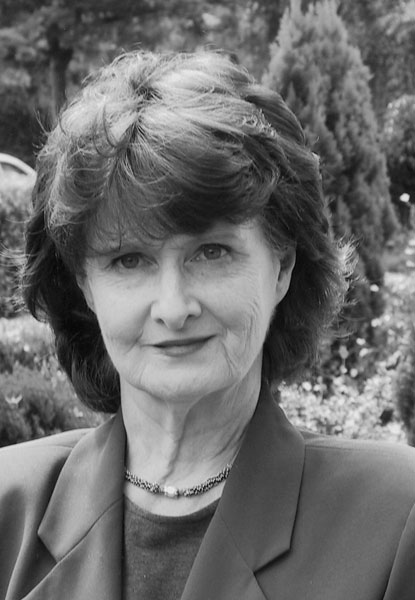
I’m on the PEN mailing list, so I got this one hot off the presses last week: Eavan Boland, director of Stanford’s Creative Writing program and one of Ireland’s leading poets, has won a 2012 PEN award for creative nonfiction with her acclaimed collection of essays, A Journey with Two Maps: Becoming a Woman Poet, published last year by W.W. Norton.

PEN Center USA will fete three honorees and give 11 awards in particular genres at its annual awards festival on Oct. 22 in Beverly Hills. Grove/Atlantic Press publisher (and Stanford alum) Morgan Entrekin will receive the Award of Honor; Joyce Carol Oates will receive the Lifetime Achievement Award and CBS correspondent Lara Logan will receive the Freedom to Write Award.

In addition to Boland’s award for creative nonfiction, the other genre awards are given for poetry, fiction, research nonfiction, children’s literature, graphic literature, journalism, translation, drama, teleplay and screenplay.

“I’m really honored to get the award. And especially from PEN, which is an institution that does so much to advocate for writers,” said Boland.

Boland has published 10 volumes of poetry – most recently New Collected Poems (2008) and Domestic Violence (2007) and an earlier collected volume, An Origin Like Water: Collected Poems 1967-87 (1996). She has received the Lannan Award for Poetry and an American Ireland Fund Literary Award. She has published a previous volume of prose, Object Lessons: The Life of the Woman and the Poet in Our Time.

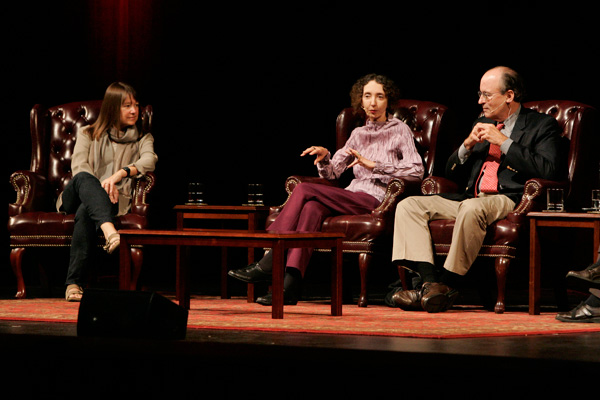
Joyce Carol Oates at Stanford, with Anne Fadiman and Tracy Kidder

A Journey with Two Maps: Becoming a Woman Poet traces Boland’s own development as a poet, and also offers insights into the work of Sylvia Plath, Gwendolyn Brooks, Adrienne Rich, Elizabeth Bishop and the German poet Elizabeth Langässer.

Irish author Colm Tóibín named it a “favorite book” in the Irish Times last year, calling it “urgent and wise.” Britain’s Poetry Review called her “one of the finest and boldest poets of the last half century.”

Boland balances two worlds: free-spirited California and Ireland, a land of historical persecution and occupation, with its “painful memory of a poetry whose archive was its audience,” she said in an Academy of American Poets interview.

“I sought out American poetry because of that powerful, inclusive diversity,” she said. “I always remember I’m an Irish poet there, but at the same time some part of my sense of poetry feels very confirmed by the American achievement.”

On Elizabeth Bishop: “The laughter is quick, sharp, deep. No way to transcribe it.”

Share

“You know what we used to do with peppermint sticks? You stick it in half a lemon, and you suck it. Very good.”

Elizabeth Bishop was a sucker for candy canes. Who knew?

Ploughshares has republished its 8,000 word interview with the poet George Starbuck, first published in 1977.  The interview feels pretty much unedited, replicating the twists and byways a conversation can take, as if the editors were reluctant to let even the tiniest bit go. And some things couldn’t be described: “The laughter is quick, sharp, deep. No way to transcribe it.”

My favorite bit is about her friendship with Marianne Moore, dating back to Bishop’s collegiate days:

EB: Actually, I didn’t tell her I wrote for a long time. … I guess she must have known by the time I graduated. Even then—I suppose this was a little odd even then—we called each other Miss for about three years. But I admired her so much.

She had a review of Wallace Stevens that I don’t think she ever reprinted. I went over there, to Brooklyn. She waved me through the back door (the elevator wasn’t working). And she had two of those baskets for tomatoes, just filled with papers. Two bushel baskets. And these were the first drafts of this rather short review. You can see how she worked.
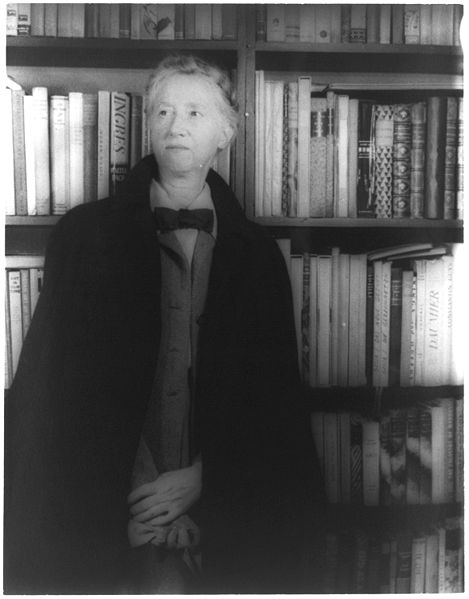
She asked for rhymes. (Photo: Carl Van Vechten)

She had a clipboard that she carried around the house to work on a poem while she was washing dishes, dusting, etc.

Now all her papers, or almost all, are in the Berg Museum in Philadelphia. … the exhibit of manuscripts was marvelous. If ever you want to see examples of hard work, it’s just perfect.

She wrote a poem about the famous racehorse, Tom Fool. The man who arranged the collection had done a beautiful job, in glass cases: dozens of little clippings from the newspapers and photographs of the horse. And then the versions of the poem. It goes on and on and on. The work she put in!

GS: I’d be fascinated to see how she did those inaudible rhymes—whether that came first or kept changing. How that figured.

EB: She was rather contradictory, you know. Very illogical. She would say, “Oh—rhyme is dowdy.” Then other times, when she was translating La Fontaine, she would ask me for a rhyme. If I suggested a rhyme, she would be very pleased. She liked that ballad of mine [“The Burglar of Babylon” –ed.] because it rhymed so well. She admired the rhyme Many Antennae. You could never tell what she was going to like or dislike.

GS: That was the other thing about “The Moose.” There’s that nice casual little six-line stanza, but you establish different interlocking ways of making at least a couple of pairs of rhymes out of the six lines.

EB: I thought it would be regular, but that turned out boring. It seemed almost like a ballad. The first stanza was what I thought of first, and then it just seemed to go. It was so funny, Octavio read it when it was published somewhere. He talks about rhyme a lot. Then he read the first stanza aloud and he said, “Oh, it rhymes! Oh it rhymes some more! Rhymes and rhymes and rhymes!” Robert Lowell is always saying, “I like rhyme.” He tries to go back to rhyme but doesn’t. Says he can’t seem to do it any more. His first poems violently rhymed. You—you’ve written sestinas. Rhymes. I’ve always thought I’d write a villanelle.

GS: But you did

EB: Finally did. Never do it again.

He loved mice. (Photo: Walter Albertin)

And this tidbit about E.E. Cummings:

GS: You seem to write more and more kinds of poems but without exhorting yourself to be suddenly different.

EB: Ha. I know I wish I had written a great deal more. Sometimes I think if I had been born a man I probably would have written more. Dared more, or spent more time at it. I’ve just wasted so much time.

GS: Would it have been extra works in other genres?

EB: No.

GS: Long poems?

EB: No. One or two long poems I’d like to write, but I doubt that I ever will. Well, not really long. Maybe ten pages. That’d be long. I read Robert Penn Warren’s Collected Poems. He wasn’t lazy. And Cummings.

Oh. I did know Cummings. When I lived in the Village, later on, I met him through a friend. He and I had the same maid for two or three years. “Leave a little dirt, Blanche,” he used to say to her. Blanche finally left them. They wouldn’t put traps down for the mice. Mrs. Cummings told her a story about how there was a little mouse that would come out and get right on the bed. They would lie in bed and watch her roll up little balls of wool from the blanket, to make her nest. Well, Blanche was appalled.

GS: Was he sparing the mice on humanitarian, vegetarian principles?

EB: Oh no. Cummings just loved mice. He had several nice poems about mice. He adored them. He used to…

Well, I haven’t said anything profound.

I have, among my books somewhere, I have the Time-Life book she was commissioned to write about Brazil, in which, according to Starbuck, she writes “such wonderful bright clear stories from the history of Brazil.” I’ll have to find it.

The rest of the Ploughshares interview here.  And my own post on Bishop, as remembered by Dana Gioia and Thom Gunn (as well as my own visit to her Brazilian home) is  here.
Literary pilgrimages here and there, and Sylvia Plath in Chalcot Square

Share

Mells, Somerset

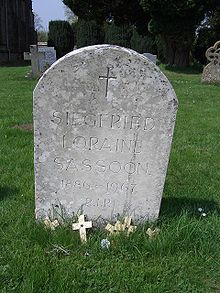
Okay. I’ll admit it’s a habit. When I travel, I often check out literary landmarks — the place where a favorite author was born, died, wrote, or was buried.  I’ve seen Mikhail Bulgakov‘s digs in Kiev, Elizabeth Bishop‘s glorious hideaway outside Samambaia, C.P. Cavafy‘s modestly exotic flat in Alexandria, Siegried Sassoon‘s grave in Somerset — I even visited Boris Pasternak‘s idyllic dacha in Peredelkino.

Milton scholar Martin Evans shares my enthusiasm.

His journeys to London are sometimes literary pilgrimages — he’s intrigued by the fact that his beloved John Milton and (my beloved) John Donne were both born on Bread Street.  He wants to show you these and more literary coincidences for your next trip.  Hence his new website,  Authorial London.  Please, do not be daunted.  It’s not complicated at all.  It’s  a really easy site.  And if you’d rather read about it than look at it, try Corrie Goldman‘s description of the site and how it came about here.

One passage intrigued me:

Nice man, odd habit (Photo: L.A. Cicero)

Readers may be surprised to learn that Sylvia Plath once lived in the same modest house in Primrose Hill in which W.B.Yeats lived many years earlier. In Plath’s time, it was a working class area beset with blue-collar workers and struggling artists. These days, glamorous socialites like Kate Moss and Sienna Miller have been dubbed by the British tabloids as the “Primrose Hill set.”

The website explains that Plath’s apartment consisted of a small bedroom, a kitchen, a living room and a bath. “Plath loved it, at least at the beginning,” the website explains. Here, Plath wrote her great social commentary of mental illness, The Bell Jar.

I was among the readers not surprised by this revelation — in fact, Plath moved to this flat precisely because Yeats had been a previous tenant.

I remember a trip to London — oh, over a decade ago — when I was writing a piece for the San Jose Mercury on the British reception of Sylvia Plath (a bare-bones, unillustrated version of it is here; the August 20, 2000 piece has disappeared from the Mercury‘s website).

The article opened:

Yeats lived here, too

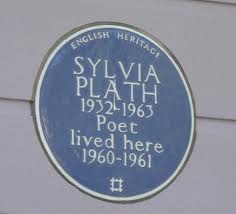
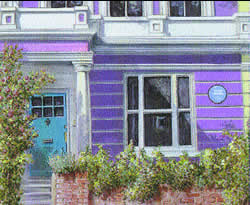
IN THE Primrose Hill area of London, where Gloucester Road and Prince of Wales Road wind back on each other in a hopeless bend, one arrives at 3 Chalcot Square, a turquoise door on a five-story building painted the color of raspberry sorbet.This summer, a simple plaque was added to the building’s facade:

Sylvia Plath
1932-1963
Poet
lived here 1960-1961

Question: Why has it taken Britain nearly 40 years to offer this first, minimalist postmortem recognition for the American poet who spent her last five years in London?

One answer: The British hardly see the need for it. When it comes to Plath, one of America’s most celebrated female poets, the British just don’t get it.

Alas, since the painting of the building has disappeared over the years, we are left with these newer images.  The torquoise door remains — but raspberry sorbet?  I think not.

Elizabeth Bishop centennary: Dana Gioia, Thom Gunn, and my long-ago trip to Samambaia

Share

The young Bishop

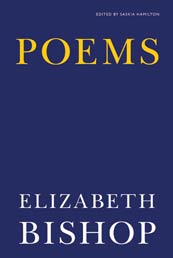
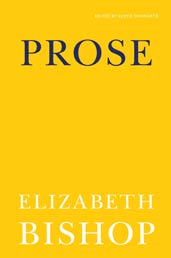
Feb. 8 marks the centennial of Elizabeth Bishop‘s birth, and her publisher Farrar Straus & Giroux, has put out a triple-hitter: a compilation of her letters to and from The New Yorker and a pair of companion volumes called simply Poems and Prose.

Dana Gioia reviews the trio in the Wall Street Journal, here.  He is too modest to say, except in passing, that he studied with Bishop at Harvard, but he’s wrote about it years ago for the New Yorker — an excerpt is here, and it’s definitely worth the read.  As always with Dana, it’s a good general introduction to Bishop and her oeuvre.

But on one point I must quibble:

In 1952, having embarked on a trip around the world, Bishop took ill in Rio de Janeiro. There she met Lota de Macedo Soares, an architect, who became her lover. Bishop quickly settled in Brazil, and the two women lived together for 15 years—the one extended period of domestic stability in Bishop’s life. Then in 1967 the Brazilian idyll was terminated by Soares’s suicide.

Some years ago, I made the trip to Samambaia — outside Petropolis, which is outside Rio — and wrote about it for the Times Literary Supplement on February 8, 2002:

Brazilians use the expression “toda vida” — for all life — where we would say, “continue to the end of the road”. On the narrow, bumpy brick roads around Petropolis, about sixty miles outside Rio de Janeiro, you may indeed feel you will reach life’s end before you reach your destination: Sitio Alcobacinha, the long-time home of the poet Elizabeth Bishop, in the outlying village of Samambaia. You have to stop every few minutes to question a resident, typically one of the ubiquitous men, shirtless and enervated by the Brazilian summer, drinking beer in the street-side cafes of this trendy, if slightly threadbare, former imperial capital. Continue down the left fork, they will tell you, “toda vida”.

Outside Petropolis ... Bishop's home for years

Bishop didn’t quite end her days here. But certainly a crucial era of her life concluded in Samambaia in 1967, when she left Brazil after a sixteen-year stay that began as a lark, endured as a deep and difficult love affair, and ended with a death. She was to return to Brazil, more particularly to the home she bought and refurbished in Ouro Preto, another 150 miles or so due north, but she never stayed long, and visited more and more sporadically, until she finally left Brazil for good in 1974.

Bishop occupied a marginal, even ostracized, place in Brazilian society at the time, and has done since; how odd, then, the current clamour about her life here. An acclaimed play, a spicy fictionalized “biography” and an excellent set of translations of her poems into Portuguese have all appeared in Brazil in the past few years, and a major film is planned. The poet who once described herself as “the loneliest person who ever lived” is hot.

The reasons for this enthusiastic reclamation, and for the original banishment, are many. The obvious one is that Bishop wrote in English, not Portuguese. Yet perhaps two dozen of Bishop’s small output of poems are about Brazil, and she was a cheerleader for Brazilian poetry, publishing her own translations in an influential anthology in 1972. Her feelings about Brazil were perplexed, puritanical, and patronizing. (“As a country I feel it’s hopeless not in the horrible way Mexico is, but just plain lethargic, self-seeking, half-smug, half-crazy, hopeless”, she wrote in a letter.) Brazilians also resent the fact that she never took the trouble to learn Portuguese properly. (“I must take Brazil more seriously and really learn the damned language”, she moaned.) Other reasons are interwoven with the explosive history of Brazil during the period of Bishop’s stay, and with the mercurial temperament of her aristocratic lover, Carlota de Macedo Soares, a self-trained architect and civic planner universally known as Lota. Lota dabbled, however peripherally, in politics, and another cause of Bishop’s banishment was her lover’s controversial friendship (and by association Bishop’s) with Rio de Janeiro’s Governor, Carlos Lacerda, the anti-Communist politician, orator, and sometime journalist.

Aterro: The park Lota designed in Rio

The story was a sad one, ending with Bishop’s affair with a younger woman (the woman she was to spend the rest of her life with, who would remain unnamed for many years) and Lota’s death:

The more active Lota became in civic affairs, as Lacerda appointed her to create Rio’s equivalent of Central Park, the less time she had for her beloved “Cookie”. The more Elizabeth drank, the more overwrought Lota became.

Lota had a breakdown — from the stress of her civic work as well as her fraying relationship — and turned to tranquillizers. … Lota, rejoining Bishop in New York in 1967, took an overdose of valium the morning after her arrival.

When I interviewed Thom Gunn in August 2003 (the interview was published in the Spring 2005 Georgia Review), he described her as an “extremely nice woman, delightful to know.”

TG: The only time I ever saw her drunk was the first time I met her. This was a meeting set up by a friend of hers in San Francisco. I think it was news to me that she’d moved to San Francisco. She wanted to meet me, which was flattering. So I spent an evening with her, and her friend, whose name I have forgotten. The woman she was living with. I guess I shouldn’t say her real name, because everybody calls her “X” or something.

CH: I think it’s come out.

TG: Roxanne. Anyway, whatever it was. She was out of it, she was out of it. I mean, she was so out of it she was not following the conversation, just making strange remarks that had nothing to do with anything. So I received a message—whether it was from this guy, or whether Roxanne phoned me. It said, “Let’s try over,” which was very nice to say. So we did try over and we got on excellently.  She gave the one good party for poets that I’ve ever been at.  Most of those can be obnoxious or boring or pretentious. She knew all these poets—like Robert Duncan—who were just poets. I think it was a Christmas party. We had a great time together.

Dana notes: “She published only five volumes of verse and a short illustrated book on Brazil.”  I have the work-for-hire that she wrote for Life’s “World Library” series on my bookshelf — not her best work, admittedly, but a dutiful tribute to the country she came to love.