
Life in exotic Palo Alto

Share

Avowed Tolstoyan

Palo Alto is often portrayed as a boring and staid address, the southernmost fringes where hip San Francisco fades into the dull heart of Silicon Valley.  The most recent Times Literary Supplement to arrive in my mailbox makes it seem positively exotic.

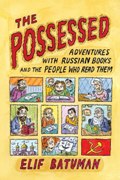
Andrew Kahn reviews Elif Batuman‘s The Possessed: Adventures with Russian Books and the People Who Read Them.  He notes that Batuman is an “avowed Tolstoyan” who nevertheless gets drawn into situations of Dostoevskian hysteria.  Her book is filled with the “unlikely stories and eccentric characters that populate a post-Soviet globalized world from her doorstep in Palo Alto to Samarkand.”
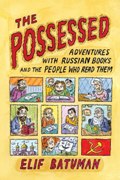
“Few satirists since David Lodge’s campus novels have captured so sparklingly and sometimes cruelly the degree to which human banality (vanity, pettiness, spite, grumpiness) and idealism (selfless sacrifice, steadfastness, loyalty) vie in academic life”:

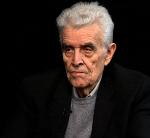
René Girard

“Her final chapter, initially an essay about Dostoevsky’s The Possessed, his twisted satire of Russian provincial life and nihilist conspiracy, becomes a group portrait of fellow graduates at Stanford who, just like that novelist’s characters, suffer from wasting passions, religious fervour and fits of torpor.  Behind their trysts lies the theory of the Stanford guru René Girard that a relationship between two people is mediated through an Other. His views were based in part on his reading of none other than Dostoevsky.  To be gripped by higher education in Batuman’s The Possessed is to be possessed by lovers possessed by Girard possessed by Dostoevsky.  Palo Alto might seem like an unlikely hothouse for a phalanstery of existentialists.  But who could possibly fault (well-funded) graduates for living out the texts they read?”
“Don’t compare yourself to Tolstoy, young lady!”

Share
jaffe_batuman

Elif Batuman

Who knew that comp lit scholars take so much abuse?

Elif Batuman (I wrote about her here and here and here) gave a reading of her The Possessed: Adventures with Russian Books and the People Who Read Them, at Kepler’s Thursday night, and spilled about the angry letter-writers who attack her.  The subject came up as she was reading her introduction, and paused after the passage that gave away the ending of Eugene Onegin.  She apologized to her audience, and then described one correspondent who had written to complain.

“Why did you have to ruin Madame Bovary?” the writer whined. Commenting on Batuman’s well-known expertise in Russian lit, the irate penpal said she expected Batuman to ruin the endings of Russian novels — “that’s your job” — but why the French ones?  “I know you think that everyone has already read it because it was published in 1867, but I personally was doing other things and only got around to it now.”

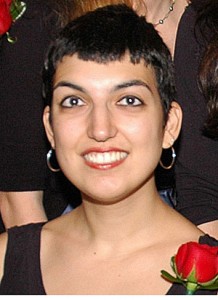
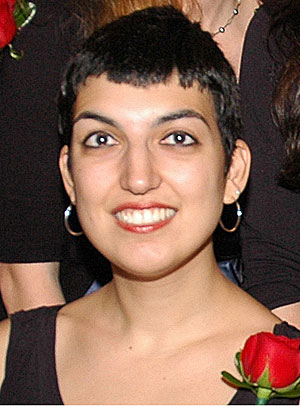
Batuman, an appealing author with a slightly goofy manner and the self-deprecating slouch tall girls acquire in adolescence (she’s six-feet tall), seem an unlikely target for anyone’s wrath.  But she also recalled a peeved listener at a reading who interrupted when she compared the “horrible traumatic story I wanted to recreate for the reader”  to the episode in Anna Karenina where the heroine thinks she will die in childbirth, but doesn’t — a variant of Chekhov’s warning about the gun that had better go off by the last act.  “Don’t compare yourself to Tolstoy, young lady!” she was angrily admonished.

Explaining books came naturally to Batuman, whose career began, in a sense, with her Turkish mother asking her to tell her what these great novels “meant.”  Although her mother was thoroughly fluent in English, she was haunted by the sense that there was something missing in her understanding of books she read in English.

Batuman, whose book includes a large section on Samarkand, was interviewed by the Uzbek National Radio last week.  “Maybe I’ll get a lot of angry calls,”elif2 she worried.

During the question-and-answer period, she was asked if Russian novel-lovers fall into Dostoevsky-Tolstoy camps, where does she place herself?  Batuman answered that Dostoevsky is the literary equivalent to theater, with “allegory intensified 10,000 times.”  Tolstoy is the stuff of movies, with costumes, elaborate scenery, and orchestral score.  She falls for Tolstoy.  “Tolstoy is girlie — he wouldn’t like my saying that, but he’s not here anymore, any more than the the Uzbeks are.”‘

She was also asked if she is going to write a Russian novel.  “The Russians already did that,” she replied.

But Batuman is thinking about a novel next.  “Maybe see you all in another 15 years!”

“Spoiled Avocado Professor” and the “six-foot tall first-generation Turkish woman”

Share

More reviews of Terry Castle’s The Professor and Other Writings and Elif Batuman’s The Possessed: Adventures with Russian Books and the People Who Read Them — in New York magazine here, and The New York Times here.

UPDATE:  Reviews of The Professor pouring from the MSM in a Vesuvial flow:

  • At the New Republic here.
  • At Canada’s National Post here.
  • And the Huffington Post picked up the San Francisco Chronicle review here.
  • And there’s a podcast from a Santa Cruz radio interview here.

(New Republic review off the “wow” meter: “The Professor goes places no book ever written about professors has ever gone. And it understands more about the academic vocation, and the art of self-examination, than the shelf of grave and socially responsible studies of and by professors that have appeared in recent years. It is a superb weapon for tearing up that soul-destroying cardboard figure of fun its title names.”)

Meanwhile, Elif Batuman is guest-posting at the New Yorker here.

UPDATE:

And … and … and … Batuman’s book is reviewed in the San Francisco Chronicle here:  ” … Batuman’s collection of ‘many unclear purposes’ is comic and baggy and wayward…”

ANOTHER UPDATE:

And here in the Christian Science Monitor:  “Part sleuth, part pundit, Batuman both plays the game of literary exegesis and skewers it”:

When a colleague maintains that Babel’s “Red Cavalry” cycle would never be totally accessible to her because of its “specifically Jewish alienation,” Batuman responds, “Right…. As a six-foot-tall first-generation Turkish woman growing up in New Jersey, I cannot possibly know as much about alienation as you, a short American Jew.” It goes right over his head.

Never knew literary conferences could be so lively…

Share
babel

Isaac Babel

Literary conferences are mostly staid affairs, opportunities for academics to exhibit themselves.  But not always.

I discussed Elif Batuman’s book a few days ago here.  Her new book, The Possessed: Adventures With Russian Books and the People Who Read Them, was reviewed yesterday in the Los Angeles Times here.  Clearly, I should have made an effort to attend The Enigma of Isaac Babel: International Conference, held almost exactly six years ago.  A few highlights from that memorable event:

“Babel in California” tells how Batuman fell in love with Isaac Babel, the most electric of Russian writers, then shows that idealized literary love bumping up against actual life in the hilarious, chastening shape of a Babel conference at Stanford organized by her mentor, the great Babelogist Grisha Freidin. Batuman helps with an exhibit and discovers in the bowels of Stanford’s Hoover library a true wonderland of previously hidden connections between Babel and the 1933 movie “King Kong.” She’s sent to the airport to pick up Babel’s second wife and one of his daughters, two tired Russian women who keep firing questions about the McDonald’s Happy Meal toy, a tiny stuffed Eeyore wearing a tiger suit, hanging from the mirror of the car that Batuman is driving.

Conference panels end in pandemonium; Russian scholars, upset by the presence of two Chinese filmmakers preparing a script from Babel elif2stories, mutter “We don’t mess with your ‘I-Ching’ “; and there’s a dinner “straight out of Dostoyevsky” in which Batuman and Freidin get the evil eye from a vain English translator in whose acclaimed Babel collection edition they have discovered mistakes. Yet even this isn’t the marvelous climax of the dinner, which comes when Babel’s daughter by his first wife stares at Babel’s second wife and shouts “THAT OLD WITCH WILL BURY US ALL.”

The writer, Richard Rayner, describes Babel as “the most electric of Russian writers.”  Not sure it’s the adjective I would have chosen (more electric than, say, Tsvetaeva?)  I wrote about Grisha Freidin’s work on the doomed Soviet writer today here.  See what you think.

The upshot:  Rayner praise’s Batuman’s “dazzling flair and originality”:  “If Susan Sontag had coupled with Buster Keaton, their prodigiously gifted love child might have written this book.”

Don’t “murder your darlings”

Share

elifElif Batuman describes her circuitous literary career path in “Confessions of an Accidental Literary Scholar,” here, in the Chronicle of Higher Education.

Her comments on the state of the American short story:

I realized that I would greatly prefer to think of literature as a profession, an art, a science, or pretty much anything else, rather than a craft. What did craft ever try to say about the world, the human condition, or the search for meaning? All it had were its negative dictates: “Show, don’t tell”; “Murder your darlings”; “Omit needless words.” As if writing were a matter of overcoming bad habits—of omitting needless words.

I thought it was the dictate of craft that had pared many of the Best American stories to a nearly unreadable core of brisk verbs and vivid nouns—like entries in a contest to identify as many concrete entities as possible, in the fewest possible words. The first sentences were crammed with so many specificities, exceptions, subverted expectations, and minor collisions that one half expected to learn they were acrostics, or had been written without using the letter e. They all began in medias res. Often, they answered the “five W’s and one H.”

This month’s article in Stanford Magazine describes how the editor of the prestigious magazine n+1 asked her to write after reading her piece in the Harvard Advocate. When “Babel in California,” about a conference at Stanford, appeared in 2005, it caught the attention of Slavophile David Remnick, editor of the New Yorker, who commissioned her to write a piece on Thai kickboxing.

elif2Describing her turn to the ivory tower, she writes: “I stopped believing that ‘theory’ had the power to ruin literature for anyone, or that it was possible to compromise something you loved by studying it. Was love really such a tenuous thing? Wasn’t the point of love that it made you want to learn more, to immerse yourself, to become possessed?”

Not surprisingly then, her new book is called The Possessed: Adventures With Russian Books and the People Who Read Them, published by Farrar, Straus & Giroux this month.

She’ll be giving a reading at 7.30 p.m. on Thursday, March 11, at Kepler’s.  You can read a bit from her new book — “The Old Uzbeks Had a Word for It” — at the bottom of the page here.