
“Are most of your stars out?” Eavan Boland offers advice to young writers at Hopwood Awards.

Share
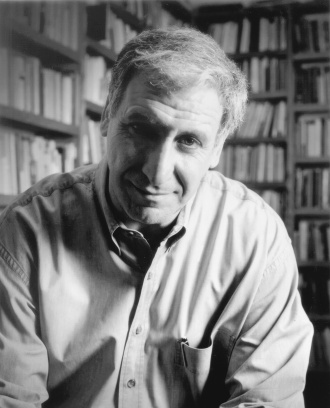
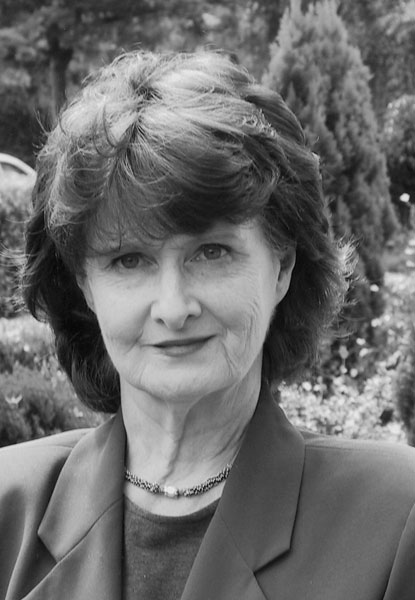
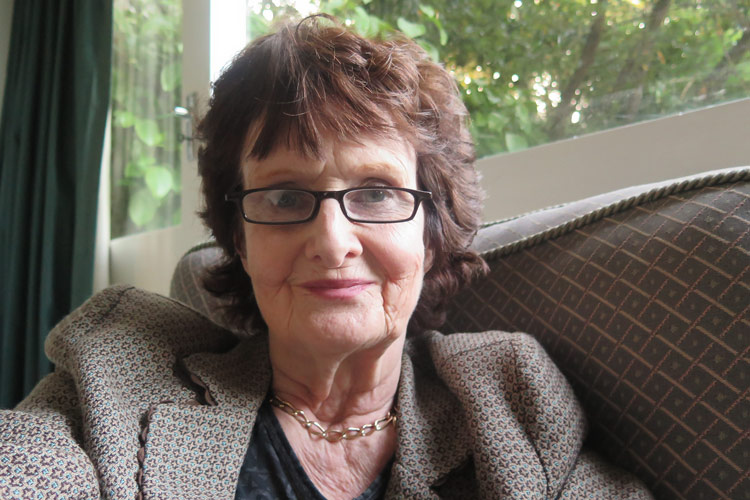
Eavan Boland, the Bella Mabury and Eloise Mabury Knapp Professor in Humanities

She oughta know. (Photo courtesy Eavan Boland)

I have an especial fondness for the Avery Hopwood awards at the University of Michigan. During my days as a student in Ann Arbor, I was awarded two – just like playwright Arthur Miller. That might be the only thing we have in common. But the early encouragement meant a lot.

So I was very pleased that Stanford’s Eavan Bolandone of Ireland’s leading poets, delivered this year’s address on April 22. Her subject: what advice can older writers give younger ones? She has her doubts about how far words can go, but I like Nicholas Del Banco‘s comment, which she cited: “the conflicted self is crucial.” He was commenting about novels – but I think the comment embraces all genres (so does she).

Her thoughts on the subject took her back to Dublin – “improbably a city where lightning had struck. In a figurative, artistic way that is.” She described this story between two Irish writers in a a smoking room in a Dublin café, in 1902:

The meeting took place on O’Connell Street which was then Sackville Street. It was a wide street in a garrison city which was still under British rule and would remain so for fourteen years. And all of this in a country, which was considered a backwater of Europe. Not a country that people – except for a few deep inside its secret societies – held out much hope for. The meeting was between two men, two writers, who had never met before. One was in his middle thirties and one a mere twenty years of age.

The two men were William Yeats and the very young James Joyce. And they were not equals. Yeats was already an iconic figure. He had founded the Irish theater. He had written admired poetry. Joyce had yet to write anything important. When I think of the hazards of this sort of advice I think of what happened next. Before any conversation could be started, James Joyce leaned across the table to William Yeats and said, “You are too old for me to help you.”

Then she told her own story, also in Dublin, decades later when she was a student at Trinity College, studying English literature in a place where poetry was treated as “a canonical fact.” She had no idea that Irish poetry had “been forced to shine out of a darkness with effort and pain.”
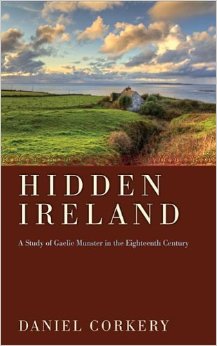
rua2And then at the age of 18 I picked up a book called The Hidden Ireland by a writer I had never heard of, Daniel Corkery. It had been published in 1925. The book follows the shattered narrative of the Cromwellian clearances in Ireland in the 18th century. It alights in their aftermath in a small part of Gaelic Munster, which is called Slieve Luachra, a mountainous area on the Cork Kerry border. Corkery writes about poets such as Aodhagán Ó Rathaille and Eoghan Rua Ó Súilleabháin. He records that they spoke the Irish language and wrote their poetry in it. That they were witnesses to the destruction of that language and the breaking apart of the Bardic order. “What Pindar is to Greece, what Burns is to Scotland  … that and much more is Eoghan Ruadh to Ireland,” wrote Corkery.

That evening as I read on I could see what Robert Penn Warren meant when he said “the poem is not a thing we see—it is, rather, a light by which we may see.” I stopped on one page, and at one passage. Everything I was or hoped to be listened to what those words said.

Here is the passage the passage from Corkery that turned her on and, perhaps, changed her life: “Then we must also remember that these poets were simple men, living as peasants in rural surroundings; some of them, probably, never saw a city; not only this, but they were all poor men, very often sore-troubled where and how to find shelter, clothing, food, at the end of a day’s tramping. Their native culture is ancient, harking back to pre-Renaissance standards; but there is no inflow of books from outside to impregnate it with new thoughts. Their language is dying: around them is the drip, drip of callous decay: famine overtakes famine, or the people are cleared from the land to make room for bullocks. The rocks in hidden mountain clefts are the only altars left to them; and teaching is a felony.”

“Not to excuse, but to explain them, are these facts mentioned; for their poetry, though doubtless the poorest chapter in .the book of Irish literature, is in itself no poor thing that needs excuse: it is, contrariwise, a rich thing, a marvelous inheritance, bright with music, flushed with colour, deep with human feeling. To see it against the dark world that threw it up, is to be astonished, if not dazzled.”
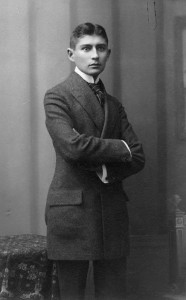
Kafka

Merciless obsessions.

Eavan Boland continues: “I can remember where I was when I read this. Even now I ask myself – why was I so moved by an assertion nobody could prove; about poets from another world, most of them lost to time and history? I believe I was moved because it was the first time I had come across a bold statement about the importance of the artist ‘s life. It was the first time I had read that language and literature could testify in and through time; that such testimony could pierce the darkness of a history. It was the first time anyone had expressed the dignity of the life I hoped I would live.”

The rest led her to “a life lived in and through language, with all its challenge and reward. This won’t change and has never changed.” Let me close with some of more of the great advice from great writers she cited. This one, from the Prague-born German-language author Franz Kafka: “Don’t bend; don’t water it down; don’t try to make it logical; don’t edit your own soul according to the fashion. Rather, follow your most intense obsessions mercilessly.”
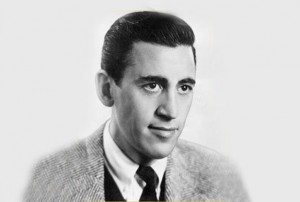
"Lame" himself

“Were you busy writing your heart out?”

And this piece closer to home, from America’s J.D. Salinger: “Do you know what you will be asked when you die? Let me tell you first what you won’t be asked. You won’t be asked if you were working on a wonderful, moving piece of writing when you died. You won’t be asked if it was long or short, sad or funny, published or unpublished. You won’t be asked if you were in good or bad form while you were working on it. You won’t even be asked if it was the one piece of writing you would have been working on if you had known your time would be up when it was finished – I think only poor Soren K. will get asked that. I’m so sure you’ll only get asked two questions. Were most of your stars out? Were you busy writing your heart out? If only you knew how easy it would be for you to say yes to both questions.”
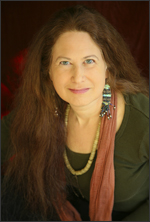
 

Seth Abramson dons “Kick me!” sign; makes list of top 200 advocates for poetry.

Share
Jane-Hirshfield

Jane made the cut.

Seth Abramson is an intrepid man in a country that publishes 20,000 books of poetry each decade, among 75,000 poets (who counts them, and how?) Here’s why: he has issued a list of “The Top 200 Advocates for Poetry (2013)” in the Huffington Post – it’s here, as well as on dartboards across the U.S.  We all love lists, of course, and everyone has an opinion on how they should be done – this one, particularly.  Two hundred is long enough to give the impression that everyone ought to be included, but short enough that not everyone can be. So Abramson’s gesture is akin to wearing a “Kick me!” sign on your back. He begins by almost apologizing: “The poets favored by one reader will invariably not be the poets favored by another; in fact, it’s getting harder and harder to find two readers whose reading interests or even reading lists exhibit much overlap at all. Too many such lists, such as the widely- and justly-panned one recently published by Flavorwire, exhibit obvious age, race, ethnicity, and (particularly) geographic biases.”  We would like to fault him, first of all, for hyphening an adverb that ends in “ly,” which is never done – moreover, it’s dangerous to begin a list by dissing someone else’s. In that way, you’ve made your first enemy already.

Wilbur2

Lifetime achievement, for sure.

He continues for some paragraphs in the same vein: “As a contemporary poetry reviewer who publishes his review-essays in The Huffington Post, I have no special access to knowledge of who is or isn’t doing the most to be an advocate for American poetry (a term I define very broadly) on a national or global scale. While I’m lucky to have access to many more published poetry collections than most poets or poetry readers do, as like any reviewer I regularly receive poetry collections in the mail from U.S. and international publishers, because the list below isn’t intended to detail who’s presently writing the best poetry, but is rather simply a list of who’s doing the best to advocate for American poetry by any and all means (including by writing it, but by no means limited to the authorial function), I’m not in a much better position than others are to generate a list of the most influential poetry advocates in America and beyond.”

Well, sure, I guess.  That said, we were pleased to see a number of friends and colleagues on the list – Kay Ryan, Jane Hirshfield,  W.S. Merwin, Don Share, Ron Silliman, Helen Vendler, Heather McHugh, Allison Joseph, Eavan Boland, Mark McGurl – and nonagenarian Richard Wilbur, a lifetime achievement award, for sure.

hirsch

Where’s Ed?

Abramson qualifies that “the list below is neither exhaustive nor authoritative nor superlative. I have no doubt that I’ve missed a number of important names, due either to forgetfulness or an unconscious bias or simply (and most likely) sheer ignorance of who’s doing what across the vast landscape of American literature. … Those poets and allies of poetry offering contributions to American poetry commensurate with the contributions of the individuals listed below should therefore consider themselves honorary members of the ‘Top 200 Advocates for American Poetry” list as well.’

RSGWYNNThen he issued this invitation: “I strongly encourage readers of this list to contribute their own names to the comment section below the article.”  Needless to say, there were a number of people ready to take him up on the offer, including other friends’ names.  What?  No Edward Hirsch?  What?  No Robert Hass?  And no mention of Dana Gioia, whose work at the NEA was tireless?

Naturally, Humble Moi didn’t make the list – but to my surprise, I did make it in the first few comments in the section afterward, for which I’m grateful to R.S. Gwynn, another friend, who did make the list:

“I’m happy to be listed here (even though I’d like to be known as ‘poet and critic’) but I miss the presence of such names as Alfred Corn, the late Tom Disch, Dana Gioia, Cynthia Haven, X. J. Kennedy, and David Mason, all of whom are (or were in Tom’s case) great advocates.

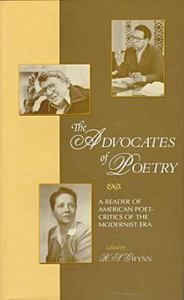
As a small plug, I’d like to mention that I edited a book of the works of modernist poet-critics some years ago. Its title?  The Advocates of Poetry.

Just for that, here’s a picture of Sam Gwynn’s book, which discusses John Crowe Ransom, Randall Jarrell, Allen Tate, John Ciardi, and Robert Penn Warren – great advocates of poetry all.


A morbid anniversary: two new books mark the half-century since Sylvia Plath’s suicide

Share

plath6Gosh, Terry Castle is a brave writer.  And a bracing one.  She is still recovering from the bashing over her Susan Sontag piece of oh, a decade ago, and here she leaps into the fray with a fire-eating piece on the Sylvia Plath morass in this week’s New York Review of Books. The avalanche of letters she’s triggered may never, ever stop.  She begins:

This year marks the fiftieth anniversary of the suicide of the poet Sylvia Plath (1932–1963), and as one might expect given the sensational details of her short and appalling life, both her US and UK publishers are celebrating the occasion with a kind of vulpine festivity. Faber has just issued an “anniversary” edition of The Bell Jar (1963)—the harrowing autobiographical novel Plath had just published at the time of her death—and has been marketing it, distastefully enough, as “chick lit” avant la lettre. A clutch of new biographies … are likewise among the morbid tie-ins. “Sylvia Plath may be the most fascinating literary figure of the twentieth century”—so the publisher’s copy for one of them gushes. “Even now, fifty years after her death, writers, students, and critics alike are enthralled by the details of her 1963 suicide and her volatile relationship with Ted Hughes.” Such ambulance-chasing fans no doubt also dote on Frida Kahlo’s near-fatal impaling by the tram rail.

Given this opening, it’s not hard to figure out that Terry is not a Plath fan, given the poet’s “shocking necrophilia and refusal of life.”  She claims “Plath’s verse lacks wisdom and humor and the power to console. She invariably scours away anything sane or good-natured.”  I wrote last year (here) about underestimating Plath’s over-the-top sense of the ridiculous – and that her “Daddy” was meant to be dark and above all fun, anticipating Mel Brooks‘s The Producers by five years.

I’m glad April Bernard took up the cry earlier this month in the New York Review of Books:

Plath can cause embarrassment through overstatement—going a little too far is her signature move. (One line from “Elm,” another late poem, that best captures her veer towards overstatement is, “I have suffered the atrocity of sunsets.”) But if we consider embarrassment as an aesthetic strategy rather than as a mistake, we begin to see how funny Plath often is. I confess I had read and admired Plath for several years before her humor struck me full-force—the first time I heard a now-famous BBC radio recording in which she reads “Daddy” with a discernible wave of laughter in her voice. (And yes, there is also rage, and profound sorrow.) I re-read the poem, and realized for the first time that her exaggerations and preposterous claims, which link the Holocaust with an American middle-class “family romance,” were meant to be an elaborate joke, one in extreme bad taste, right on the edge of kitsch.

castle2

Not a fan.

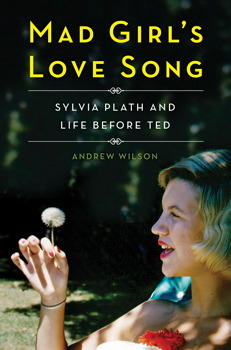
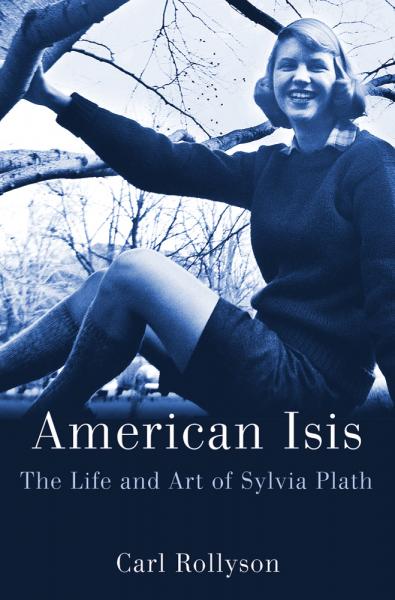
Terry’s task at hand is two new additions to the Plath library:  Carl Rollysons “diverting, gossipy” American Isis: The Life and Art of Sylvia Plath, which “bounces along, jalopy-like, at a madcap pace. No slack metaphor, shameless cliché, or laughable anachronism can slow the authorial juggernaut.”  Curiously enough, she doesn’t mention that one of Rollyson’s more controversial efforts was a biography of Terry’s own bête noir, Sontag.) Andrew Wilson‘s more judicious work, Mad Girl’s Love Song: Sylvia Plath and Life Before Ted, turns over a few new stones – he even had the partial cooperation of Plath’s so-far-silent lover Richard Sassoon.

Could it all have been different?  Counterfactuals abound. A chance meeting at a party Ted Hughes hadn’t planned on attending, interrupting a serious affair in Paris with Sassoon.  Terry writes:

plath5A striking effect of the chronology is to take away some of the fatal glamour one associates with Hughes. He seems less the craggy, carnal bogeyman of Plath mythology here and more just another contender for Plath’s widely broadcast sexual charms. It all could have gone a different way. “Plath’s feelings for Sassoon were so intense,” Wilson argues, “that, had Richard decided to stay in Paris, it’s highly probable that [Plath] would never have returned to England to marry Hughes. It was his rejection that catapulted Sylvia into Ted’s arms.” Waiting in vain for Sassoon to return to Paris, she wrote to a friend, “If he would come today I would stay here with him.”

And here once again, the fancy that Wilson’s book—a study at once stately and strange—so often elicits: how easily the “life before Ted” might have become the “life without Ted.” Would such a tweak in the course of destiny have meant more years—with or without poems—for Sylvia? Sanity, self-possession, and an escape from the prescribed doom? Or merely some other kind of agony and mental collapse?

She tips her hat to a former colleague: with about fifteen Plath biographies in English to date — “some adversarial in tone, others less so” – then rates Diane Middlebrook’s elegiac Her Husband: Ted Hughes and Sylvia Plath—A Marriage as “one of the more balanced and sensible.”  She also credits Eavan Boland for her kindly assessment of Plath’s legacy.  But she has limits to her charity.

At times, Terry seems to be judging the person rather than the poet, even blaming Plath for “creating tragic inhuman mischief from beyond the grave,” with the suicide of her son a few years ago, after a largely lonely life.  She hints that he lacked a mother’s love.  It is a great misfortune to lose one’s mother so young.  But … didn’t he also have a dad somewhere?

Read all of Terry Castle’s piece here. It’s better than coffee for a jolt.  Really.

Poet Eavan Boland bags PEN prize

Share

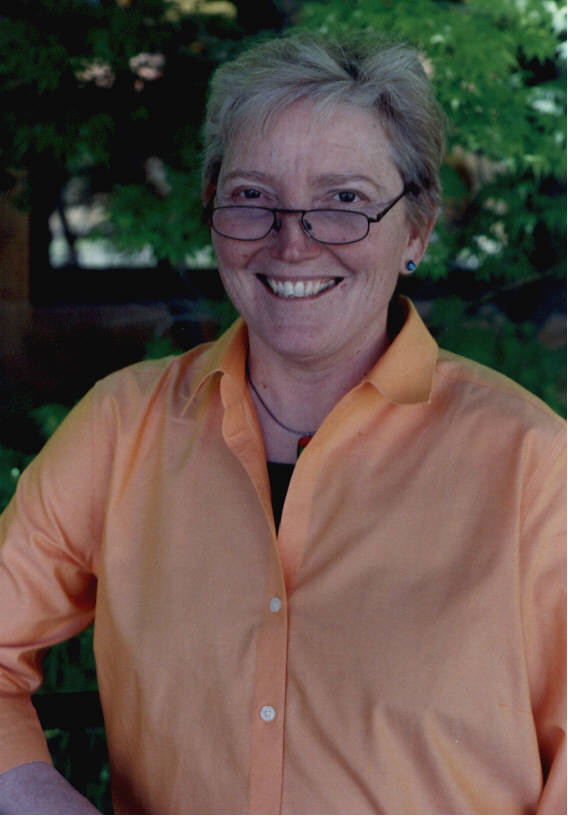
A winner

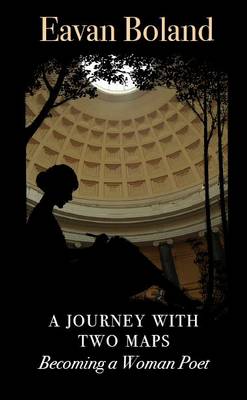
I’m on the PEN mailing list, so I got this one hot off the presses last week: Eavan Boland, director of Stanford’s Creative Writing program and one of Ireland’s leading poets, has won a 2012 PEN award for creative nonfiction with her acclaimed collection of essays, A Journey with Two Maps: Becoming a Woman Poet, published last year by W.W. Norton.

PEN Center USA will fete three honorees and give 11 awards in particular genres at its annual awards festival on Oct. 22 in Beverly Hills. Grove/Atlantic Press publisher (and Stanford alum) Morgan Entrekin will receive the Award of Honor; Joyce Carol Oates will receive the Lifetime Achievement Award and CBS correspondent Lara Logan will receive the Freedom to Write Award.

In addition to Boland’s award for creative nonfiction, the other genre awards are given for poetry, fiction, research nonfiction, children’s literature, graphic literature, journalism, translation, drama, teleplay and screenplay.

“I’m really honored to get the award. And especially from PEN, which is an institution that does so much to advocate for writers,” said Boland.

Boland has published 10 volumes of poetry – most recently New Collected Poems (2008) and Domestic Violence (2007) and an earlier collected volume, An Origin Like Water: Collected Poems 1967-87 (1996). She has received the Lannan Award for Poetry and an American Ireland Fund Literary Award. She has published a previous volume of prose, Object Lessons: The Life of the Woman and the Poet in Our Time.

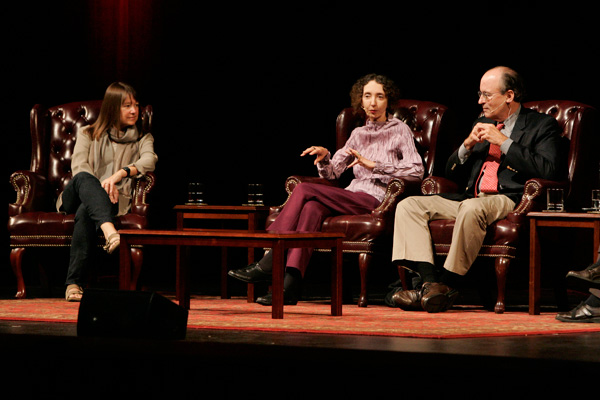
Joyce Carol Oates at Stanford, with Anne Fadiman and Tracy Kidder

A Journey with Two Maps: Becoming a Woman Poet traces Boland’s own development as a poet, and also offers insights into the work of Sylvia Plath, Gwendolyn Brooks, Adrienne Rich, Elizabeth Bishop and the German poet Elizabeth Langässer.

Irish author Colm Tóibín named it a “favorite book” in the Irish Times last year, calling it “urgent and wise.” Britain’s Poetry Review called her “one of the finest and boldest poets of the last half century.”

Boland balances two worlds: free-spirited California and Ireland, a land of historical persecution and occupation, with its “painful memory of a poetry whose archive was its audience,” she said in an Academy of American Poets interview.

“I sought out American poetry because of that powerful, inclusive diversity,” she said. “I always remember I’m an Irish poet there, but at the same time some part of my sense of poetry feels very confirmed by the American achievement.”

Stanford writers bag an awful lot of prizes this year

Share

It’s easy to forget the caliber of the people you are rubbing elbows with every day.  So let me take a moment to blow their collective horn – especially since they’re so humble.  Many of you may have seen the recent New Yorker article about high-tech Stanford’s close relationship with Silicon Valley.  Fewer people, alas, know that it also has one of the top-rated faculties in English and Creative Writing anywhere.

This year has been a banner year.  Stanford and its alums have bagged a Pulitzer, a Ruth Lilly Prize, a National Book Award, a Guggenheim, a presidential awards.   Everything short of a Nobel. Are you listening, Stockholm?

From a piece I wrote recently:

Turning 40 is a landmark for many, and poet Tracy Smith was no exception. She planned to celebrate in style with champagne. But what she didn’t expect was the biggest present ever: her husband told her The New York Timeswebsite had just announced that she’d won this year’s Pulitzer Prize in poetry.The new Pulitzer for Smith, a former Wallace Stegner Fellow at Stanford, is one of several awards that have put a spotlight on Stanford’s top-ranked English Department and its renowned Creative Writing Program– a sometimes overlooked triumph on a campus that more often prides itself on its technological savvy.

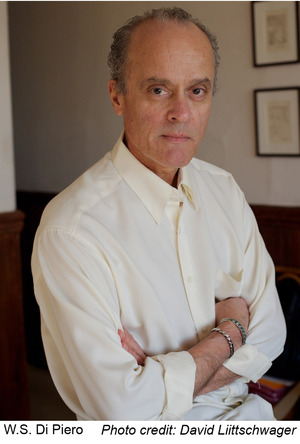
Simone Di Piero, Photo credit: David LiittschwagerPoet W.S. Di Piero got the news that he had won the 2012 Ruth Lilly Poetry Prize on April 1.  “They called me on April Fools Day.  So I had to ask twice if they were serious.  They said it was on the up and up.”

“In the land of poetry it’s a big prize,” said the emeritus professor of English.  His new collection of poetry, Nitro Nights, was published in December, but the $100,000 award honors lifetime accomplishments.

According to Christian Wiman, editor of Poetry magazine, “He wakes up the language, and in doing so wakes up his readers, whose lives are suddenly sharper and larger than they were before. He’s a great poet whose work is just beginning to get the wide audience it deserves.”

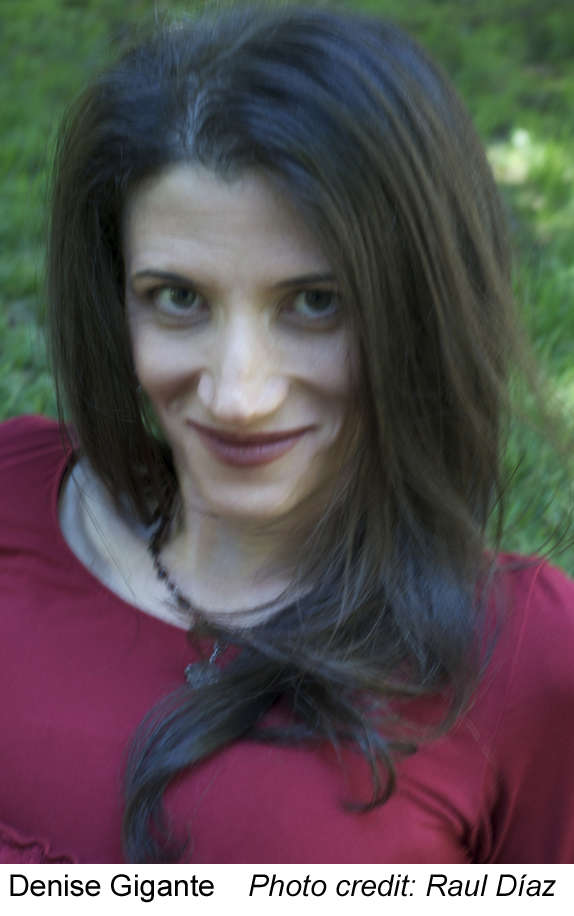
Poets weren’t the only ones to get prizes: English Prof. Denise Gigante got a coveted Guggenheim Fellowship, topping a year that had already brought stunning accolades: The Keats Brothers: The Life of John and George, was named a New York Times Notable Book for 2011 and an Editor’s Choice in The New York Times Book Review.

Denise Gigante, photo credit: Raul DiazThe Guggenheim will give her time to work on her new book, The Book Madness: Charles Lamb’s Midnight Darlings in New York, a study of 19th century bibliomania, the formation of important libraries and literary culture in America, and the half-forgotten English essayist Charles Lamb.
“Americans were fascinated with the figures of British poets,” said Gigante.  “Culture was imported from Britain – that’s not true today.  And library-makers were the cultural brokers of the time.”  Her book will be “an experiment in literary critical form,” she said.

Gavin Jones, English Department chair, said, “Denise is the rare scholar with the power to tell a story that’s also the biography of an age and an intellectual culture.”

The list of awards continues:  President Obama awarded Prof. Ramón Saldívar a National Humanities medal in February. (Arnold Rampersad, emeritus professor of English, received the same award a year before.)

The English Department has consistently been at the top of U.S. News and World Report rankings of graduate programs. The creative writing program, which does not confer an MFA, is considered by many to be the best in the country.  Its Stegner fellows form a tight-knit, ongoing society.

Pulitzer prizewinner Smith, at Stanford from 1997 to 1999, said her years at Stanford “pushed me to move towards a mature sense of what I was doing. To be honest, I didn’t know how to do that.”

The program’s focus on moving from manuscript to book “frees you from the person you were as a student and into what you will be as a poet.”

Smith, now an assistant professor at Princeton, was awarded for her collection Life on Mars. The New York Times called her “a poet of extraordinary range and ambition” whose book “first sends us out into the magnificent chill of the imagination and then returns us to ourselves, both changed and consoled.”

Although many may have seen The Descendants, a critically praised film with George Clooney that won two Golden Globe awards (for best picture and best actor in drama), few know it was born in the English Department. Kaui Hart Hemmings, a Stegner Fellow from 2002-2004, was working on the novel while at Stanford.

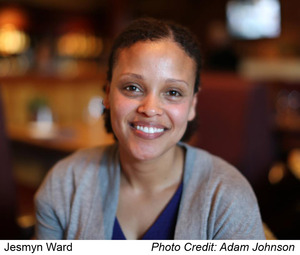
Jesmyn Ward, photo credit: Adam JohnsonJesmyn Ward became the out-of-nowhere winner of the prestigious National Book Award for 2011 with Salvage the Bones, a novel about a working-class family confronting the disaster of Hurricane Katrina.

Novelist Tobias Wolff said, “One of the great pleasures of teaching in the Stegner program is seeing the manuscripts we discuss in our workshops turn into books, distinguished, remarkable books, and recognized as such by the larger world.”

“Jesmyn Ward’s recent success is but one of too many examples to list here,” said the professor of English.

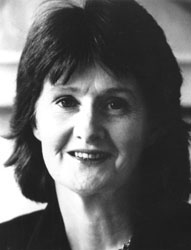
Eavan Boland, one of Ireland’s leading poets and director of the Creative Writing Program, called it “a stellar year” for the English department – but cautioned that  “our entire focus has to be on the writing and not the recognition. The writing life is an end in itself – that’s what the program stands for.”

“We have many outstanding Stegners who don’t win awards and go on to be significant writers through their commitment to that life and its outcomes.”

For the award-winners, however, the recognition certainly doesn’t hurt: “I’ve done a lot of the research, but the writing needs the fellowship,” said Gigante. “I needed to have this award. The timing seems perfect.”

For Smith, now working on a memoir, the birthday bash was even bigger than she had planned. “A lot of champagne was involved,” said Smith. “It was put to good use, very quickly.”

What will Di Piero do with all the money? “Of course the first thing that came to mind a really hot, fast car.  I don’t own one, so if I’m going to buy one, I should get serious.”

“But in order to buy a car, I need a parking space, and to have a parking space, I should buy a house. And even the Lilly prize doesn’t go far enough to buy a house in San Francisco.”

Eavan Boland’s new book: “her brilliance justifies the journey”

Share

I’ve only met the eminent Irish poet Eavan Boland a handful of times, but we have one unexpected thing in common:  both our books – her A Journey with Two Maps: Becoming a Woman Poet and my  An Invisible Rope: Portraits of Czeslaw Milosz – were named in Publisher’s Weekly top ten books for the spring, in the “Belles Lettres and Reflections” category.  (You can read my euphoria here.)

I was reviewed in the Times Literary Supplement in May, and on June 10, so was she.  High praise from Abigail Deutsch:

“Delightfully surprising critiques spring from her analysis. The bland poet Speranza, Boland writes, subjected her poems to a ‘word-bath of acid, in which details and subtleties are dissolved”. Of Charlotte Mew, Boland notes: ‘There is a sort of salt and spray about reading Mew for the first time: her poems are not like anything else’. This formulation conveys the reader’s proximity to something at once thrilling and perhaps threatening. Boland has a rare gift for providing critical evaluations so compressed and illustrative that they approach poetry themselves.

That control sometimes slips. Boland takes a roundabout route through this volume; before introducing her ideas, she will often explain why we might dismiss them and point out why we shouldn’t. Her terms can be vague, and her organization tortuous. She loops about the concept of the ‘domestic poem’, for instance, several times. But when she finally homes in – using the concept of the sublime to explain the disparagement of the domestic – her brilliance justifies the journey.”

A Poetry Foundation interview with Eavan, “Of Antibiotics and iPods,” is here.