
Dana Gioia: running the long race

Featured

Share

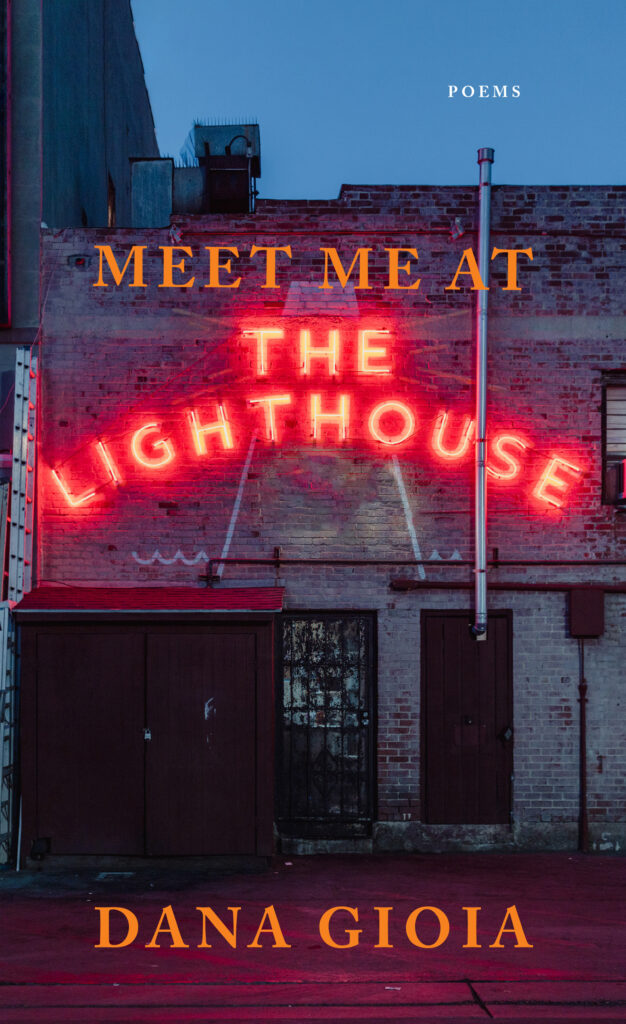
A first, incandescent review for Dana Gioia‘s brand new collection, Meet Me At The Lighthouse (Graywolf). Seth Wieck‘s write-up, “Dana Gioia’s Bright Twilight,” is in included the newest issue of The Front Porch Republic, a blog (and book publisher) launched in 2009 with contributors, known as “porchers,” focusing on concepts of community, place, decentralism, and conservation. And sometimes they talk about poetry.

Poetry is a profession that bears well into the seventh decade of life and beyond – better than being an astronaut or Olympic gymnast, or pretty much any other non-literary profession. Dana is playing the long game, and he isn’t missing a beat, metrical or metaphorical. As Wieck writes, “Rather, he’s heeding Eliot’s warning. Don’t turn aside. Take up your lantern and charge into the darkness. Sing all the way into the afterlife. Gioia does not linger on the threshold of death; he wants to be our guide through the Inferno and beyond.” (Please be reassured, gentle reader, Dana is in the best of health.)

An excerpt:

“The book closes with the 14-page poem “The Underworld,” giving it a weight no other poem in the collection receives. The 17 seven-line stanzas return us to the afterlife with which the book opened. However, instead of a lively jazz club, now the ‘you’ is seated on a silent train commute to the Underworld. It flips the tropes of those ancient epics where a hero interviews a long train of shades, hoping to garner wisdom. In Gioia’s Underworld, ‘You’ speak to no one. There are no fantastical creatures, ‘no triple-headed dogs…no Titans bound in chains.’ There are no malebolges stuffed with squirming sufferers. There is only the commute full of dead-eyed passengers isolated from one another, turned to stone as if the Gorgon had gazed back from their morning mirrors, or the screens in their palms.
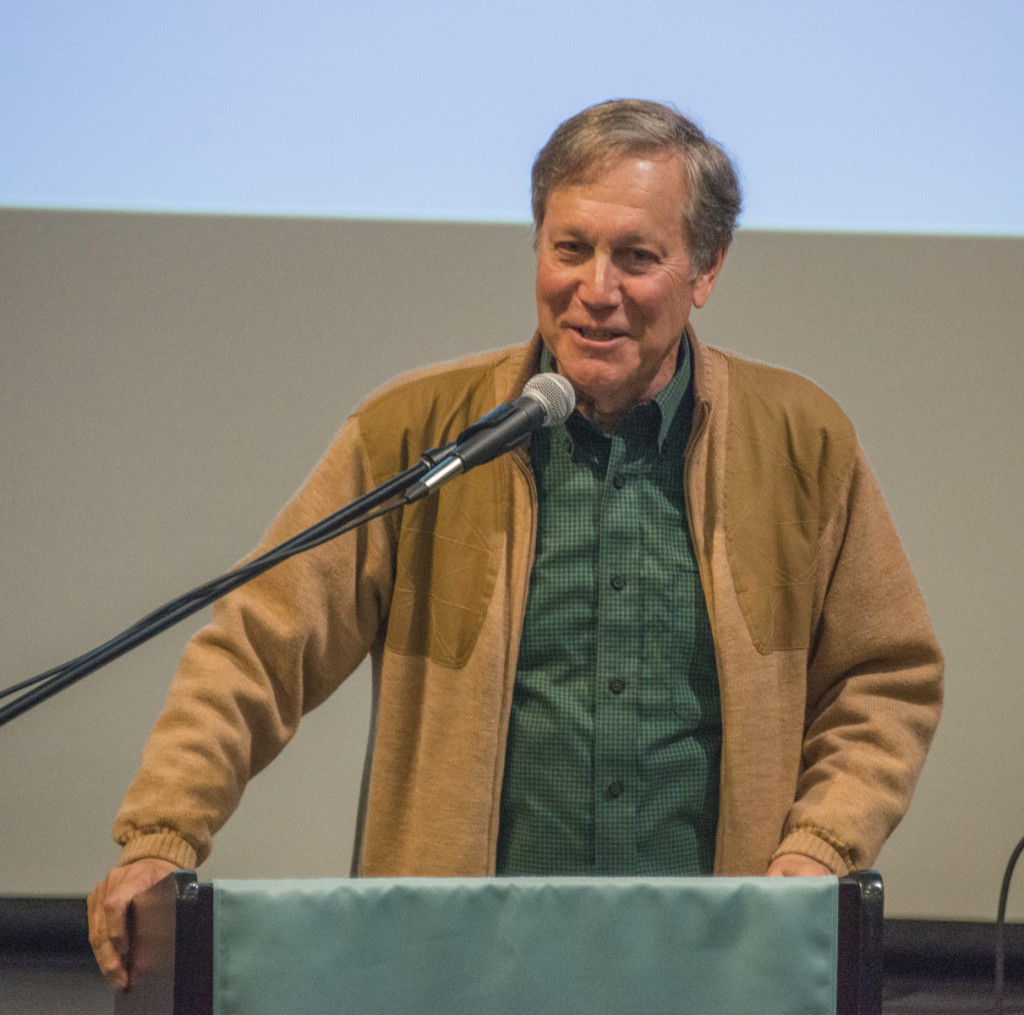
Gioia at the Sierra Poetry Festival (Photo: Radu Sava)

The train never quite arrives anywhere, yet all the passengers are anxious to get there. For those people like Tennyson and Baudelaire—like me on the days I get off work and succumb to sitting vacantly in a room with my family, each with a face to a respective screen, absence substituting absinthe—for those, the Underworld, Hell, is already here. As Gioia reminds us in the poem’s epigraph, quoting The Aeneid, ‘Descending into Hell is easy.’ The sentence doesn’t stop here, however. If we were to heed Gioia’s guidance and work our way back through the poets, the tradition, the wisdom handed down to us through the ages (with no lack of God’s providence in the process), then we’d arrive back at Virgil and finish the line: ‘Descending into Hell is easy / But to return, and view the cheerful skies, / In this the task and mighty labor lies.’”

“As I mount midlife—Tennyson’s rocky walls—and attempt to gather my bearings for what’s coming in the next 40 years, I find fewer and fewer people have been able to run the long race. The energy and ambition and love I had in my youth is running low. Wouldn’t it be easier to fold my hands, to repeat the catch phrases and sound bites, to laugh at the canned cues and teach my children to? Whose woods these are I think I know. Then out on the wrinkled sea, the high notes come shimmering over the cold waves, and 72-year-old Dana Gioia says, ‘Meet me at the Lighthouse.’”

Read the whole thing here.
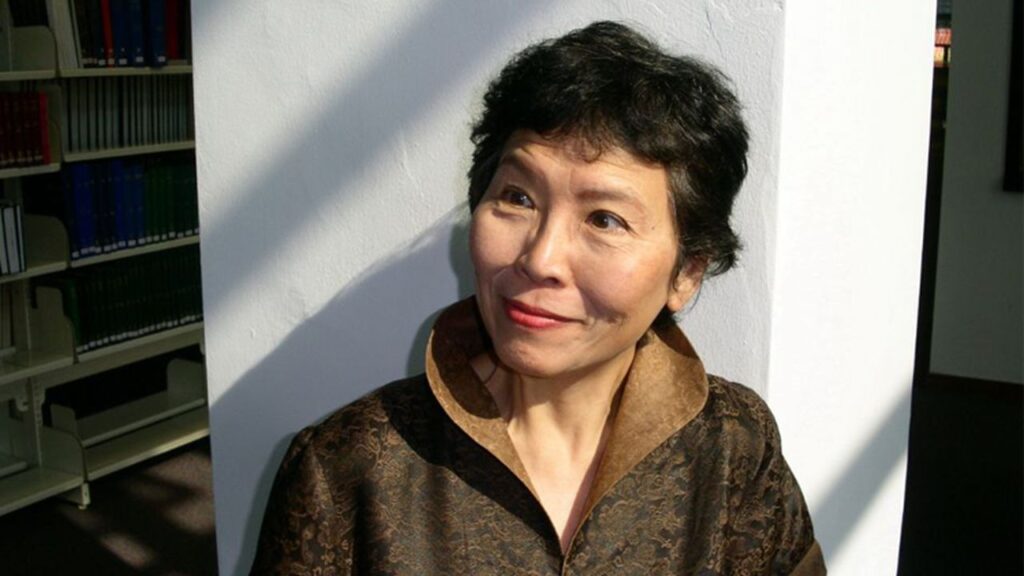
“She has put a planet on the table”: Dana Gioia on poet Shirley Lim

Featured

Share
“An unusual economy and panache”

Over at The Los Angeles Review of Books, poet Dana Gioia praises Shirley Geok-lin Lim as “a poet of exile and assimilation, loss and recovery, journeys and explorations.” His friendship with the Malaysian-born poet goes back four decades, when they first met in Katonah, NY. During an awkward conversation, he recalls, “Finally, I asked a polite but banal question about her graduate studies in English. Shirley replied that she had worked at Brandeis with J. V. Cunningham. His was not a name to impress most people, but to me, Cunningham was a gold standard. He was the greatest American epigrammatic poet — ever. He was also a formidable scholar, mordant curmudgeon, and semi-recluse. Tell me more, I said. And she did.”

“A year later Shirley sent me her first book, Crossing the Peninsula & Other Poems (1980). Published in Kuala Lumpur by Heinemann Asia in a tiny format, the book gave the impression of slightness. I always worry when reading a book of poems by an acquaintance, Will I like it? Will it be interesting or awful? In Shirley’s case, I was immediately engaged, though I recognized her debut volume was a very unusual collection.”

“A gold standard”

Why? He explains: “Most first books have a grab bag quality. Young poets want to show all their steps toward creative maturity — different styles, subjects, and stances. Lim’s book did that, too, but with an unusual economy and panache. The poems had ambitious subjects — Adam and Eve, Christ, shopping, divorce, Cezanne — but they were mostly short. They didn’t waste a word. (Surely the terse Prof. Cunningham’s influence at work.) Few young poets show such control, especially mixed with such an appetite for ideas and experience.”

He soon added her poem, “To Li Po,” to a new edition of An Introduction to Poetry, which he co-edited with X. J. Kennedy. “Since then I have hardly published an anthology which did not include one or more of her poems.”

Dana Gioia recalled the words of literary critic Hugh Kenner, who once described American Modernist innovation as a “homemade world” — “unorthodox creativity free from pomp, precedent, and pretension.” Then he added “Shirley’s best poetry has that ‘homemade’ quality. Like Wallace Stevens, she has put a planet on the table, a ‘homemade world’ of her own experience.”

Lim’s In Praise of Limes, will appear in March from Sungold Editions. Meanwhile, read more about her in The Los Angeles Review of Books here.

Dana Gioia’s lament for Los Angeles and Scott Timberg’s essays

Featured

Share

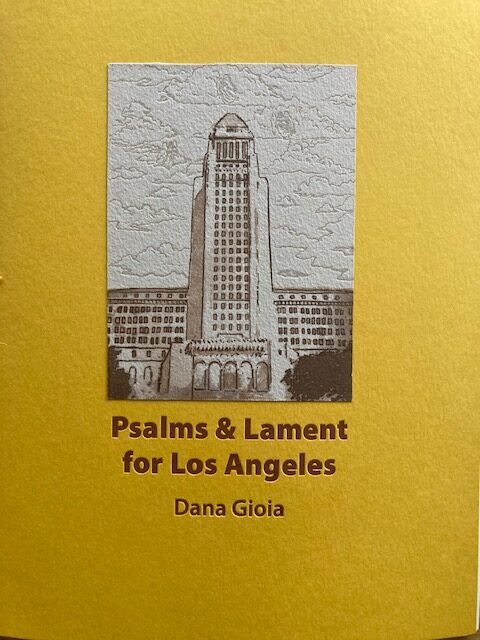
The Christmas season brings interesting surprises through the mail – and this year was no exception. Dana Gioia‘s new monograph Psalms and Lament for Los Angeles arrived in my mailbox, letterpress and hand-bound by Providence Press in Ojai. The press was founded by the celebrated printer Norman Clayton, who publishes some of the special editions for the Book Club of California. It’s not the poet and the publishers’ first collaboration: Providence printed The Ballad of Jesus Ortiz in 2018 as its first-ever project. (The book is now in its second printing.)

The three long poems in Psalms and Lament represent Dana’s “late style,” composed between 2018 and 2020 – the first two before the pandemic, the last one, “Psalm to Our Lady Queen of the Angels,” praising his Latino origins (“a mutt of mestizo and mezzogiorno/The seed of exiles and violent men”), at the height of coronavirus.

They were previously published in The Hudson Review, Rattle, and First Things.

Here’s the first part of the second poem in the monograph, “Psalm of the Heights,” describing his native Los Angeles:

PSALM OF THE HEIGHTS

I.

You don’t fall in love with Los Angeles
Until you’ve seen it from a distance after dark.

Up in the heights of the Hollywood Hills
You can mute the sounds and find perspective.

The pulsing anger of the traffic dissipates,
And our swank unmanageable metropolis 

Dissolves with all its signage and its sewage— 
Until only the radiance remains. 

That’s when the City of Angels appears,
Silent and weightless as a dancer’s dream.    

The boulevards unfold in brilliant lines.
The freeways flow like shining rivers. 

The moving lights stretch into vast
And secret shapes, invisible at street level.

At the horizon, the city rises into sky,
Our demi-galaxy brighter than the zodiac.

Gone too soon

The dedication for the monograph is to his friend Scott Timberg, the gifted Palo Alto-born journalist, culture writer, and editor who committed suicide two years ago this month – all too young at 50. He is best known for his 2008 book, Culture Crash: The Killing of the Creative Class (Yale University Press). You can read a retrospective of the writer over at the Los Angeles Review of Books here, or on the Book Haven here and here.

Here’s some exciting news: Dana Gioia’s dedication precedes another announcement: my publisher Heyday in Berkeley, Steve Wasserman, will be publishing Scott Timberg’s essays, in a collection called Boom Times at the End of the World. I’m looking forward to it. Hope you are, too.

Poet Al Young is dead at 81: “He was one of the most gracious writers I ever met.”

Share
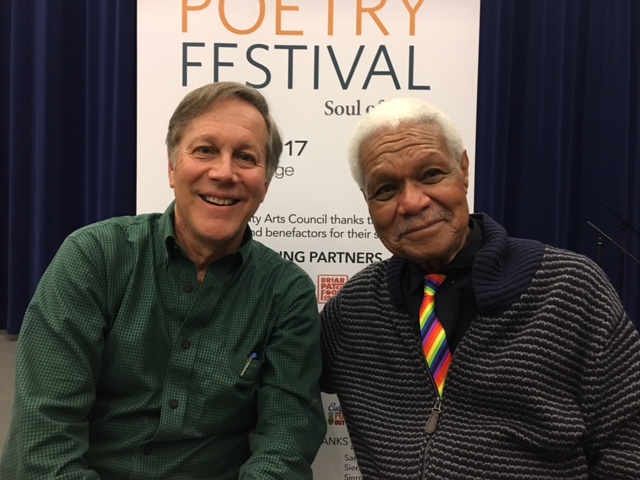
Dana Gioia with Al Young at the Sierra Poetry Festival a few years ago.

Poet Al Young, who suffered a massive stroke in February 2019 and never fully recovered, has died at 81. Jazz scholar Ted Gioia recalled, “Al Young was a treasure of the Bay Area cultural scene. I first knew him as a jazz lover who wrote movingly about the music—and I would run into him frequently at clubs and concerts. But he was probably even better known in the literary world, and Young would eventually serve as poet laureate for California. But he was also a teacher, a screenwriter, a novelist, an editor, and a mentor to many. In fact, you couldn’t find a better role model. Every encounter I had with him was an inspiring one.” Young was named California poet laureate in 2005.

Dana Gioia, a recent state laureate himself, had known Young since 1972, when Dana was at Stanford, where Young spent much of his career. Young had been a Jones lecturer in the Stanford English Department when both Gioias were undergraduates. (Young was a Jones lecturer from 1969 to 1979.) “Al Young represented the best in literary life. He was enormously talented in both fiction and poetry, though as he got older poetry came to be his natural means of expression. He was a powerful and persuasive reader with a beautiful bass voice which sometimes broke out in song,” said Dana.

“He was one of the most gracious writers I ever met. People were drawn to his warmth and humor. He inspired people. Eliza Tudor told me that once Al had accepted the invitation to speak at her new Sierra Poetry Conference, she knew the gathering would be successful.”

“I particularly admired Al in his term as California State Poet Laureate. Not many writers have a gift for public service. The role came naturally for Al. He liked to meet people – all kinds of people. He listened to them and laughed with them. He travelled to rural areas of the state that previous laureates had overlooked. He spoke in urban schools where he was a powerful role model of the African American artist. He became my role model for the state laureate. I loved being (and basking) in his company. I’ll miss him.”

Young has received the American Book Award twice, for Bodies and Soul: Musical Memoirs (1982) and The Sound of Dreams Remembered: Poems 1990-2000 (2002). He was also awarded an honorary Doctor of Humane Letters from Whittier College in 2009. He is a recipient of Guggenheim, Fulbright, and Wallace Stegner fellowships, and grants from the National Endowment for the Arts.  the PEN-Library of Congress Award for Short Fiction, the PEN-USA Award for Non-Fiction, two American Book Awards, the Pushcart Prize, and two New York Times Notable Book of the year citations.

I don’t ask to be forgiven
nor do I wish to be given up,
not entirely, not yet, not while
pain is shooting clean through
the only world I know: this one.

Postscript on 4/23Berkeleyside published a terrific retrospective on April 21. “Remembering Al Young, a California poet laureate, musician, teacher,” by Frances Dinkenspiel, is here.

An excerpt: “…Young was not as famous as he deserved to be, said Ishmael Reed, a longtime friend, collaborator and fellow writer. Some of that had to do with the fact he lived on the West Coast, far from the star-anointing powers of East Coast critics. ‘He’s probably one of the most underrated writers in the country,’ said Reed, who published The Yardbird Reader, a literary magazine that highlighted contemporary Black writers, with Young in the 1970s. ‘He lived on the West Coast. The people who receive a lot of publicity live in the New York-Washington, D.C. shuttle area. It’s difficult for a writer like Al to achieve prominence with critics who see Northern California as a stepchild of Manhattan.'”

Here’s another: “In 2007, during his term as poet laureate, Young traveled around California, reading his work in 40 rural communities in the Central Valley and mountain areas in 11 days, often accompanied by a musician. For Young, poetry and music, particularly jazz and blues, were intertwined. He frequently wrote while listening to music (he knew so much about music he was almost a music ethnologist, one friend said) and incorporated jazz rhythms into his poems. ‘He wedded poetry and music together,’ said Sharon Coleman, a poet and instructor at Berkeley City College ‘He brought music to poetry in a very integral way.'”

Read the whole thing here.