
More on “taking responsibility” and other hackneyed phrases

Share
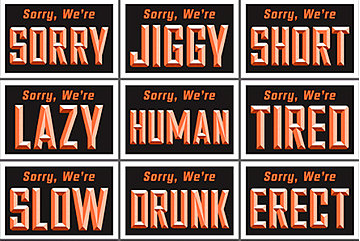
(Image adapted from the Tumblr this isn't happiness, via ffffound)

(Image adapted from the Tumblr this isn't happiness, via ffffound)

My call to arms a few days ago (“Orwell watch #9:  ‘I take full responsibility for...'”) was picked up by Andrew Sullivan in The Daily Beasthere.  The passage he highlights:

I suspect the phrase “take responsibility for” is actually a journalists’ invention, and people like Weiner picked it up from the media, rather than his heartfelt intentions. As George Orwell said in “Politics and the English Language,” this one could be “killed by the jeers of a few journalists.” I call out to journalists everywhere to jeer this phrase out of existence – unless it really means taking responsibility, the way I “took responsibility” for, say, raising a child, by paying for her upbringing, nursing her through illness,  attending back-to-school days, and preparing dinner every night.

Sure would be nice if we could we could drive this phrase into late-night comedy, wouldn’t it?  This expression has been due for the slaughterhouse since the IRA mayhem in the 1960s, and has made its small contribution to dulling our sense that words have meaning, and are meant to convey our feelings, thoughts, and intentions – not conceal them.
Language fails

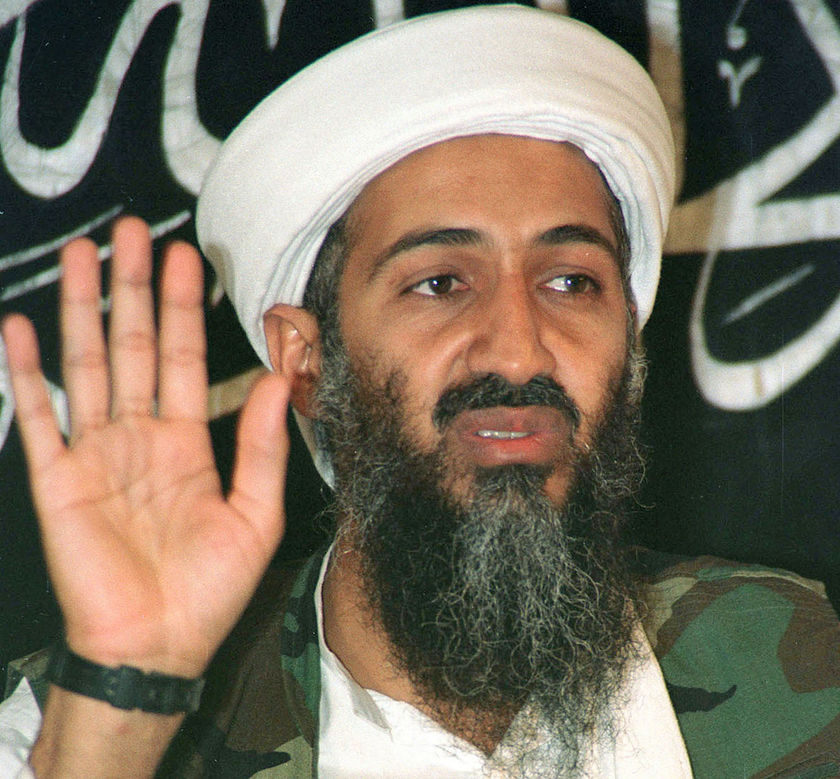
Meanwhile, the post generated some interesting conversation over at Frank Wilson‘s Books Inq. I was singled out, rightly, for a little criticism from Art Durkee:  “Calling [Osama] bin Laden‘s death ‘liquidation’ is also pretty Orwellian, it seems to me. Let’s call a spade a spade: it was a retaliatory political assassination.  But then, a great deal of political euphemism is and always has been Orwellian.”

Liquidation is indeed a strange term – did he dissolve into water? “Liquidation” sounds like the final sale at a failing bookstore, anyway. A colleague corrected me when I said “murder,” arguing that murder was a legal term, calling for the prosecution of the murderer.  One is at a loss – what neutral term can one say nowadays? Osama bin Laden’s “offing”?

Art’s p.o.v.:

“I don’t think there is a neutral term. I think you have to call an assassination what it is.

I think we have to be honest when murder is murder, and not whitewash it. (The best argument, for example, that I’ve heard against the death penalty is that it means that murder is criminalized for anyone to commit except the state.) Similarly, assassination needs to be called what it is, and acknowledged as the political tool it has always been, sanctioned or otherwise.

History may show if this particular sanctioned assassination (sometimes called a ‘sanction,’ or ‘termination with extreme prejudice’) was the right and good thing to do. Lots of people are claiming that already, but they’re also ignoring what making someone into a martyr can do. It’s a tricky call, and those who set policy ought to lose sleep over it.

But that’s the whole pattern that Orwell pointed out, isn’t it: the neutralization of language into mechanical, denatured, unemotional, technical terminology that allows one to deal with humans as dehumanized. Turn people into inhuman statistics, and you can sleep at night when you talk about ‘collateral damage,’ or ‘friendly fire,’ for example. Do that kind of neutralization of language enough, and you dehumanize yourself as well, Orwell warned.”

And so did Mark Twain, in ‘The Way Prayer.'”

Thoughts?

René Girard, meet Terry Jones, Andrew Sullivan, Christopher Hitchens, and the gang

Share

Avoiding crowds (Photo: L.A. Cicero)

A brief conversation with Martha and René Girard brought forth the startling fact that René had made an unaccustomed appearance in Andrew Sullivan’s Dish blog over the weekend.  The subject was, of all things, would-be Koran-burner Terry Jones.

Quietly nestled among his posts on the sex lives and habits of other people is  “What Qu’ran Burning and Crucifixion Have in Common.” Sullivan cites an article by Eric Reitan:

[A]t least one theologian—S. Mark Heim—has taken up Girardian themes to argue that the crucifixion is best understood as a potent repudiation of sacrificial scapegoating… If Heim is right about this, then Jones and Phelps and their respective congregations are symbolically enacting the very thing that the passion stories central to Christianity were intended to repudiate. Where they are called to see the crucified Christ in those who are being symbolically burned at the stake, they instead see a righteous sacrifice to God. Where they are called to identify with the victim of sacrificial scapegoating, they become the practitioners.

Reitan’s article adds:

Some, such as Christopher Hitchens, would see such sacrificial scapegoating as a natural extension of Christian theology—which, after all, has at its heart the doctrine of the vicarious atonement, which Hitchens finds an appalling extension of the idea that wrongs can be righted by sacrificing an innocent scapegoat to God.  But the crucifixion, like book burning, is a complex symbol.

Of course, what Reitan calls Heim’s idea is not Heim’s idea at all.  René Girard himself has written  — for example, in I See Satan Fall Like Lightning — that  “the Gospels are aware of what they are doing. They not only tell the truth about victims unjustly condemned, but they know they are telling it, and they know that in speaking the truth they are taking again the path of the Hebrew Bible.”

But more and more I find myself coming back to the René’s writings about the role of the mob, which seems very apropos  to the discussion at hand:

In a society that has fallen prey to anarchy, the voracious appetite for persecution feeds on victims indiscriminately, as long as they are weak and vulnerable.  The least pretext is enough.  No one really cares about the guilt or innocence of the victim.  These two words, without cause, marvelously describe the behavior of human packs.

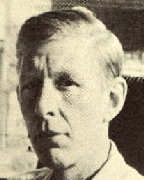
W.H. Auden wrote put it this way:

… the crowd rejects no one, joining the crowd is the only thing all men can do.Only because of that can we sayall men are our brothers …

Auden understood

With the inevitable consequences:

All if challenged would reply– ‘It was a monster with one red eye,
A crowd that saw him die, not I. —

Reitan seems to be haunted by the same theme.  He writes that “the nation has, through extensive media attention, conferred on this tiny congregation an enormous power it otherwise wouldn’t have—a power to make their symbolic violence do more actual harm than it otherwise might have done, to make their vicarious scapegoating less vicarious, and so to more effectively reach their intended targets.”

He concludes:

The media rushes to the next dramatic spectacle because to do so will attract ratings. And why does it attract ratings? A congregation of 50 can hardly be blamed for that. All of us in our own ways play the roles of betrayer, deserter, and denier. And while we should not condone the Dove Center’s desire to burn Muslims in effigy—nor should we fail to repudiate it when it becomes a public spectacle—it is important that our response not re-enact on another symbolic level the very pattern of sacrificial scapegoating that we repudiate.

In others words, societies of hundreds of millions of people have many subsets, niches, and off-the-beaten-track pockets.  The scapegoat-maker in one subset becomes the scapegoat of another.  As Girard writes, “Persecutors think they are doing good, the right thing; they believe they are working for justice and truth; they believe they are saving their community.”

On both sides of a discussion, too.