
Adam Johnson, the Pulitzer, NYC … and a young girl’s photo op

Share

jupiter

It was a big weekend in the Big Apple for one San Franciscan.  Adam Johnson, the newest recipient of the Pulitzer Prize for fiction, accepted his award from Lee Bolinger, President of Columbia University, at a May 30 luncheon.  (We’ve written about Adam’s most recent honors this year, the Pulitzer and Guggenheim,  here and here.)
jupiter2

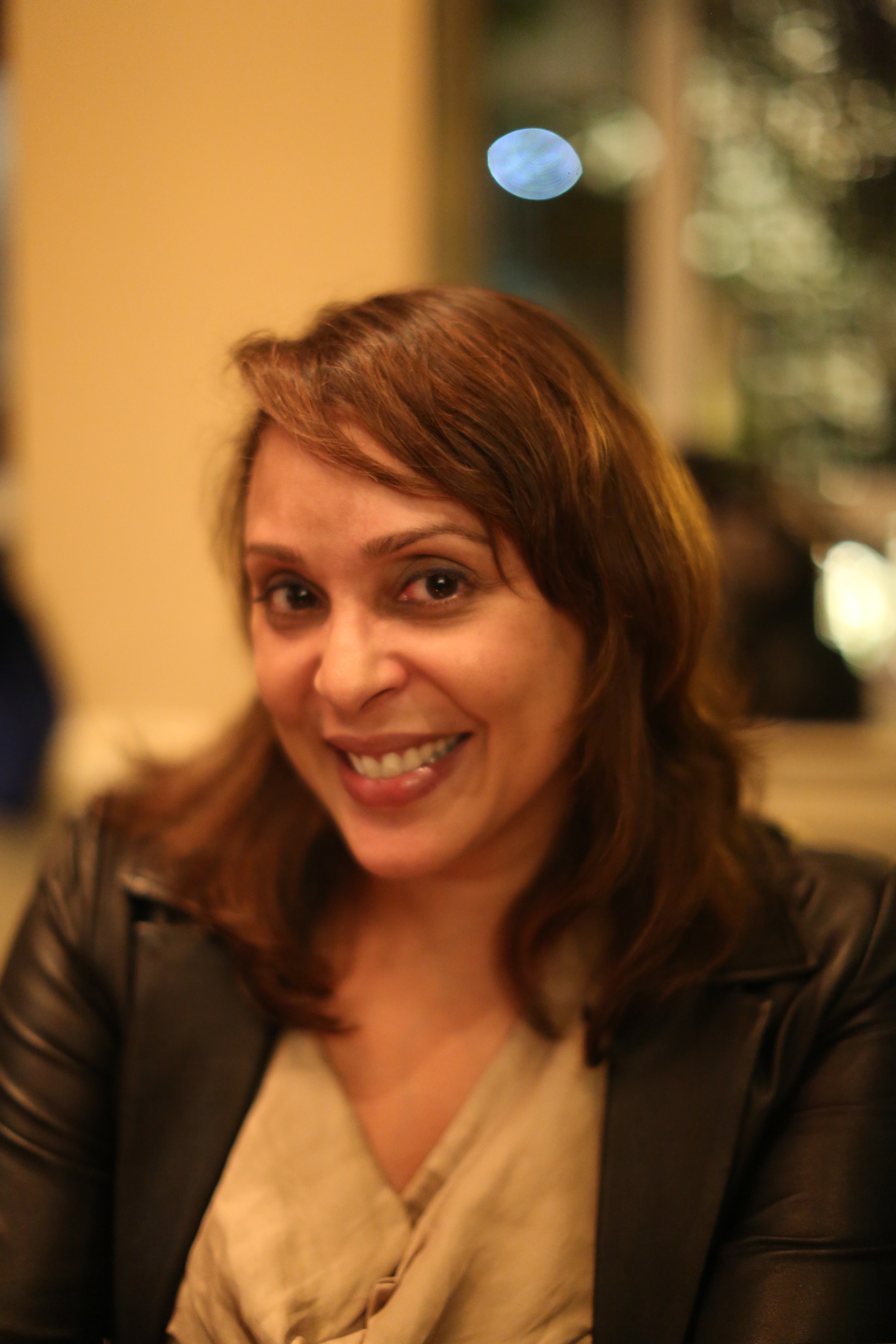
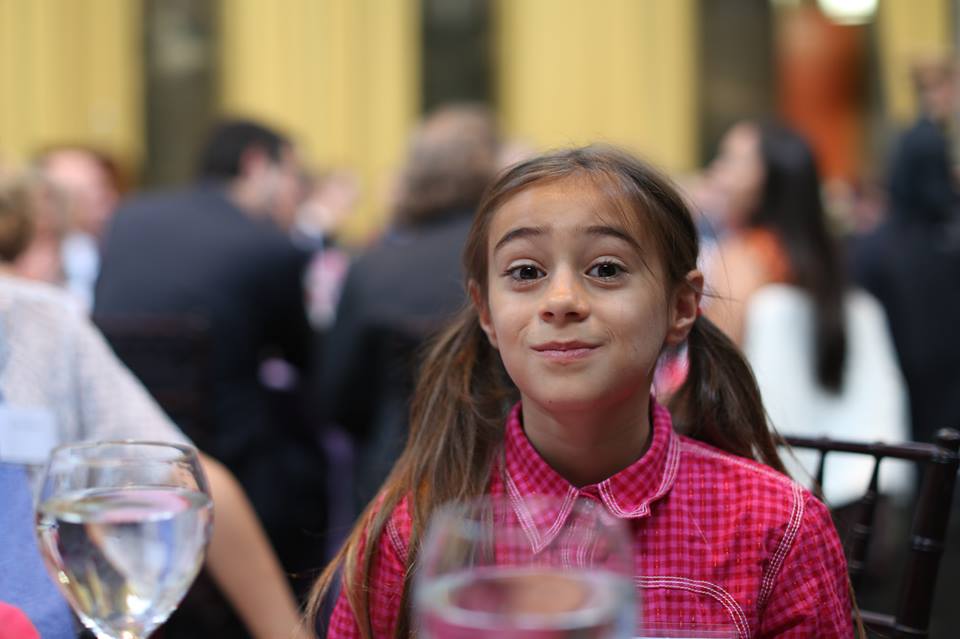
The attractive photographer.

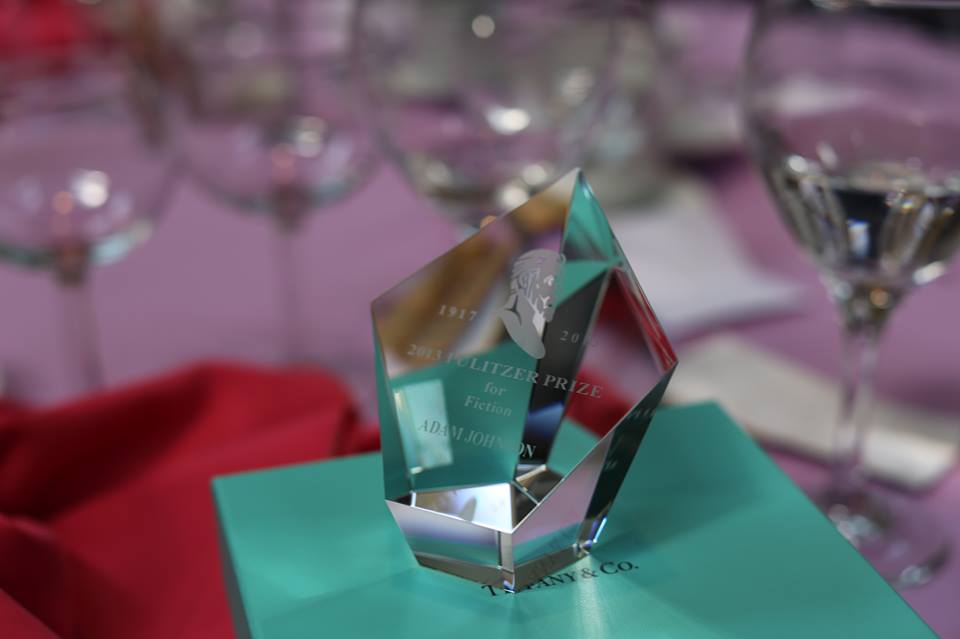
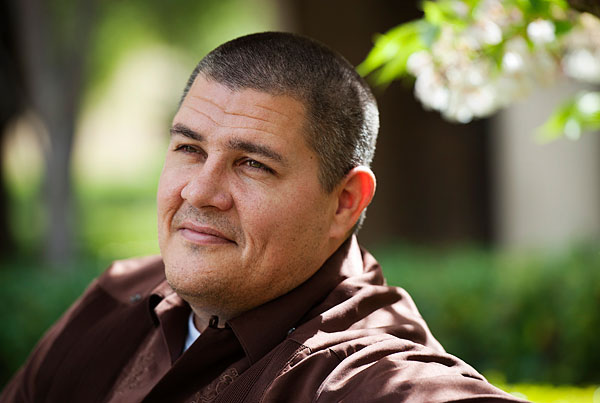
Clearly talent runs in the family.  The photo above was taken by his 9-year-old daughter Jupiter Johnson.  The pretty prize is pictured below.  I’d never seen the sparkly bauble before.

The day before, the San Francisco Weekly ran a Q&A with the author of The Orphan Master’s Son (we’ve written about the book here and here and here), and admitted it was smitten by the 6’4 linebacker-sized  author.  A sample from his comments about North Korea:  “This is a nation without any voice at all. It’s unthinkable. We have no evidence of a literary underground. No book or poem has made it out in 60 years. As I wrote the book, I thought, who am I to write this? But the truth is, they can’t write, they can’t express themselves, and until they can, we need to do this. We won’t know if it’s true until they can tell their own story.”

Speaking of Jupiter, the interview has an interesting admission about his work habits: “I can’t write with the Internet, so I go to the UCSF library as a guest; I get more work done there. When I’m home and I hear my three kids’ voices outside the door, all under 10, I think, why am I spending time with imaginary people?”
pulitzer

Adam Johnson, author of Orphan Master’s Son, gets a Guggenheim! Yayyy!

Share
Author, author! (Photo: L.A. Cicero)

Bravo, Adam! (Photo: L.A. Cicero)

The 2013 John Simon Guggenheim fellows have been announced, and we were pleased to see one friend on the list – Adam Johnson, author of The Orphan Master’s Son.

The whole list of fellows is here.  Another acquaintance was next on the alphabetical list: Bill Johnston, the acclaimed translator of Polish poet Tadeusz Różewicz.

The foundation awarded a diverse group of 175 scholars, artists, and scientists, chosen on the basis of prior achievement and exceptional promise, from a field of almost 3,000 applicants this year.

We’re proud that we wrote about Adam even before he became a really big deal, as well as since the applause –  here and here and here and here, among other places.

Johnson1

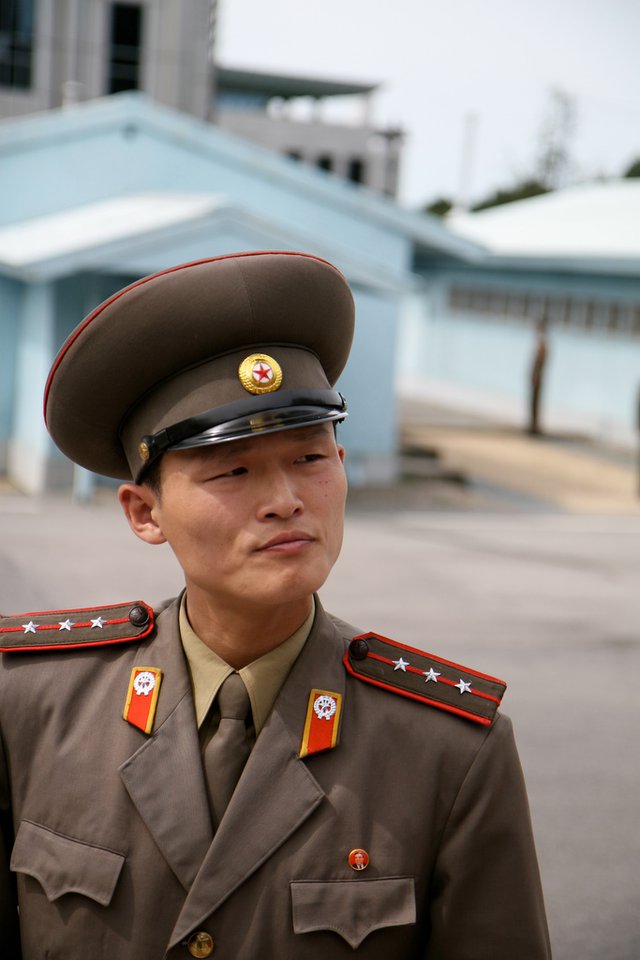
N. Korean soldier (photo: A. Johnson)

I phoned Adam to offer my congratulations, and caught him just as he was about to go into a class where he is a guest speaker in Moscow, Idaho.  Did he have any words to offer Book Haven readers?  “What should I say?  What should I say?” he asked me.  Heavens, how should we know? We’ve never gotten a Guggenheim.

“I’m thrilled, honored.  I have received the most precious gift a writer can have – time to complete the next project, and to fulfill the potential of the work,” he finally said.

So what’s this next project?  “What?  I can’t say,” he said.  But surely it was in the Guggenheim proposal, so it’s not a secret?  He hemmed and hawed a bit – let’s just call it  “narratives of North Korea,” he said.

Any comments on the latest standoff with North Korea?  He asked me if I’d seen the New York Times article explaining that the renegade nation has most probably learned how to make a nuclear weapon small enough to be delivered by a ballistic missile, and is “missile ready.”  What did he think about it?  “I’m not a nuclear expert, I write about people,” he said, before ducking into the classroom.  We called out “Congratulations, Adam!” after him.

Update! North Korea celebrates Adam’s award with a funky get down Juche Party!

Red lipstick and the soul as a tin can

Share

When interviewing author Adam Johnson, one always leaves with one’s notebook full of great stories and great quotes that didn’t make it to the final cut – this was true even before he wrote the celebrated Orphan Master’s Son, “a place where living meaningfully and survival are at odds constantly – and as a literary fiction writer, I was completely drawn to that territory.” (I’ve written about him here and here and here and here.)

While talking to him about his newest novel in his home in the Cole Valley neighborhood of San Francisco, he recalled his sole, and heavily chaperoned, trip to Pyongyang.  He was so floored by the disconnect with reality, that he asked his young female chaperone, “You know, I think my next trip is going to be to either Mogadishu or Paris. What do you think?”

Adam (Photo: L.A. Cicero)

She looked at him blankly.  “It depends on what your travel plans are,” she replied.

“She didn’t ask, ‘Do you like cheese?’ ‘Can you handle an AK-47?'”  It was apparent that Mogadishu and Paris were no more than dots on a map, absolutely free of associations.

You’ll get your own chance to hear of his North Korean adventures in the New York Times today hereas he reflects on the new Google maps of the mysterious totalitarian state.  As he explains, during his visit, the only guide he could find at the time wore red lipstick:

My minder was smart and appraising, with something regal about her. And driving around Pyongyang, I couldn’t stop pestering her with questions:

“I don’t see any trash cans,” I said. “Where are the trash cans?”

We’re a society without waste, she said.

Later, I wondered where the mailboxes were.

We have the world’s most efficient mail system was her answer.

I hadn’t seen a fire station. “Where do you keep your fire trucks?” I asked her.

We haven’t had a fire in the capital in 12 years.

Later, when I finally popped the big question — “Oh, can we stop someplace that sells maps?” — she swept her hand to include the driver, the state-supplied videographer and her assistant, and said: We are your mapWe’re all you need to find your way.


North Korea, he said, is a place where  “everyone there makes an impossible choice to survive.”

Then he wondered, “Does your soul, if you don’t exercise it, just crumple up like a tin can inside of you, unable to find its form again?”

Natasha Tretheway at Stanford: “reclaiming the interior life”

Share

Adam Johnson's portrait of Natasha Tretheway

U.S. poet laureate Natasha Trethewey was at Stanford last night – alas, I had a conflicting appointment.  But Adam Johnson, author of the acclaimed The Orphan Master’s Son, attended, and sent me his glorious portrait as a souvenir of the occasion.  And that is the excuse for this post.

Adam had this to say about the reading I didn’t attend: “The reading was a truly commanding one. The poetry was powerful and beautiful, and the audience felt its embrace. Rarely do you see a poet so fully or eloquently embody her work as Natasha Trethewey did at the lectern tonight.”  (Adam was no slouch at his own reading tonight – more on that in another post.)

Adam Johnson, Tretheway fan (Photo: L.A. Cicero)

In his citation for the poet laureate appointment, Librarian of Congress James Billington wrote that he was “immediately struck by a kind of classic quality with a richness and variety of structures with which she presents her poetry … she intermixes her story with the historical story in a way that takes you deep into the human tragedy of it.” Rita Dove wrote in an introduction to one of Tretheway’s books that she “eschews the Polaroid instant … reclaiming for us that interior life where the true self flourishes and to which we return, in solitary reverie, for strength.”

Tretheway is the author of Beyond Katrina: A Meditation on the Mississippi Gulf Coast (University of Georgia Press), Native Guard (Houghton Mifflin), for which she won the 2007 Pulitzer Prize, Bellocq’s Ophelia (Graywolf, 2002), which was named a Notable Book for 2003 by the American Library Association, and Domestic Work (Graywolf, 2000).

Her collection Thrall is due for publication in 2012 – but it better hurry up, only seven weeks left in the year.  My goodness, where did it go?

Postscript on 11/7:  Whoops!  Christina Ablaza just wrote to tell me that Thrall came out in August.

“Truth is the strongest weapon,” says N. Korean poet Jang Jin Sung

Share

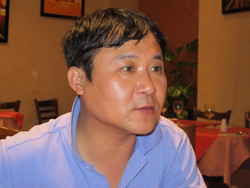
(Photo: Martin Alexander)

One of the more haunting moments in author Adam Johnson‘s interview with Charlie Rose is when he describes the impossibility of the plight of North Koreans – these are “people who have never seen a stop light before; they don’t know how many works,” says the author of the acclaimed Orphan Master’s Son.  As he has pointed out elsewhere, most of the stories we have are from the areas outside the capital. The citizens of Pyongyang have already “made it.”  So what is life like among North Korea’s upper classes?

“The cadres of the past had very traditional mentalities. They are people who lived thinking, “Anything for the party and the General…” The cadres, with the change in generations, started to think about their security. Corruption and self-interest stemmed from that.

In actuality, the North Korean cadres are the first ones to have changed internally. On the outside, they maintain their security by serving the regime, but internally, they will be the first ones to abandon it if the circumstances permit.”

These are the observations of Kim Jong Il‘s favorite state poet,  Jang Jin Sung, who defected in 2004.  He will be attending an international poetry festival during the upcoming London Olympics, from  July 27 to Aug. 12 (Kay Ryan will also attend).  The man who once wrote official poetry for the Workers’ Party newspaper now writes about executions, hunger, and desperate lives, according to an Associated Press article.  In a Daily NK interview four years ago, he said:

North Korea is a country which allowed 3 million people to die during a peacetime period. The fact that the administration still exists is a shameful thing. North Korea is a country which calls the period which produced 3,000,000 starvation victims the “March of Tribulation.” If Hitler was a despot who massacred foreign citizens, Kim Jong Il is a despot who has slaughtered his own people. If this truth is not made known, we cannot find justice.

Jang said he led a privileged life in Pyongyang and once dined with Kim.  He was instructed to avoid looking into the leader’s eyes and instead to stare at his second shirt button. After more contact with Kim, Jang said he soon stopped believing that he was “this godlike leader of this wonderful country.”

He said that poets had a special role to play in the regime:  “Because of the paper shortage in North Korea, poems were the most efficient, economical way to spread propaganda,” he said.

While working in the propaganda ministry, he was able to read South Korean books. He crossed the river to China. Although he was hunted by the North Korea, South Korea found him first (needless to say, he now works under an assumed name). He worked for the South Korean intelligence for seven years before setting up his own online newspaper about North Korea earlier this year.  Now he says “Truth is the strongest weapon.”

A few of the poet’s poems are shown in the video below – but only in Korean.  The soundtrack has a lovely rendition of  Handel‘s immortal cry for liberty, “Lascia Ch’io Pianga,” sung by South Korean singer Jung Se Hoon. Lovely, that is, till the end – I don’t know why they felt the need to junk up the orchestration at the end. (Go here for Cecilia Bartoli‘s interpretation.)