

The poet, editor, publisher David Sanders
I met David Sanders many years ago. The occasion was the West Chester Poetry Conference – but circa when? The year 2000, I think, at an evening celebration at the home of the conference’s co-founder, Michael Peich. I don’t remember what the two of us were discussing so earnestly. I simply remember standing on the back porch with David, his cigarette embers glowing in the dark, a sea of crickets somewhere in the distance, and the orange tip of light making circles as he gestured. He was the director of Ohio University Press/Swallow Press then, and I thought of him as publisher, not a poet. Later, he became the founding editor Poetry News in Review at The Prairie Schooner – the Book Haven has discussed it here.
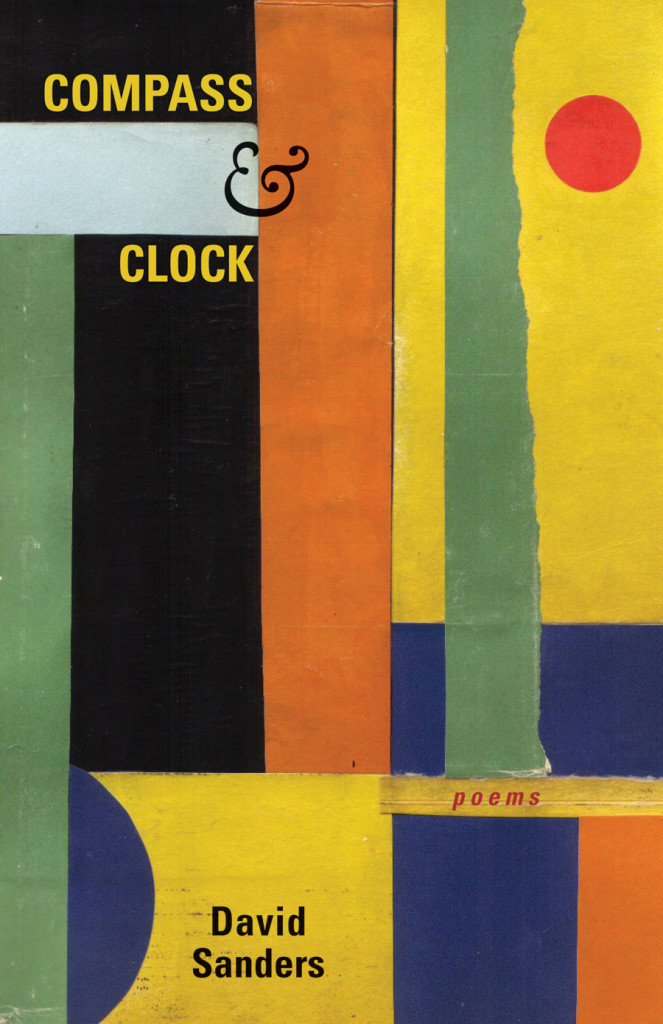
Recently, however, I was pleased to see the more personal side of the poet emerge, with the publication of his collection Compass & Clock. (The title does not refer to a poem in the collection – why the title then? Perhaps because one measures space, the other time.)
Poet, actor, and editor David Yezzi called the collection “the strongest new book of poems I have read in quite some time.” Poet Joshua Mehigan noted that the poet’s “kind, observant clarity can lull you into a sense of ease, even as he lays open the poignancy and diverse fascinations of existing on earth.” According to poet Andrew Hudgins, “Sanders knows well it is love itself that makes us miss and mourn the things we’ve lost.”
Here’s one on a topic we’re all too familiar with, the quotidian effects of death on the living – written, curiously, in first person, from the p.o.v. of the dead:
 Housekeeping
The living pack us up.
Now that we have gone and died
it’s comforting to them
to know what’s left is tucked inside
a box, an urn, or closet
where memories, like dreams, abound.
They tend to the mess
our dying first has left around.
(Letters dried to mica,
clothes gone further out of style,
souvenirs of us
in storage, kept a little while.)
They allow themselves sadness,
drifting near this windy border.
But grief has raked out its embers,
which cool and die among the order.
His poem “Lascaux” naturally caught my eye – I recognized immediately which poem he honors when he writes “after Miłosz.” The Nobel poet’s very early 1936 poem, “Encounter” is the first in his Collected Poems. You can read it here to see the Polish maestro’s earlier treatment of the same idea. One poet answers another through time. Here’s David’s unusual take:
Lascaux
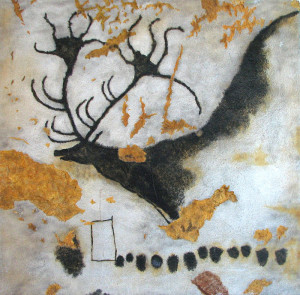
Jacques Marsal, who as a boy discovered the prehistoric paintings of the Lascaux cave with three friends and became the cave’s guardian for life, died Saturday after a long illness.
 – (AP) July 17, 1989
The first day, his dog disappeared in the forest,
lost down a hole. The next, exploring with friends,
he found the cave – leaping stags, buffalo,
prehistoric horses.
. Alone a moment, one French boy lived
a dream boys dream: to stand at the place
where for thousands of years no one has been.
That was 1940. Boy and dog are dead.
And the moment? Well, moments are always disappearing.
. after Miłosz
Just put a copy in my cart and will add it to my next book order. David has made me aware of several poets I never would have discovered otherwise, and he’s linked to some of my reviews and blog posts, but until now he’s been only a name I associate with these kindnesses—and with advocacy of poetry in all its forms. I’m glad to support him, and I’m happy to know I’ll be finding out who he is, at least to some extent, through poems of his own.
He’s generated a lot of good karma over the years, for sure. I think you’ll be delighted, Jeff.