
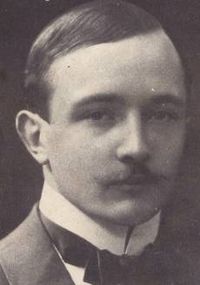
Real writer
It’s the 100th anniversary of the assassination that triggered World War I. On this day in 1914, the 19-year-old Serbian Gavrilo Princip shot the Austrian Archduke Franz Ferdinand. The assassin was one of those nobodies who pops up occasionally in history, rather like John Wilkes Booth, but the Austrian writer Robert Musil has another take on the schoolboy, who was secretly a poet – as well as French leader Georges Clémenceau, who “obviously had a poet living inside him,” and Italian novelist/playwright Benito Mussolini. In this passage taken from his notebooks in late 1935 or early 1936:
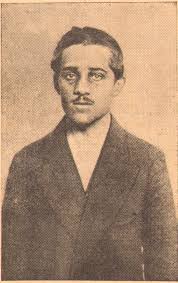
Writer wannabe
“In a word, one must remind those irredeemably blind people who despise literature that even Nero set Rome on fire once, and this not just because he was mentally ill, as is maintained, but above all because he was a writer. Their respect for writing will increase if they notice that not only amateur writers, writing dilettantes, but also writers who for one reason or another never fully managed to devote themselves to writing, have set the world on fire.
“Compared to them, the real or fully developed writers are not dangerous in any way and, aside from spiritual theft, bourgeois bankruptcy, and offences against public decency, have never done anything serious at all. The source of restlessness in the kind of people who destroy worlds is transformed in these writers to a quietly burning and nourishing hearth-flame and they make a well-ordered export business out of the adventures of their fantasy…”
Read the rest at the blog on Musil, Attempts to Find Another Human Being, here. As I recall, Joseph Stalin was an aspiring writer, too, and Mao Tse-Tung was a poet of note. I suppose it could be flipped around to be an argument for killing all of us early… Some sort of fireworks exploding outside as I write. I find it rather chilling on a warm summer night.
Stalin was an aspiring writer? That is kind of fascinating… A lot of villains in our history seemed to have a creative side (i.e. Hitler used to a painter, he wasn’t successful tho, his art teacher described his painting as soulless and stiff).