
Question for the coronavirus era: What’s the opposite of loneliness? It’s not company.

Share

Arendt had the best company: herself

The business of being a writer is necessarily solitary. I’m used to it. In fact, with the current coronavirus “shelter in place” in  California and elsewhere in the country, little has changed in my work routine. One good adjustment: the rest of the world is on “pause,” so I don’t have the usual intrusion of emails, phone calls, and other interruptions.

Nevertheless, should all those fail, I have shelves of books I’ve never read. And it’s always a good day when you can reread Jane Austen, or explore The Divine Comedy again. Revisit Proust, or Stanisław Barańczak. Or finally get around to reading something by Michel Houellebecq, or the unopened novel by Ismail Kadare.

Yet all over the social media I hear complaints about loneliness and boredom during the coronavirus crisis. But the antidote to loneliness isn’t society – it’s solitude.

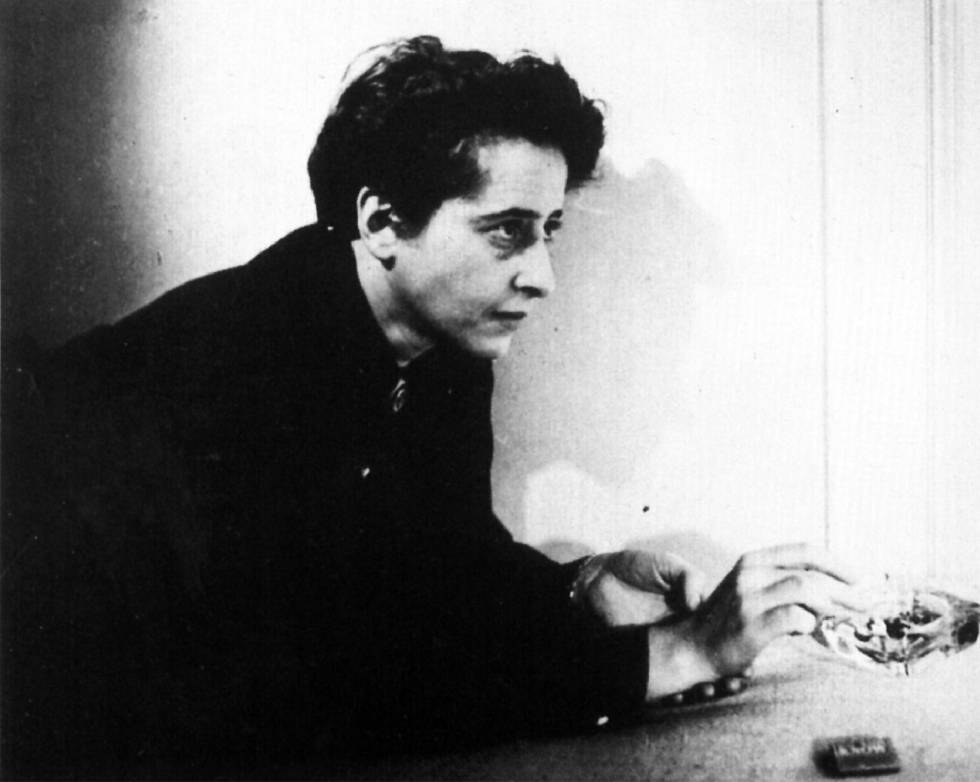
Hannah Arendt wrote that the ability to tolerate the solitariness of an internal space, in which one can commune with oneself and think for oneself, is central to personal responsibility. In an essay on “Personal Responsibility Under Dictatorship,” she argued such “being-with-oneself” is connected with the sustained practice of examining issues, weighing contradictory thoughts, making up one’s own mind. She observed that those who resisted the Nazi call had the habit and experience of daring to judge for themselves:

“The precondition for this kind of judging is not a highly developed intelligence or sophistication in moral matters, but rather the disposition to live together explicitly with oneself, to have intercourse with oneself, that is, to be engaged in that silent dialogue between me and myself which, since Socrates and Plato, we usually call thinking.”

It’s what  Stanford professor Robert Pogue Harrison said a decade ago at a Stanford conference on Arendt, when he made the event’s most spirited remarks in a talk on “passionate thinking.” Read the whole article here. A relevant excerpt:
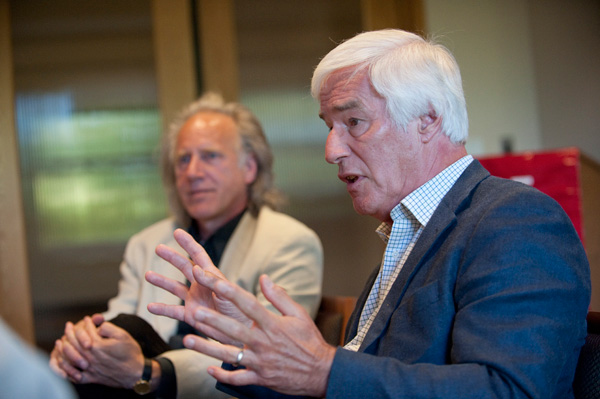
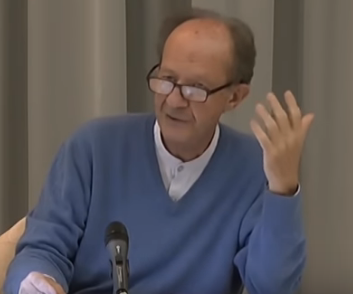
Stanford’s Gerhard Casper, Robert Harrison at back (Photo: L.A. Cicero)

[Harrison] considered Arendt’s notion of friendship and thought as rooted in solitude and the ability to commune with oneself – that “plurality begins with the individual.”

The “overwhelming question” in the humanities, he said, is: “How do we negotiate the necessity of solitude as a precondition for thought?”

“What do we do to foster the regeneration of thinking? Nothing. At least not institutionally,” he said. “Not only in the university, but in society at large, everything conspires to invade the solitude of thought. It has as much to do with technology as it does with ideology. There is a not a place we go where we are not connected to the collective.

“Every place of silence is invaded by noise. Everywhere we see the ravages of this on our thinking. The ability for sustained, coherent, consistent thought is becoming rare” in the “thoughtlessness of the age.”

So do take some time to talk internally with yourself during this unusual time. We hope it will be over soon! And if you want to read what Arendt wrote to James Baldwin, go here.
Postscript from George Dunn of Zhejiang University: Ursula LeGuin has a powerful story that addresses issues of injustice and scapegoating, titled “The Ones Who Walk Away From Omelas.” I’ve used it in my Ethics class more times than I can count. The title refers to the very small minority of citizens in the imaginary city of Omelas who walk away from the hedonic paradise this city represents because they are unwilling to partake of a joy that’s purchased through the torture of a child. There is one line in the story had that always struck me as somehow key to what LeGuin wants us to understand, though it is spoken so causally that its import can easily be missed. Most of the citizens of Omelas are reconciled to the horror on which their happiness is built, though some leave in their youth the moment they come face to face with that horror. Yet, reports LeGuin, “Sometimes also a man or woman much older falls silent for a day or two, and then leaves home.” The phrase “falls silent” stands out for me, indicating as it does a retreat into deep introspection. Such a retreat into silence would be quite conspicuous in Omelas, whose citizens are depicted by LeGuin as highly gregarious. LeGuin then recounts how these few leave the city, three times using the word “alone” to underscore the solitude of those who walk away. Reading these passages always puts me in mind of Arendt’s essay on “Responsibility,” also assigned a few times, with its reminder that ethics is predicated on our ability to resist the crowd, which in turn depends on having cultivated an inner space for reflection. Being highly intelligent, articulate, and quick-witted in debate is no guarantee of a capacity for reflection. To the contrary, as we’ve both seen, those with the greatest intellectual gifts will also often display the greatest ingenuity in making excuses for themselves.
Russian Hollywood: Boris Dralyuk’s sonnet for a long-ago star

Share

Editor, translator, and poet, too.

I know Boris Dralyuk as a Russian translator, scholar, and author, and also as the editor I work with at the estimable Los Angeles Review of Books. In addition, I know him  as the husband of author and translator Jennifer Croft, winner of the Man Booker prize for her translation of Nobel prizewinner Olga Tokarczuk’s Extraordinary Flights from the Polish.

But I didn’t know him as a poet … until now. Three poems have appeared in the current issue of The New Criterion.  I also didn’t know him as a native Angeleno, but all three poems are set in that legendary city. “Yes, the town is a stage set, but it’s also the stage where our lives play out — lives no less rich, no less meaningful than those playing out elsewhere,” he has written in an LARB piece on Henri Coulette, titled “…With the remote shine of dead planets”: A New Year’s Meeting in Los Angeles.”

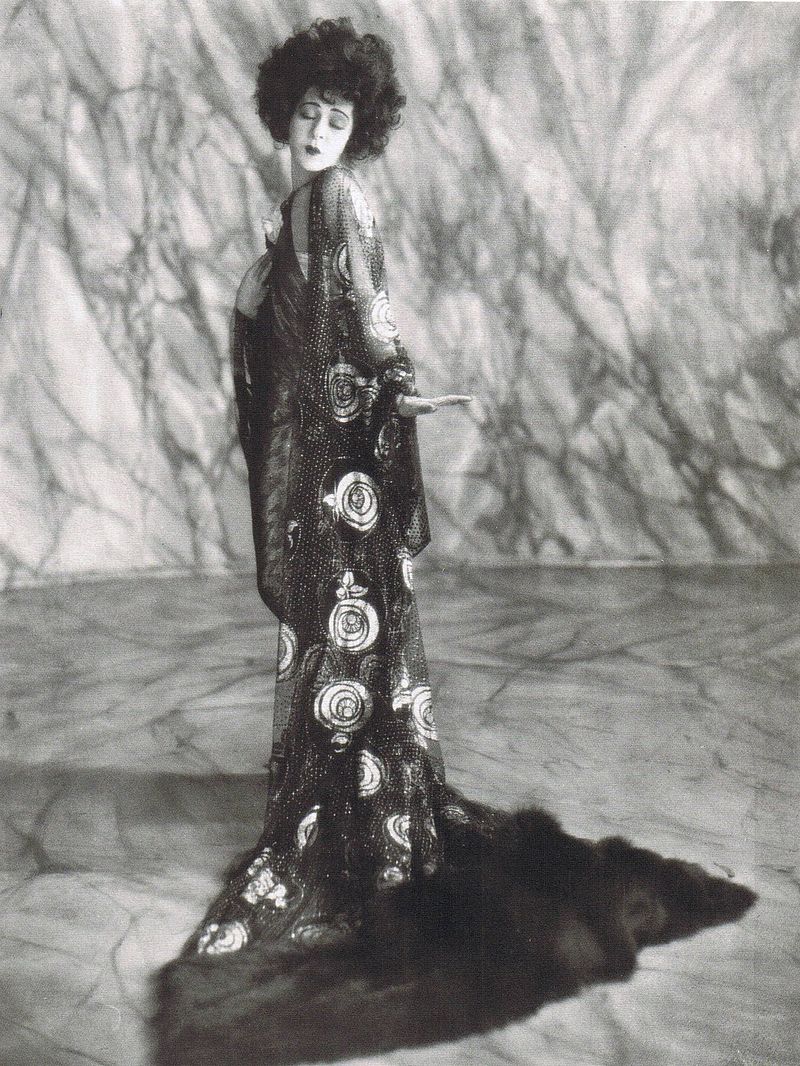
Nazimova in 1921 (Photo: Arthur Rice)

On Boris’s blog, he wrote about the poems in The New Criterion:

“This brief sequence of poems is set in the Los Angeles neighborhood where I grew up and where Jenny and I now make our home. Hollywood is by no means underexposed, of course, yet some corners of it receive less attention than others, and some episodes of its past are gradually sinking into oblivion. In the stanzas below, I spend some time with a monument to Rudolph Valentino; imagine what one of the neighborhood’s early residents, Paul de Longpré, would have made of its current state; and consider the fates of two generations of Russian émigrés — those among whom I was raised in the 1990s, and those who, like Alla Nazimova, flocked here in the 1910s and ’20s.

I had a hard time picking one of the three to publish on the Book Haven, but … Boris is Russian, and I write a good deal about Russian culture and Russian poetry. Moreover, I remember fondly visiting the ethnic enclaves of Los Angeles (my in-laws lived in Armenian Glendale), so in the end I made a surprise choice for the sonnet remembering one of the legendary Russian stars of the early decades of the 20th century.

III: The Garden of Allah

The Garden of Allah Hotel, playground of the movie stars during the 20s and 30s, will be torn down to make way for a new commercial and business center. . . . The hotel originally was the home of Alla Nazimova, late stage and screen star.
—Los Angeles Times, 1959

And now I watch another era fade,
Cyrillic letters scraped from shuttered storefronts,
tar-crusted bread, stale fish, stiff marmalade
sit sulking on the shelves, unchosen orphans
in what were once the bustling little shops
of Russian Hollywood. Hardly a soul now stops
to thumb the plums, frown at the penciled prices;
the neighborhood is lurching towards crisis,
all in slow motion. Rents climb out of reach
for émigrés . . . There’s nothing new in this.
Think of Nazimova and of her short-lived bliss
beside her pool—her private Black Sea beach . . .
She died a tenant in a bungalow
of a hotel razed sixty years ago.

Giorgio Agamben on coronavirus: “The enemy is not outside, it is within us.”

Share

“What is a society that has no value other than survival?” Giorgio Agamben asks, in this piece published today in Italian on the blog Quodlibet.  The essay was republished on Medium, and in an authorized translation by Adam Kotsko , who described it as the important European philosopher’s “indirect response to the controversy surrounding his article about the response to coronavirus in Italy.” It was also included in the European Journal of Psychoanlysis, in a round-up of thoughts on “Coronavirus and Philosophers,” and from there to Facebook, where it came to my attention: 

Fear is a poor advisor, but it causes many things to appear that one pretended not to see. The problem is not to give opinions on the gravity of the disease, but to ask about the ethical and political consequences of the epidemic. The first thing that the wave of panic that has paralyzed the country obviously shows is that our society no longer believes in anything but bare life. It is obvious that Italians are disposed to sacrifice practically everything — the normal conditions of life, social relationships, work, even friendships, affections, and religious and political convictions — to the danger of getting sick. Bare life — and the danger of losing it — is not something that unites people, but blinds and separates them. Other human beings, as in the plague described in Alessandro Manzoni’s novel, are now seen solely as possible spreaders of the plague whom one must avoid at all costs and from whom one needs to keep oneself at a distance of at least a meter. The dead — our dead — do not have a right to a funeral and it is not clear what will happen to the bodies of our loved ones. Our neighbor has been cancelled and it is curious that churches remain silent on the subject. What do human relationships become in a country that habituates itself to live in this way for who knows how long? And what is a society that has no value other than survival?

The other thing, no less disquieting than the first, that the epidemic has caused to appear with clarity is that the state of exception, to which governments have habituated us for some time, has truly become the normal condition. There have been more serious epidemics in the past, but no one ever thought for that reason to declare a state of emergency like the current one, which prevents us even from moving. People have been so habituated to live in conditions of perennial crisis and perennial emergency that they don’t seem to notice that their life has been reduced to a purely biological condition and has not only every social and political dimension, but also human and affective. A society that lives in a perennial state of emergency cannot be a free society. We in fact live in a society that has sacrificed freedom to so-called “reasons of security” and has therefore condemned itself to live in a perennial state of fear and insecurity.

It is not surprising that for the virus one speaks of war. The emergency measures obligate us in fact to life in conditions of curfew. But a war with an invisible enemy that can lurk in every other person is the most absurd of wars. It is, in reality, a civil war. The enemy is not outside, it is within us.

What is worrisome is not so much or not only the present, but what comes after. Just as wars have left as a legacy to peace a series of inauspicious technology, from barbed wire to nuclear power plants, so it is also very likely that one will seek to continue even after the health emergency experiments that governments did not manage to bring to reality before: closing universities and schools and doing lessons only online, putting a stop once and for all to meeting together and speaking for political or cultural reasons and exchanging only digital messages with each other, wherever possible substituting machines for every contact — every contagion — between human beings.

“They may break our bodies (a microbe can do that) but they need not dominate our minds”: C.S. Lewis on living in a time of terror

Share

A few days ago I wrote about the wildfires, earthquakes, mudslides, and drought of California. It hasn’t gotten better since. So here I sit, “social distancing” myself (the new advice for contagious disease), as the coronavirus numbers climb in Santa Clara County, one of the  hotspots in our afflicted nation. I wasn’t expecting to turn to C.S. Lewis for advice, but this excerpt turned up in an four-year-old Reddit post, offering some seminal thoughts for today.  The excerpt is taken from his essay, written three years after the bombing on Hiroshima and Nagasaki, “On Living In An Atomic Age”:

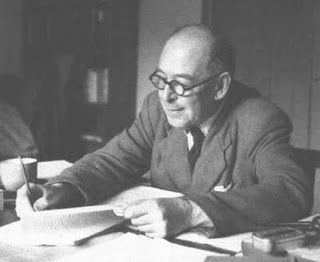
C.S. Lewis, minding his business.

In one way we think a great deal too much of the atomic bomb. “How are we to live in an atomic age?” I am tempted to reply: “Why, as you would have lived in the sixteenth century when the plague visited London almost every year, or as you would have lived in a Viking age when raiders from Scandinavia might land and cut your throat any night; or indeed, as you are already living in an age of cancer, an age of syphilis, an age of paralysis, an age of air raids, an age of railway accidents, an age of motor accidents.”

In other words, do not let us begin by exaggerating the novelty of our situation. Believe me, dear sir or madam, you and all whom you love were already sentenced to death before the atomic bomb was invented: and quite a high percentage of us were going to die in unpleasant ways. We had, indeed, one very great advantage over our ancestors – anaesthetics; but we have that still. It is perfectly ridiculous to go about whimpering and drawing long faces because the scientists have added one more chance of painful and premature death to a world which already bristled with such chances and in which death itself was not a chance at all, but a certainty.

This is the first point to be made: and the first action to be taken is to pull ourselves together. If we are all going to be destroyed by an atomic bomb, let that bomb when it comes find us doing sensible and human things – praying, working, teaching, reading, listening to music, bathing the children, playing tennis, chatting to our friends over a pint and a game of darts – not huddled together like frightened sheep and thinking about bombs. They may break our bodies (a microbe can do that) but they need not dominate our minds.

A new poetry anthology for the fires, floods, earthquakes, tsunamis, and hurricanes that shape California life

Share

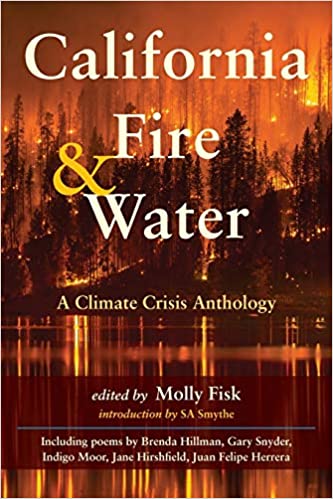
On Friday, a slim book arrived at my Stanford mailbox in a brown envelope with a neat, small, handwritten address written on it. I wasn’t expecting Molly Fisk‘s California Fire & Water: A Climate Crisis Anthology to be such a trim endeavor, but here it is, weighing in at a compact 190 pages for $15. It’s a reminder that an “anthology” need not always be a staggering door-stopper to make its point. The book was supported by a Poets Laureate Fellowship from the Academy of American Poets, funded by the Mellon Foundation, and packs 143 poets into, including some heavy hitters – Gary Snyder, Brenda Hillman, Jane Hirshfield, Kim Addonizio, Juan Felipe Herrera, and even a page for my humble self, as well as poet-teachers, poet laureates from all over, and students of all ages.

Editor Molly Fisk, an American Poets Laureate Fellow, explains the rationale behind the volume in the preface: “If you don’t experience a disaster yourself, it can be hard to imagine it. Photos and video are shocking, but they don’t hijack your nervous system the way reality does. And they only last a few minutes. One thing I’ve learned about disasters is how far-reaching the consequences are and how long the effects last.”

So when Molly was Nevada County’s poet laureate in the Sierra foothills, she took matters into her own hands: “When I saw a new grant that asked me to address something important to my community, of course I thought of wildfire.” So did most of the contributors, it appears – fire seems to dominate the table of contents. But not only.

Fisk: honored poet of the Sierra foothills

She continues: “Fire is not the only trouble we’re up against, so I broadened the lesson plan scope to include any kind of climate crisis our state has seen: floods, mudslides, smoke, drought, coastal erosion and sea level rise, refugee populations.”

UCLA’s SA Smythe in the foreword wrote that the book is a compendium of voices “working to make meaning of their lives and futures amid ongoing climate crisis … this book is a soothing gesture of solidarity, an outstretched arm in the wake of helplessness that can befall those of us confronting the harsh reality of a planet engulfed in flames. How can we continue to navigate a life in extremis? We bring together our memories and cobble together our defenses – ancestral and contemporary, coalitional and creative – to ward off the fires, floods, earthquakes, tsunamis, and hurricanes that persist and shape our lives today.”

I was very pleasantly surprised to see a poem by a longtime friend, Kate Dwyer – not a narrow escape from catastrophe, but a rueful take on a wet springtime in Nevada County:


Spring as Adversary

Mid-month it rained so hard
the daffodils lay down and did not get up again.
The apple trees pelted us with blossoms,
death by wet confetti.
I emptied the rain gauge 6 times in 3 weeks.
And a sinkhole the size of a battleship
swallowed the parking lot at the tire store.
It took no prisoners.
Still, after 5 years of drought,
we dared not complain.
I put on my rain suit for the 64th day in a row
and tried to be grateful that
I would be soaked through before
the dog walk was over.

                                        – Kate Dwyer

Leon Trotsky @Stanford: it’s a long story of love, murder, and archival records

Share

A guest post from Elena Danielson, director emerita of the Hoover Library and Archives:

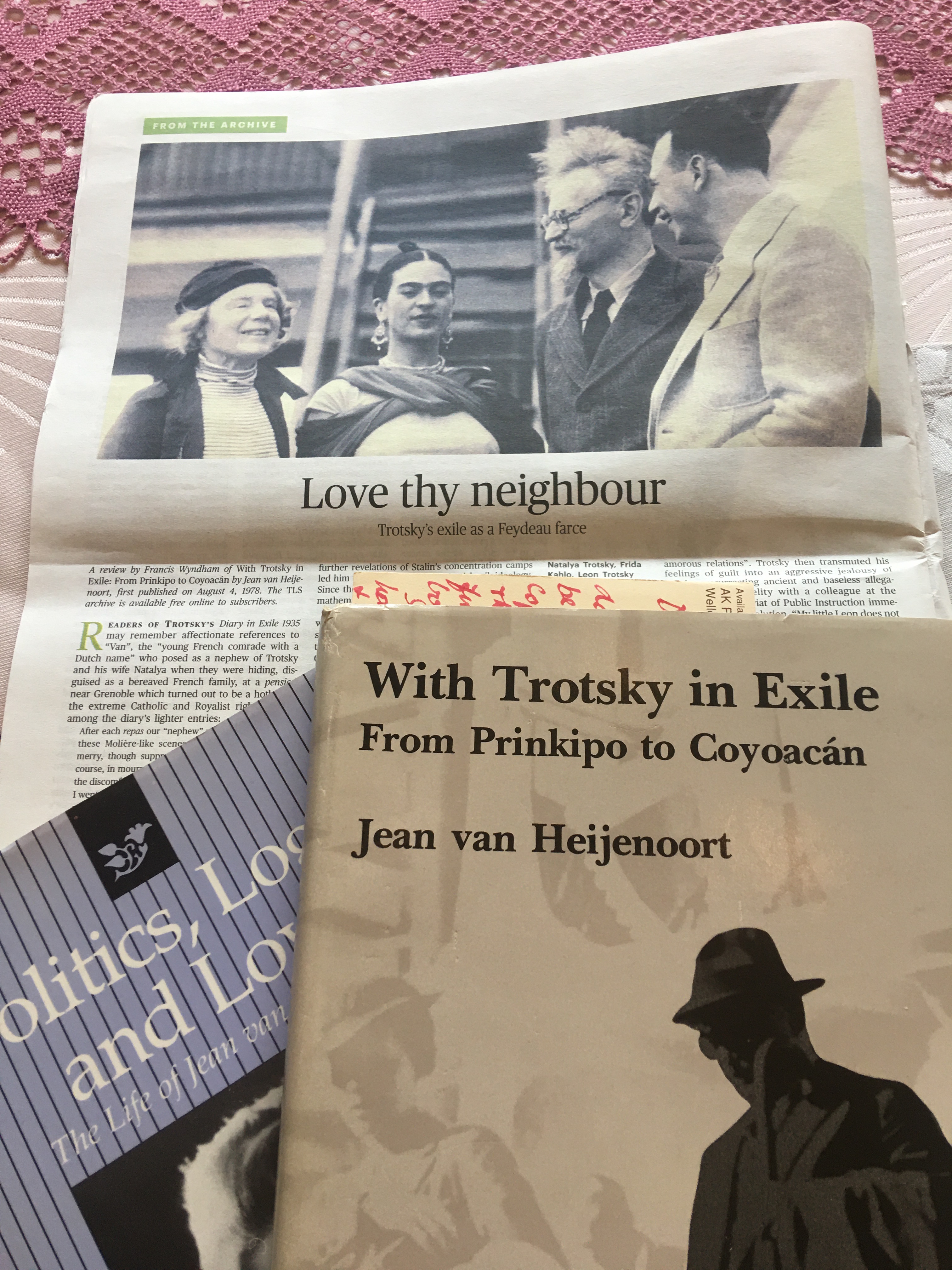
The Times Literary Supplement recently republished the late Francis Wyndham‘s review of Jean van Heijenoort‘s 1978 book on Leon Trotsky, With Trotsky in Exile: From Prinkipo to Coyoacan. (It’s in the February 7, 2020, issue with the title “Love thy neighbour, Trotsky’s exile as a Feydeau farce.” )

A Frenchman with a Dutch last name, Van Heijenoort was Trotsky’s secretary and bodyguard in exile. Van, as everyone called him, observed Trotsky’s life first hand, and wrote his book to correct the many errors that were circulating in the vast literature on Trotsky and Stalin.

Van was a mathematician and compulsively accurate. Wyndham was surprised and appalled by Van’s factual description of Trotsky’s blithe bed-hopping all while the old Bolshevik and his long suffering wife Natalia were being hunted down by Stalin’s assassins all over Europe and Mexico. In 1937, Diego Rivera befriended Trotsky, often referred to as “The Old Man,” whom Frida Kahlo called “el Viejo” or “Piochitas.” Trotsky was soon initiating an affair with Frida, who eventually decided it was too dangerous. Wyndham apparently not aware of Van’s own entanglement with Frida. The “Feydeau farce,” as Wyndham styles it, only came to an end when the assassination was finally successful in 1940 in Mexico. In 1978, Van tried to correct all the accumulating errors in the historical narrative at a time when some leftists saw Trotsky as the true heir of Marx.

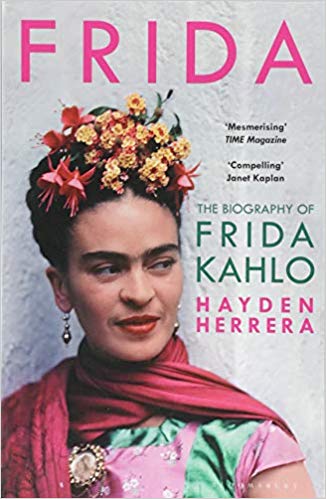
Meanwhile in California in 1978, I started working in the Hoover Archives at Stanford, where there is original correspondence from figures such as Diego Rivera and Frida Kahlo in the papers of Bertram and Ella Wolfe. These affectionate and exuberant letters from Frida to Ella, whom she calls Ella, Linda, and Ellochka, are sometimes sealed with lipstick kisses. The archives also hold a rare home movie of Trotsky, Diego, and Frida – donated by a former Trotskyist named Alex Buchman. The film and the papers helped fuel a kind of frenzied interest in Diego and Frida. Bertram Wolfe died in 1977, but Ella carried on his legacy and generously helped scholars such as Hayden Herrara, then writing her famous biography of Frida. All of this was great fun for me, and I looked forward to the publication of Bert’s (“Boit,” as Frida called him, imitating his Brooklyn pronunciation) posthumous memoirs, A Life in Two Centuries.

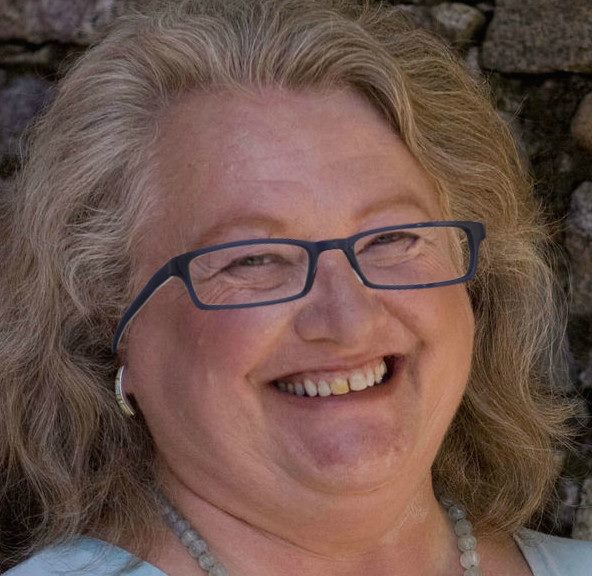
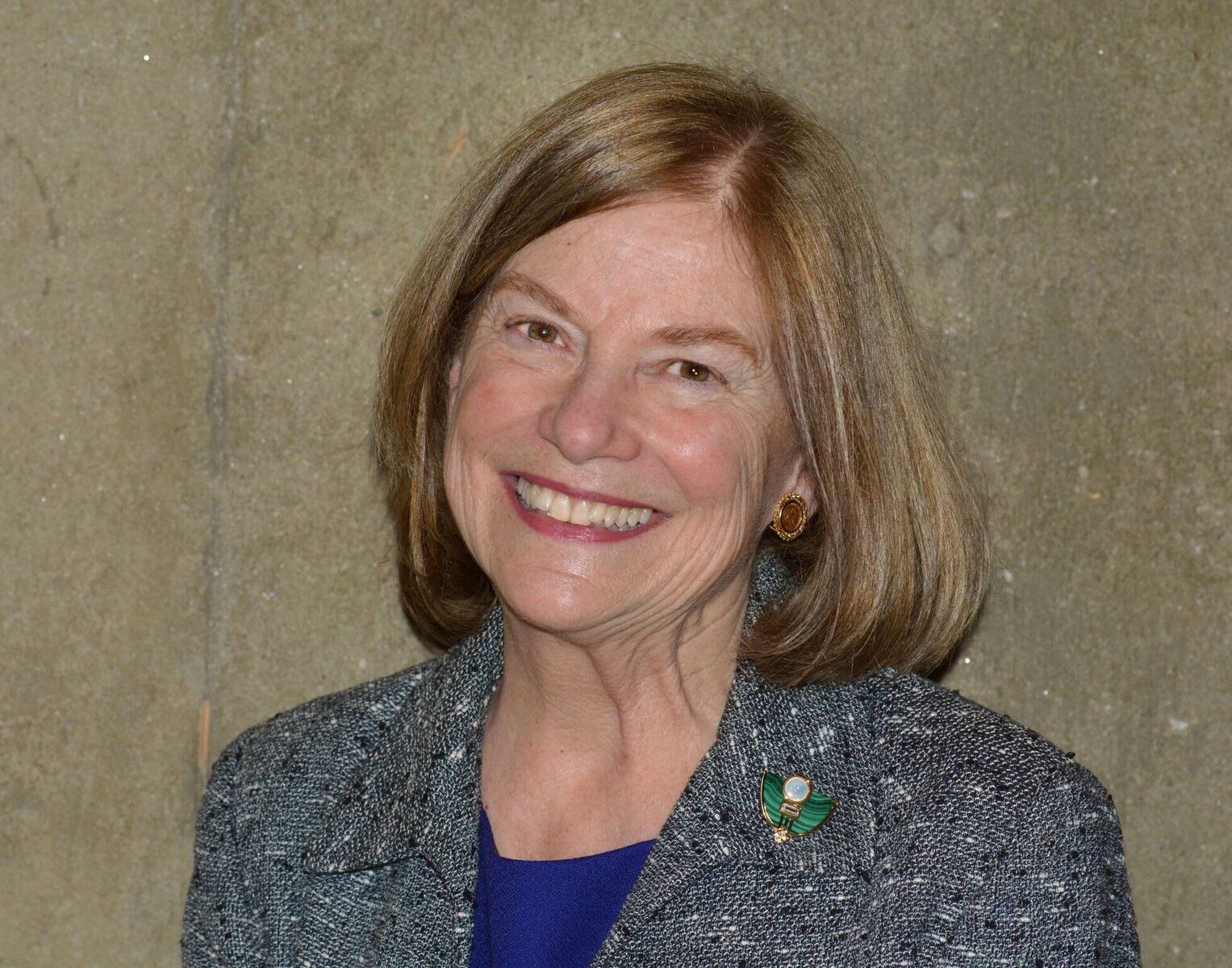
Archivist extraordinaire: Elena Danielson

By 1982, Van, as everyone called him, became a presence on the Stanford campus where he was working in the Math Department on the history of logic (primarily the work of Kurt Gödel) with the department chair Solomon Feferman. While Van had mostly left his political life behind, he attended Ella’s 1982 talk about her late husband’s Life in Two Centuries (New York: Stein and Day, 1981). Van made a public comment during Q&A that drew my attention.

Van had presence: Tall, thin, precise in his speech, and unexpectedly charismatic. Van had helped with the opening of the Trotsky papers at Harvard in 1980. There were no Trotsky papers at Stanford, he knew, because he had made inquiries. I did not expect to see him again.

In 1983, in the Hoover Archives reading room, I was helping a researcher, a professor of cultural studies from York in Canada, Marlene Kadar, who was an expert on André Breton, who had ties with the Trotsky circle in both France and Mexico. I showed Marlene the Buchman film, and she got quite animated: on the flickering gray screen, behind the massive figure of Diego, the intense Trotsky, and the flamboyant Frida, was a tall, thin, strikingly handsome figure of a man in the background. “I know that man! He is here.”

She had met Van at Harvard in 1980 at the opening for the Trotsky papers. He went on to participate in her doctoral defense, so she gave him a copy of her dissertation while they were both on the Stanford campus. Marlene dashed off and brought Van to see the home movie, which much amused him: there he was himself in his earlier political life, more than four decades before. Both in 1937 and still in 1983, he was courtly and quiet, but with an intensity you could not miss.

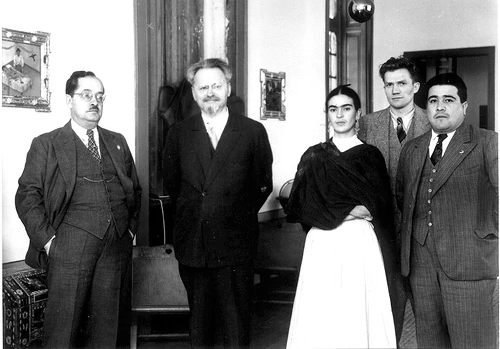
Trotsky, Kahlo, Heijenoort, and friends

Marlene encouraged me to look for more Trotsky materials to show him, that sent me to the index of the massive Nicolaevsky papers. Nicolaevsky’s widow, who had tightly controlled access to the papers, had recently passed away. Looking through the typed list of the contents, I noticed recent handwritten additions to the index: Sedov and Trotsky in section 231. So I brought out a sample box from Fond 231. Van and Marlene were elated….these were indeed papers of the Old Man, some typed by Van himself decades earlier.

From then on for the next three years, he was often in the archives, helping us process the Hoover set of Trotsky papers. Most notably, he compiled a detailed list of all of the pseudonyms used by the Trotskyists. Van himself had operated under quite a few false names. Solomon Feferman and his remarkable wife Anita created a kind of salon, and generously included me in some of the dinners and discussions with Van and other Trotsky historians, notably Pierre Broué. Sometimes when I was supervising the reading room, it took a while to notice that Van had come in to work. He was preternaturally quiet, and wore very soft, soundless, rubber-soled shoes. He came of age evading the attention of the police and spies, and just knew how to move quietly. Old habits die hard.

From conversations with Anita, I was aware of Van’s colorful personal life, which initially seemed at odds with his reserve. However, it was not ordinary reserve, it was more like oceans of emotion held in check by a sea wall. His affair with Frida became public with Hayden Herrera‘s biography, but it was definitely not something we would talk about. He would periodically disappear without explanation, then quietly show up later, without any mention of where he had been. I would assume maybe a trip to France or Mexico.

After one of his puzzling absences, the telephone rang. Van had been murdered in Mexico. His fourth wife shot him, and then killed herself. It was chilling. He had survived Stalin, but not his wife.

It had always seemed best not to ask too many questions. Fortunately, the witty and vivacious Anita won his confidence, and she did ask questions and put the information he told her in her biography with the enchanting title Politics, Logic, and Love: the Life of Jean van Heijenoort (Boston: Jones and Bartlett, 1993). Here it is February 2020 as I’m writing out these memories, as I get email that the de Young Museum in San Francisco is opening a new exhibition on Frida Kahlo. The mystique around these flamboyant people lives on.

Read the article, “Love Thy Neighbour,” over at the Times Literary Supplement. It’s here.