
In English at last: Vasily Grossman’s “Stalingrad,” and how nations can be both victims and perps

Share

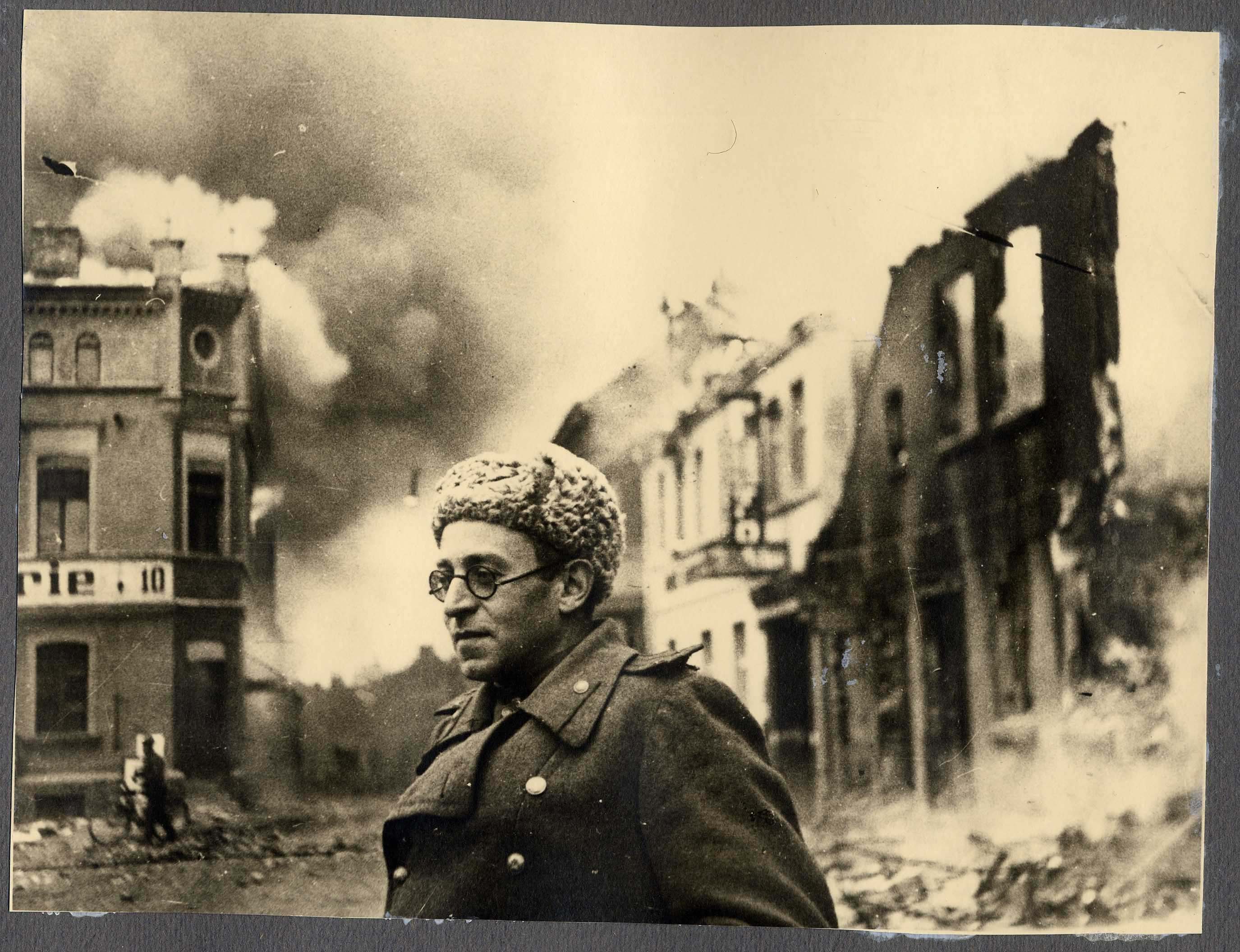
Grossman as a reporter for the Red Star. In Germany, 1945.


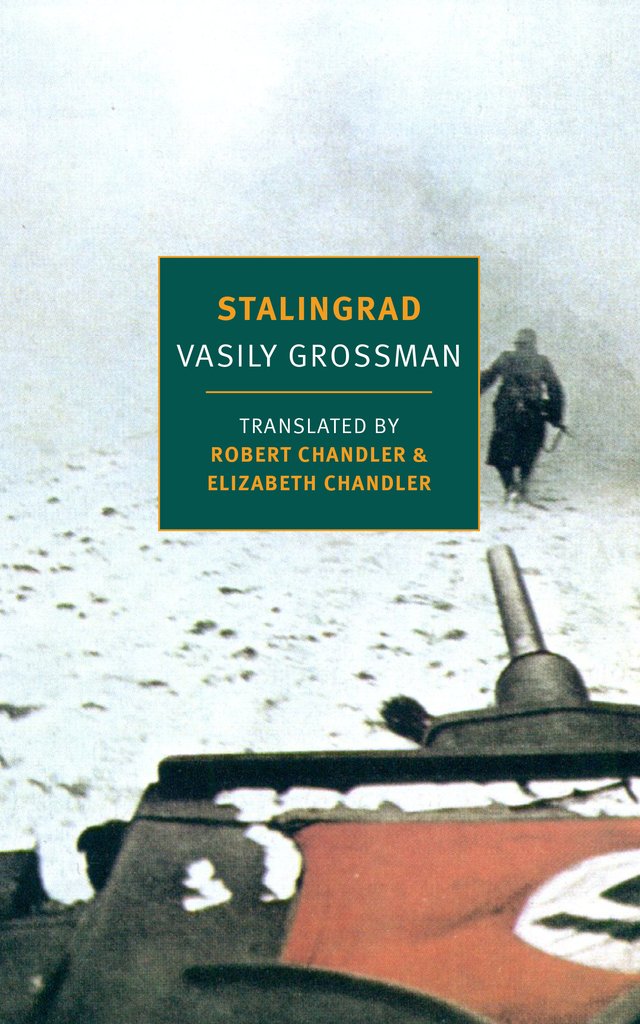
A few days ago, Vasily Grossman‘s 1952 Stalingrad arrived at my Stanford mailbox – a surprise for me, and an absolute miracle for Russian literature. It’s the first-ever translation of the “prequel” to Life and Fate (we’ve written about that book here and here and here). Both books have been considered a twentieth century update of Tolstoy’s War and Peace. But there’s a significant difference: while Count Tolstoy tended to focus on the stories of aristocrats, Grossman, a Ukrainian Jewish journalist and soldier who had written about the opening of Treblinka (he was there), “accords a proper humanity to his subsidiary cast of steelworkers, factory chemists and Red Army soldiers, who battle against the odds from their ice-bound dugouts and foxholes,” according to Ian Thomson, writing in the London’s Weekly Standard. But there was another big difference: the Soviet Union didn’t want Grossman’s stories told, and did its best to suppress and destroy the manuscript. Evans tells that story, too, in London’s The Telegraph. 

Chandler and his wife and co-translator for Stalingrad, Elizabeth Chandler, are already getting the reviews most writers dream of. According to Robert Chandler, “Vasily Grossman was a man of unusual courage, both physically and morally. He spent longer than any other Soviet journalist in the thick of the fighting on the right bank of the Volga, in the ruins being fought over building by building and even room by room. And then, within months of the Soviet victory at Stalingrad, he was writing some of the first articles and stories published in any language about the Shoah.”

From Evans in The Telegraph:
“I read Life and Fate on a trip to Moscow during the post-Soviet badland years, at the very end of the last century. Its vividness and power were so extraordinary that I felt my understanding both of that century, and of human love and fragility, shift on their foundations.

“The appearance of Stalingrad, Grossman’s prequel to Life and Fate written a decade earlier, is then a cause for excitement. Why do we so admire him? If you haven’t read him, you may be surprised that he does not feel ‘new’. His prose is plain, rugged, nearly old-fashioned. He has none of the bravura of Bulgakov, Olesha or Platonov, not much of the refinement of Pasternak or Solzhenitsyn. He is Hemingway without the modernism (and exalted masculinity).” [Solzhenitsyn … refined? – B.H.]

“But a choice of detail, a descriptive lovingness in his sentences (he revels in lists as much as a panning movie camera), and a tireless curiosity about people under stress from tectonic events, enable him to articulate with an arresting empathy how it feels to be alive and human under such pressure. His minute and compulsive interest in his characters might feel intrusive, if his understanding were not so true. When, at Stalingrad’s start, Pyotr Vavilov, a middle-aged kolkhoz [collective farm] worker, receives his call-up papers in the summer of 1942, his first worry is that he cannot leave his family enough wheat and firewood to see them through the winter:

That night Vavilov stood in the moonlight, chopping up the tree stumps stacked under an awning behind the shed… Marya – tall, broad-shouldered and dark-skinned like her husband – was standing nearby. Now and again she bent down to pick up stray pieces of wood and occasionally she gave her husband a sideways look… Neither was speaking, which was their way of saying farewell. All around was silence. Like soft linseed oil, the moonlight covered the ground, the grass, the broad fields of young rye and the roofs of the huts, dissolving in the puddles and little windows…

“That’ll do,” said his wife. “You’re not going to lay in enough firewood for the whole of the war.”

According to Thomson in The Evening Standard, “For good or ill, no definitive version of Stalingrad exists. The ‘official’ version published in Moscow in 1954, one year after Stalin died, was heavily cut by the Central Committee and contained drearily propagandist overtures to collective farm output. Thanks to the editorial endeavours of Grossman’s superb translators, Robert and Elizabeth Chandler, Stalingrad has now been restored to the version that Grossman himself might have wanted.”

According to Evans in The Telegraph:  “Stalingrad (flawlessly translated by Robert and Elizabeth Chandler), beyond its breathtaking fictional panorama, is, I think, even more moving because it also tells the story of a liminal moment, a moment that is briefly innocent both of the full hell of the Holocaust that Grossman would go on to document in Life and Fate, and of the knowledge we now have, that nations can be both victims and perpetrators.”

Read The Telegraph review here. Read The Evening Standard review here.
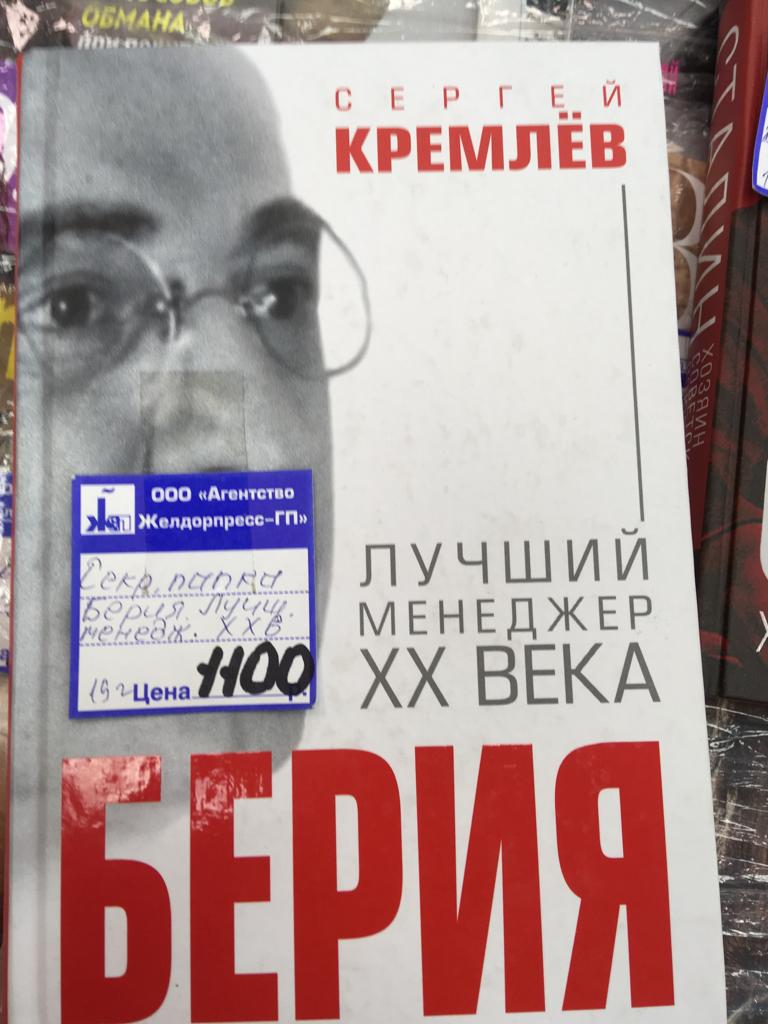
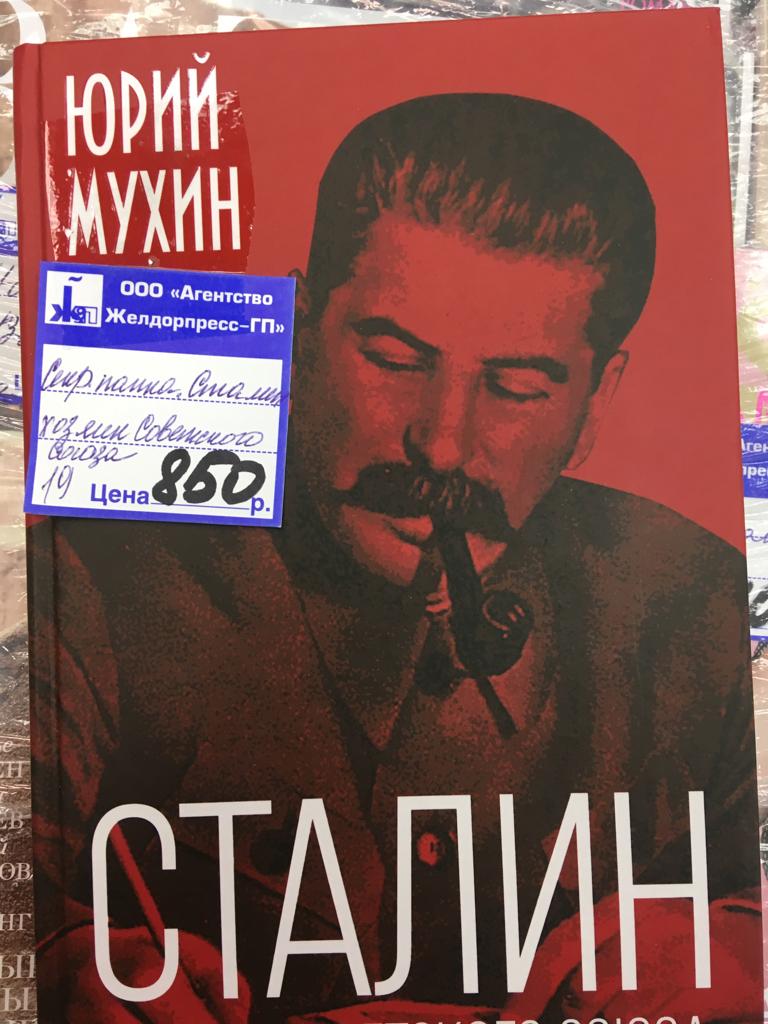
Mass murderer Lavrentiy Beria: Moscow’s comeback kid? What’s selling in Russian bookstores today…

Share

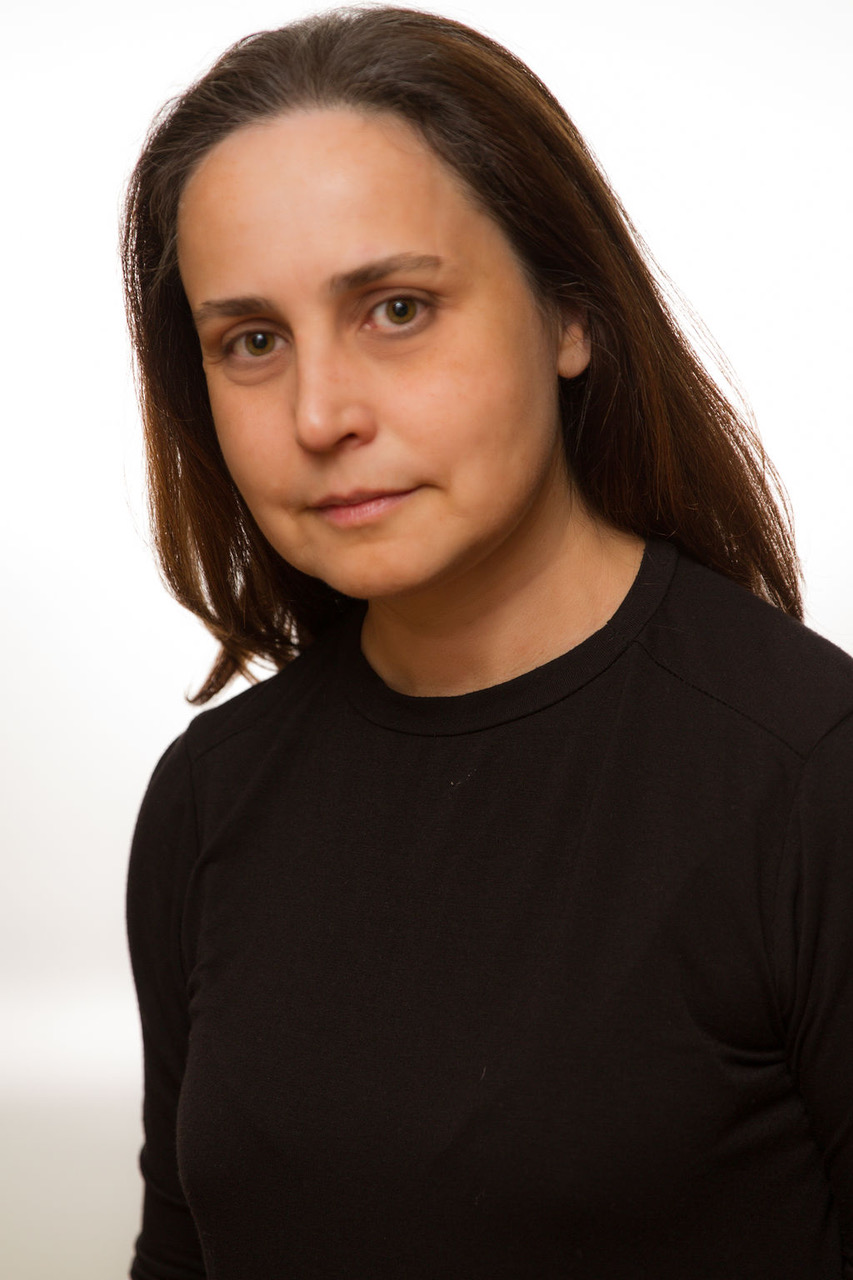
Marianna Yarovskaya

Think you have it bad here? When you see what’s selling in Russian bookstores, you’ll be grateful for Amazon.com. Filmmaker Marianna Yarovskaya was presenting her Women of the Gulag at Cannes International Film Market, and was en route to Chisnau in Moldova, where the film about the last surviving women of the Soviet gulag system will be getting an award.

But she took a moment to write to me from Cannes: “Moscow friends occasionally send me snapshots from local and big bookstores. Here are a few more. Photos of ‘wonderful’ legally sold books in Moscow stores that have been sent to me: Beria: The Best Manager of the Twentieth Century (left), The Genius of Stalin, The Genius in Power.” This was photographed at the newspaper stand near Kazansky train station in Moscow this morning.”

Joseph Stalin is infamous and renowned. But Lavrentiy Beria? Not so much. Yet he engineered the Katyń massacres, which destroyed a generation of Poland’s leadership, about 22,000 officers and civilians.

He administered and expanded the vast gulag system, the subject of Marianna’s film. He also oversaw secret detention facilities for Soviet scientists and engineers, and the Communist takeover of the nations in Central and Eastern Europe, along with the repression of the people in those countries. He even supervised the development of a Soviet atomic bomb project.

But some of you will remember him from The Death of Stalin. Simon Russell Beale portrays the unsavory Beria in the film clip below, with Jeffrey Tambor as Georgy Malenkov (in white), who briefly assumed power after Stalin’s death, and Steve Buscemi as the wily Nikita Khrushchev, who launched a successful coup d’état.

Theatrical distribution of the film was banned in Russia, but pirated copies circulated.

Bibliophile and oenophile alert: rare 16th-century German winemaking book on the auction block!

Share

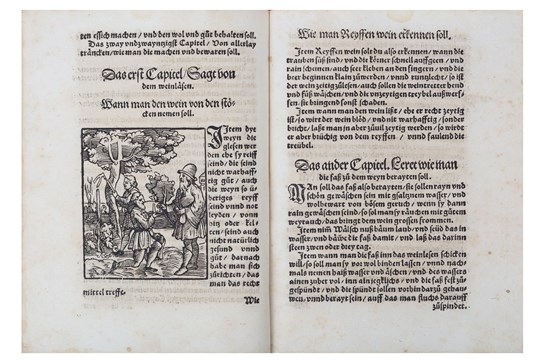
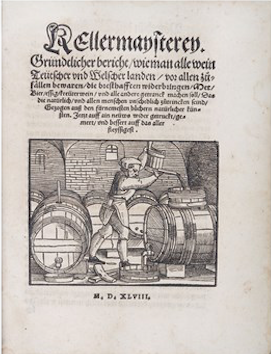
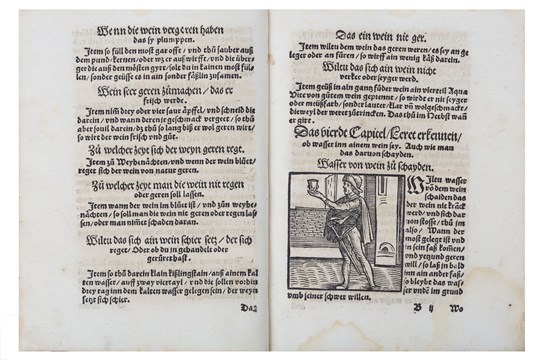
A rare copy of an early German winemaking book is on the auction block. It’s expected to fetch £2000-3000. The unusual offering comes to us courtesy the Rare Books & Works on Paper sale at Chiswick Auctions. The bidding ends on May 29.

Here’s the cool part: the beautiful woodcuts are by Hans Schäufelein, one of Albrecht Dürer‘s most gifted pupils. Schäufelein, born sometime between 1480 and 1485, was one of Dürer’s first journeymen. He developed his own style, yet never lost Dürer’s friendship and confidence along the way.

The illustrations, which show a winemaker at his labors, were originally planned for the Heinrich Steiner’s edition of the Liber Ruralium Commodorum by Petrus de Crescentiis, a work that was never printed.

This extremely rare copy on the production, storage, and improvement of wines, as well as beer, vinegar, mead, wormwood, and brandies, was reprinted eleven times until 1560, often bound together with Kuchenmeysterey, the first German cookbook.

According to Carmen Donia of Chiswick Auctions, interest in wine books, as well as an increase in their prices, has been a trend for the last few decades, thanks to the explosion of interest in food and wine in our wider culture. Among the earliest and most desirable titles is a work by Bartolomeo Plantina, the first printed cookbook from the late 15th century, the 1514 First Aldine Edition of Libri de re rustica (Book of Country Affairs), including works by Columella, Cato, Varro and Palladius, as well as Paulo Mini’s Discorso della natura del vino (1596), one of earliest books on wine.

“The author, not surprisingly a physician, considering the role wine played in health and wellbeing, tries to analyze tasting notes from different regions around Italy,” she says.

“Large collections of rare and first edition wine books have typically been amassed by wine estates, but equally academic institutions and wealthy individuals, especially traders and passionate oenophiles, have taken an interest. All early printed books (15th-16th century) on wine making, or on the culture surrounding wine, are very rare. We are therefore delighted to be able to offer this unique edition in our upcoming sale.”

Interested? Place your bids here.

Maxim Osipov: “You write a poem and a window breaks—such is the strength of your word.”

Share

Translator Boris Dralyuk

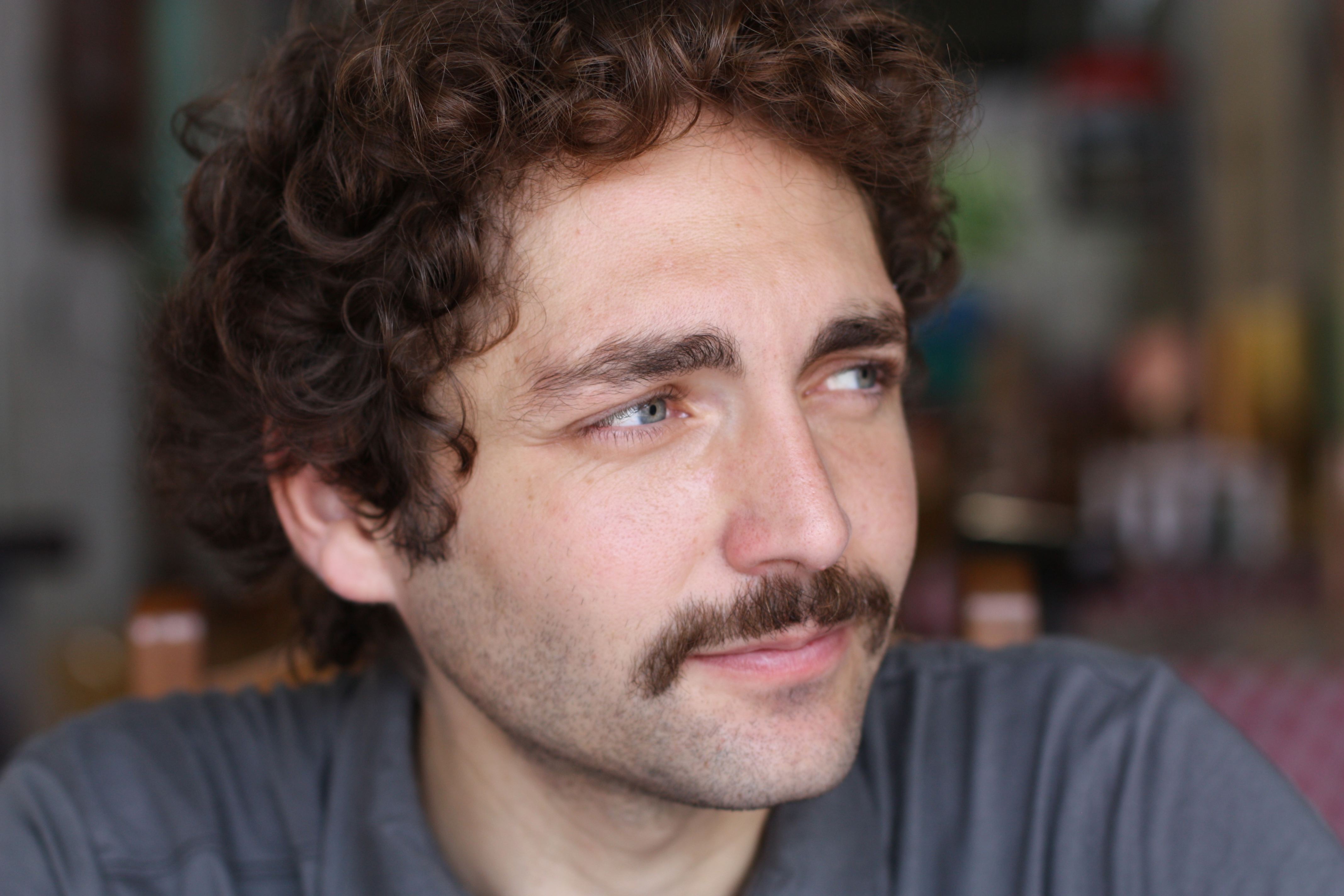
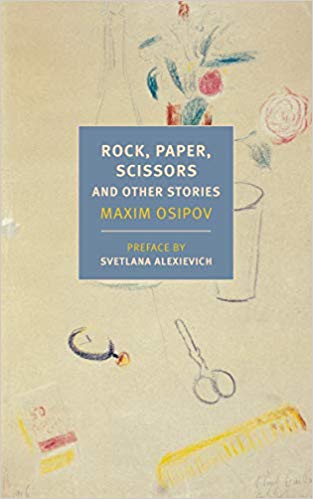
Boris Dralyuk alerted me to Joshua Yaffa‘s “A Doctor’s Literary Calling,” in the New Yorker this month. The article is a profile of Russian writer and cardiologist Maxim Osipov. Boris’s enthusiasm is understandable: he is one of the early champions of Osipov’s  writing, and his translator as well. Osipov’s rueful reaction to his newfound fame and the controversy it’s caused in Tarusa, the small provincial town that is his home: “It’s any author’s dream … You write a poem and a window breaks—such is the strength of your word.”

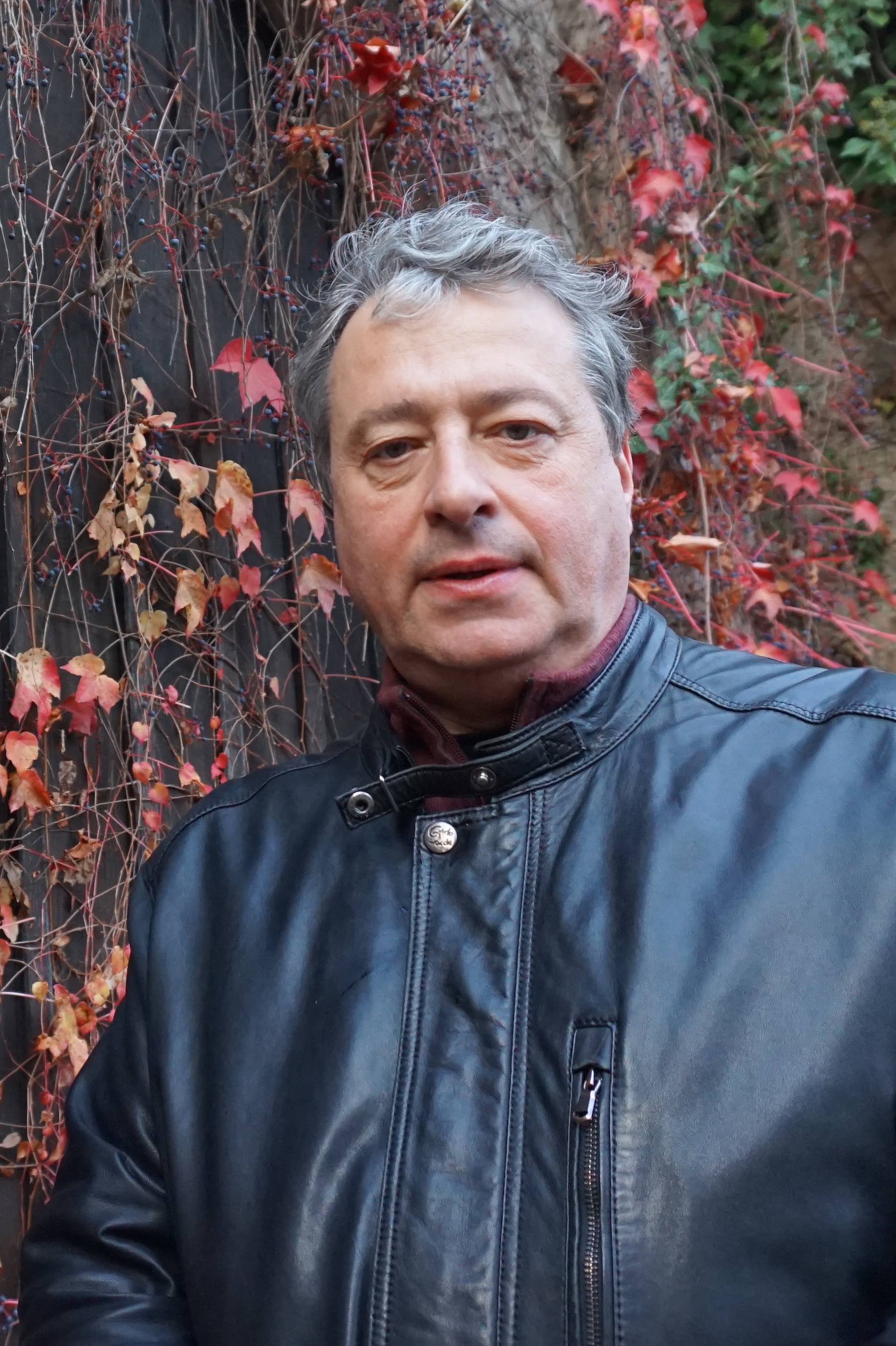
According to Yaffa, “Osipov’s legend grew, and so did the inevitable comparisons to Chekhov, who, in the eighteen-nineties, at his estate outside Moscow, often treated peasants for free and helped contain a cholera outbreak. ‘Both anatomy and belles-lettres are of equally noble descent,’ Chekhov once wrote to his publisher, adding that they share ‘identical goals and an identical enemy—the Devil.’ Osipov bristles at the comparison. ‘All it illustrates is the inclination to typecast people,’ he said. But it is hard not to find something Chekhovian in Osipov’s precision and pitiless honesty.”

“Precision and pitiless honesty.”

More praise: “In the past two decades, Russian literature has been dominated by surreal, dystopian tales—an appropriate genre, perhaps, to describe the convulsions that followed the Soviet collapse. Osipov’s stories, by contrast, are quiet, almost documentary. ‘There’s something of the late nineteenth century in Osipov,’ Anna Narinskaya, one of Russia’s leading literary critics, told me. ‘He allows himself a certain moral judgment. He knows what’s right, in life and in literature.’”

Varya Gornostaeva, who has published Osipov’s books with Moscow’s Corpus Books, told Yaffa: “Russian society is sadly marked by a certain infantilism. Maxim isn’t so much a liberal—though he’s that, too—as he is an adult, a person who can answer for himself. He’s one of the few grownups.”

“A year and a half after his first essay appeared in Znamya, he published an elegiac follow-up called “Complaining Is a Sin,” in which he describes receiving an early-morning summons from the hospital. “Cold, fog,” he writes. “Ten minutes later, you run into the office, shove the plug into the socket, everything is noisy, you put on a robe, look at the canvas-colored twilight outside the window, and say to yourself, ‘One, it won’t get any better, and, two, this is happiness.’ ”

Yaffa’s profile includes the fascinating history of Tarusa, a city 101 kilometers outside Moscow, the nearest former prisoners were allowed to get near the capital. It became a refuge for dissidents:

“As the camps emptied out after Stalin’s death, in 1953, Tarusa became increasingly populated with former prisoners. In 1955, Konstantin Paustovsky, a mid-century Soviet Thoreau, who was an officially recognized writer and was not a dissident himself, sought to escape the distractions of the capital and settled in Tarusa. In his small blue house at the end of a dirt lane, he began hosting the kinds of cultural figures who were treated with varying degrees of suspicion by the Soviet authorities—among them Arkady Steinberg, a poet and a translator who spent eleven years in the gulag, and Bulat Okudzhava, a talented folksinger whose parents had been arrested as ‘enemies of the people,’ in the thirties.”

The town became a sort of “sanctuary city” for those out of favor, “including, in 1959, Nadezhda Mandelstam, the widow of the poet Osip Mandelstam, one of the great lyricists of the twentieth century, who disappeared into the gulag in the thirties. Nadezhda had spent years evading arrest, moving from one provincial town to the next. In Tarusa, she found a place of refuge. ‘It’s Heaven,’ she wrote in a letter inviting another poet to visit her. ‘It’s wonderful here. I live well.’”

“It was in Tarusa where she began to work on her memoir, which circulated in samizdat copies in the Soviet Union and was first published in the West in the nineteen-seventies. ‘I knew she was writing something,’ [translator] Viktor Golyshev … who is now in his eighties, recently recalled. ‘But at the time I was honestly far more interested in lying on the beach by the Oka and getting a suntan.” …

“A young, relatively unknown Joseph Brodsky came to visit; so did his fellow future Nobel recipient Alexander Solzhenitsyn, the chronicler of the gulag. Rumor had it that as many as eleven K.G.B. agents were assigned to the town to keep track of all the political undesirables.”

Read the whole thing here.

Ukraine’s national poet Serhiy Zhadan: “I believe in a people’s right to decide its future.”

Share

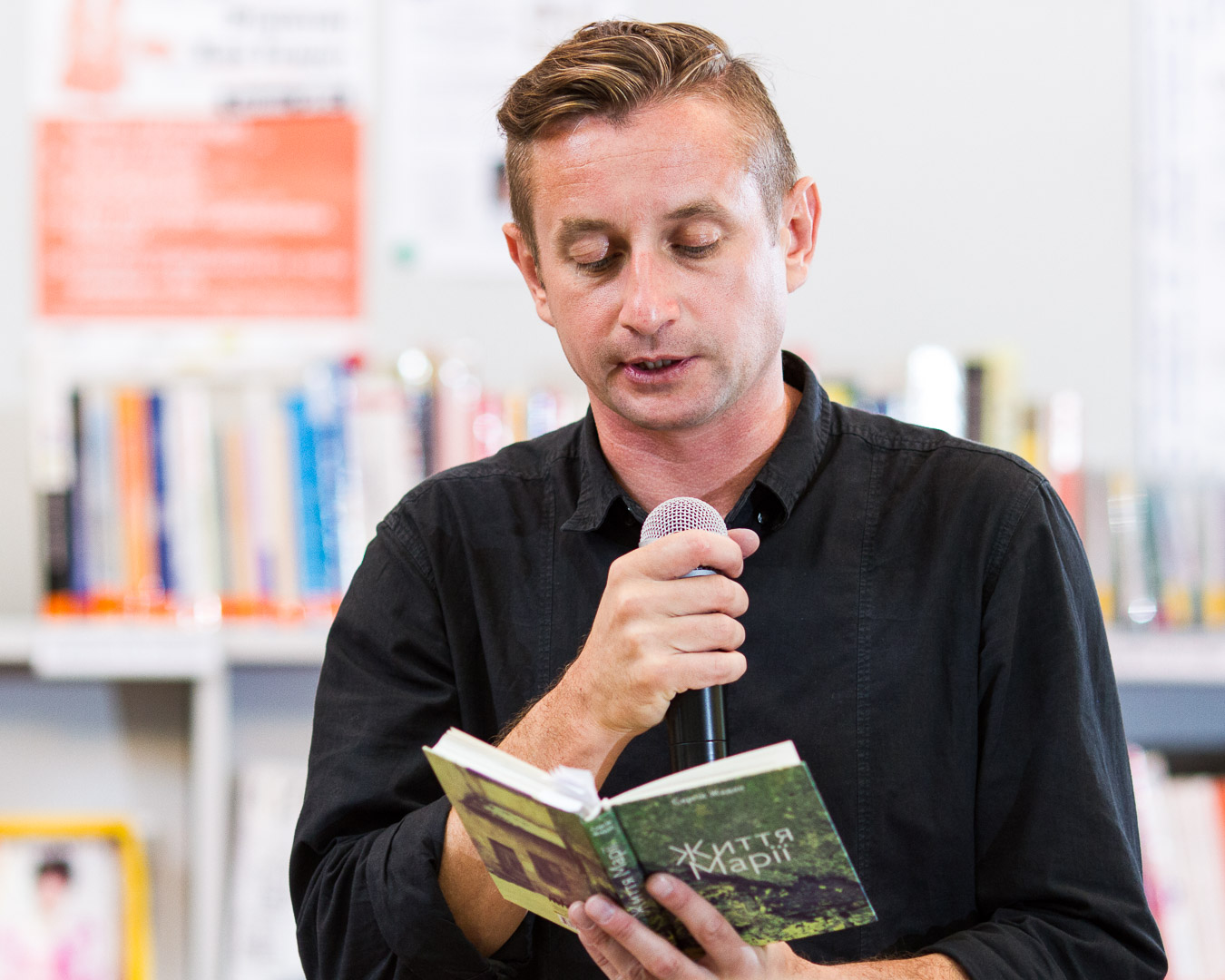
Reading from “Lives of Maria” in Wrocław, Poland (Photo: Rafał Komorowski)

Just back from a busy day in Berkeley, but not too tired to share an article I just discoverd on Serhiy Zhadan in the Los Angeles Review of Books. Steadfast Book Haven readers will remember me writing about Ukraine’s leading writer (poet, novelist, essayist, translator), who visited Stanford a year or so ago, here and here and, in a piece titled “They told him to kneel and kiss the Russian flag, then he told them to…” here.

An excerpt from Amelia Glaser’s article, “Poems for an Uncertain World: On Serhiy Zhadan’s “What We Live For, What We Die For”:

…with the beginning of the war in Donbas in 2014, the present grew grimmer, and Zhadan’s verse grew more urgent. He has remained in close contact with many who still live in the region, and has written a series of poems in versions of their voices. “Headphones,” from 2015, describes a “quiet drunk” who has stopped watching the news. Instead,

He walks around the city with headphones on,
listening to golden oldies,
as he stumbles into burned-out cars,
blown-up bodies.

The poet in a café…

In addition to writing, Zhadan fronts a rock band, The Space Dogs (Sobaki v Kosmose), which has recently been renamed Zhadan and the Dogs (Zhadan i Sobaki), reflecting the poet’s new status as a household name. Phipps and Tkacz did not include his songs in this volume, but the fact that Zhadan is a public figure, immersed in the contemporary culture he writes about, is very much a part of his poetic persona. Rejecting the ivory tower, the 44-year-old Zhadan — whose boyish face is framed by a punky crew cut — articulates the voices of the crowd.

Much has been written about Zhadan’s street-level activism, about his involvement in the Kharkiv protests during the 2014 Euromaidan standoff. The poet made international news when he was badly beaten by a pro-Kremlin “Titushka,” or rabble-rouser, that spring. But what is striking about Zhadan — who read his work at my home institution, UCSD, two years ago — is his ability to connect with individuals on a personal level. He is direct, engaging, and remarkably patient. As a small group of us shared dinner after the event, a woman at the next table overheard our Russian-language conversation and, when we introduced Zhadan as a Ukrainian poet, asked whether he was a nationalist. Zhadan, who had recently been listed by the Russian government as a nationalist terrorist and arrested for attempting to attend a poetry festival in Belarus, shook his head, then added, “But I believe in a people’s right to decide its future.” He agreed to send the woman some of his writing electronically. I was stunned by his empathy and generosity. But Zhadan, a native speaker of both Ukrainian and Russian who has always written in Ukrainian, has a long relationship with Russian readers, and one that has not always been confrontational. In Russia, his books have been shortlisted for the Andrei Belyi Prize, the “National Bestseller” award, and the “Book of the Year”; he was nominated in 2010 for Russian GQ’s “Man of the Year” for literature, and his work remains important to the Russian literary counterculture.

Read the whole thing here.

James Baldwin: “No writer can judge his work. I don’t think I’ve ever tried to judge mine.”

Share

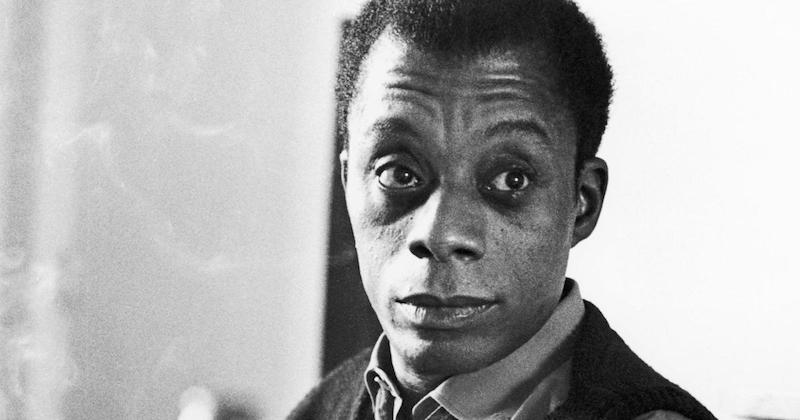
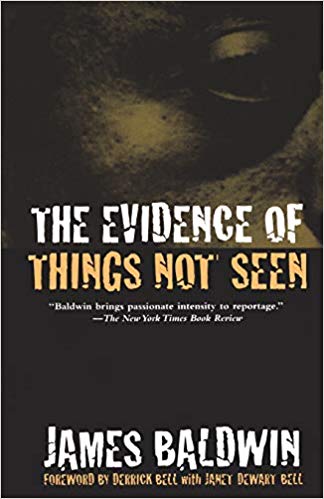
We’ve written about author James Baldwin before – here and here and here. He’s one of the most remarkable voices in American lit. So we were pleased when LitHub recently republished his 1986 interview with David C. Estes. He begins with questions about James Baldwin’s The Evidence of Things Not Seen, which had just been published the year before. The book examines the Atlanta child murders that took place over a period of twenty-two months in 1979 and 1980. Says Baldwin:

JB: No writer can judge his work. I don’t think I’ve ever tried to judge mine. You just have to trust it. I’ve not been able to read the book, but I remember some of the moments when I wrote this or that. So in some ways, it’s a kind of melancholy inventory, not so much about myself as a writer (I’m not melancholy about that), but I think that what I found hard to decipher is to what extent or in what way my ostensible subject has changed. Nothing in the book could be written that way today.

Estes retraces his career, and Baldwin recalls his early days as a writer. Another excerpt: 

JB: Later, at Commentary, I had a marvelous relationship with one of the editors—Robert Warshow, my first real editor. He asked me to do an essay about the Harlem ghetto. When I turned it in, Robert said, “Do it over.” He didn’t say anything more. So I did. And then he said, “You know more than that.” I began to be aware of what he was doing. When he saw me come close to what I was afraid of, he circled it and said, “Tell me more about that.” What I was afraid of was the relationship between Negroes and Jews in Harlem—afraid on many levels. I’d never consciously thought about it before, but then it began to hit me on a profound and private level because many of my friends were Jews, although they had nothing to do with the Jewish landlords and pawnbrokers in the ghetto. So I had been blotting it out. It was with Robert that I began to be able to talk about it, and that was a kind of liberation for me. I’m in his debt forever because after that I was clear in my own mind. I suddenly realized that perhaps I had been afraid to talk about it because I was a closet anti-Semite myself. One always has that terror. And then I realized that I wasn’t. So something else was opened.

DCE: What major artistic problems have you had to confront in your nonfiction?

JB: I was a black kid and was expected to write from that perspective. Yet I had to realize the black perspective was dictated by the white imagination. Since I wouldn’t write from the perspective, essentially, of the victim, I had to find what my own perspective was and then use it. I couldn’t talk about “them” and “us.” So I had to use “we” and let the reader figure out who “we” is. That was the only possible choice of pronoun. It had to be “we.” And we had to figure out who “we” was, or who “we” is. That was very liberating for me.

I was going through a whole lot of shit in New York because I was black, because I was always in the wrong neighborhood, because I was small. It was dangerous, and I was in a difficult position because I couldn’t find a place to live. I was always being thrown out, fighting landlords. My best friend committed suicide when I was twenty-two, and I could see that I was with him on that road. I knew exactly what happened to him—everything that happened to me. The great battle was not to interiorize the world’s condemnation, not to see yourself as the world saw you, and also not to depend on your skill. I was very skillful—much more skillful than my friend, much more ruthless, too. In my own mind, I had my family to save. I could not go under; I could not afford to. Yet I knew that I was going under. And at the very same moment, I was writing myself up to a wall. I knew I couldn’t continue. It was too confining. I wrote my first two short stories, and then I split.

Read the whole thing here.