International honors for “Women of the Gulag” – and an exclusive podcast from the Stanford screening!

Share


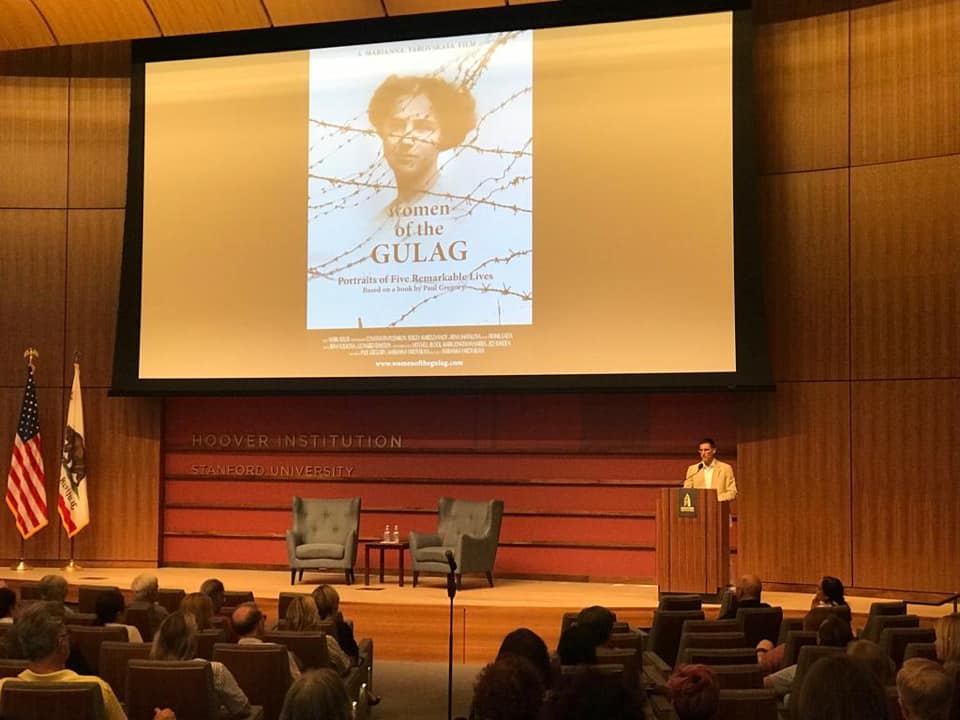
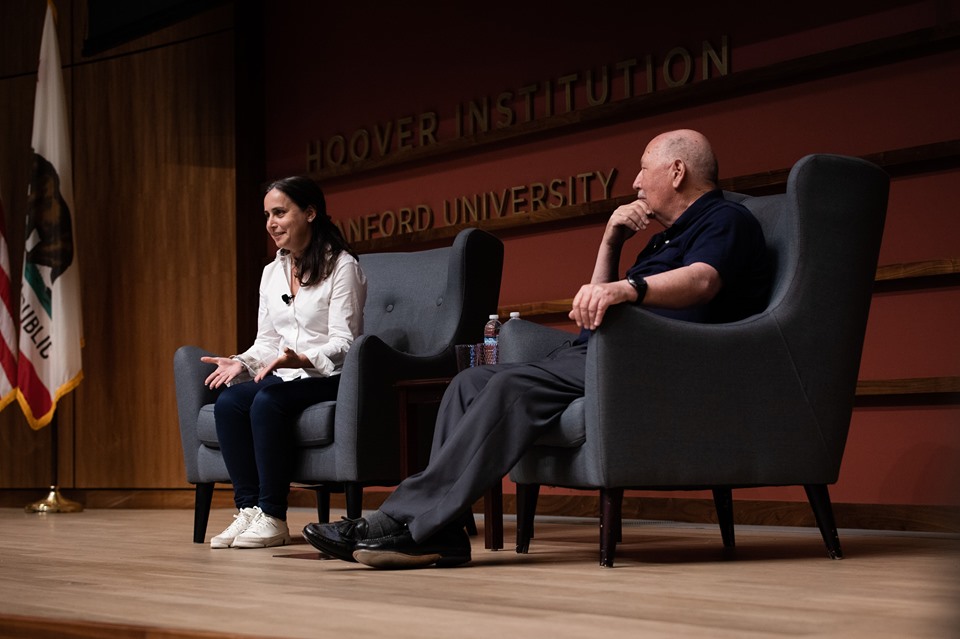
It premiered in Hollywood and New York – but on June 11, Women of the Gulag, a documentary film based on Paul Gregory‘s book of the same name, came home to Stanford. It got a big audience at Hoover’s Hauck Auditorium, in the new David & Joan Traitel Building, with a splendid reception afterwards. (We’ve written about the film here and here and here and here.)

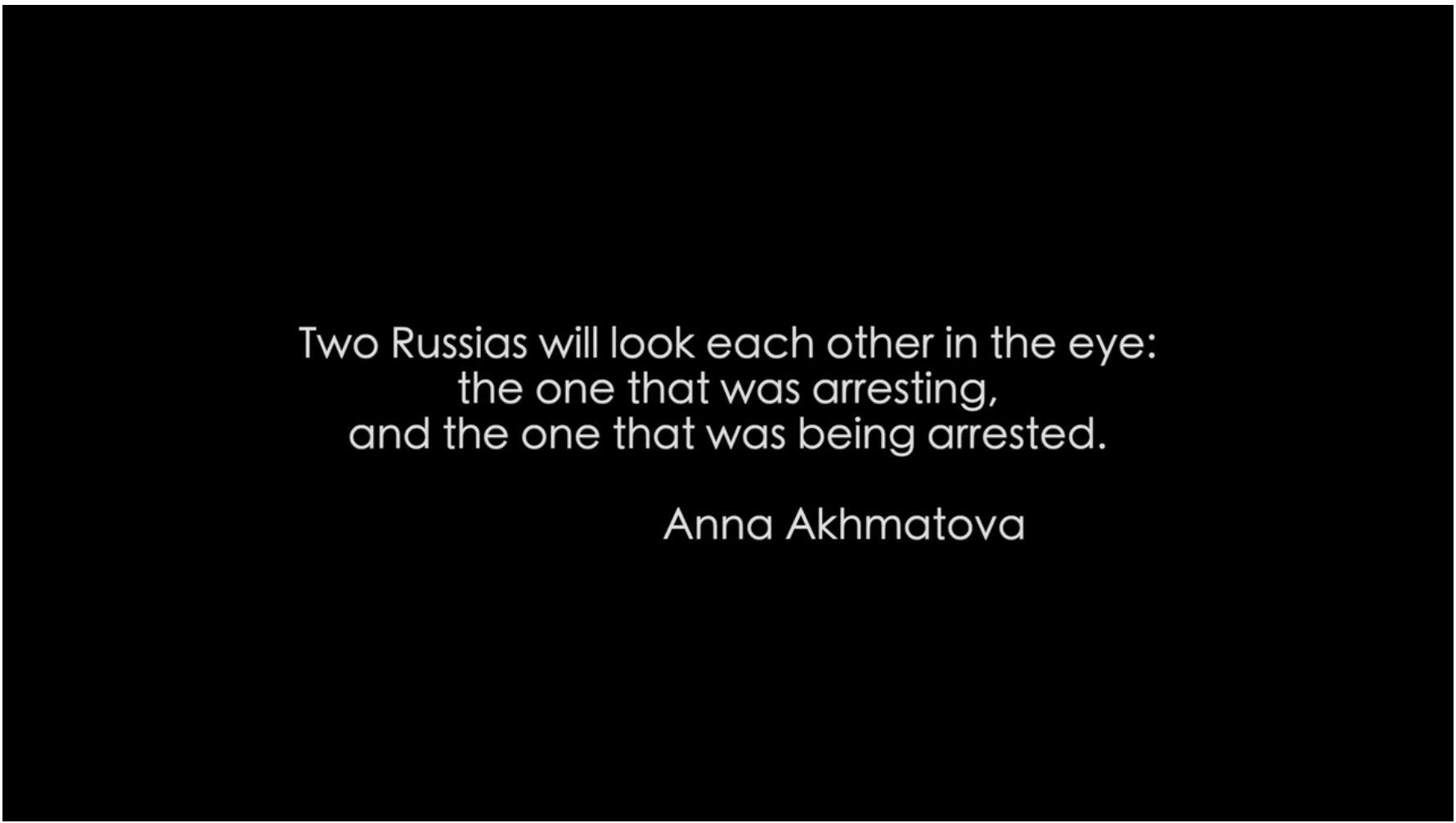
The film, directed by Marianna Yarovskaya of MayFilms and produced by Yarovskaya and Gregory, was also shortlisted in the best documentary category in the 2019 Academy Awards competition. It has been named the Best Non-European Independent Documentary in the 2019 European Independent Documentary Film Festival held in Paris. It was also shown at Moscow’s Film Festival. It couldn’t be more timely, as Russia sinks into denial, historical lies, and Stalin-fandom.

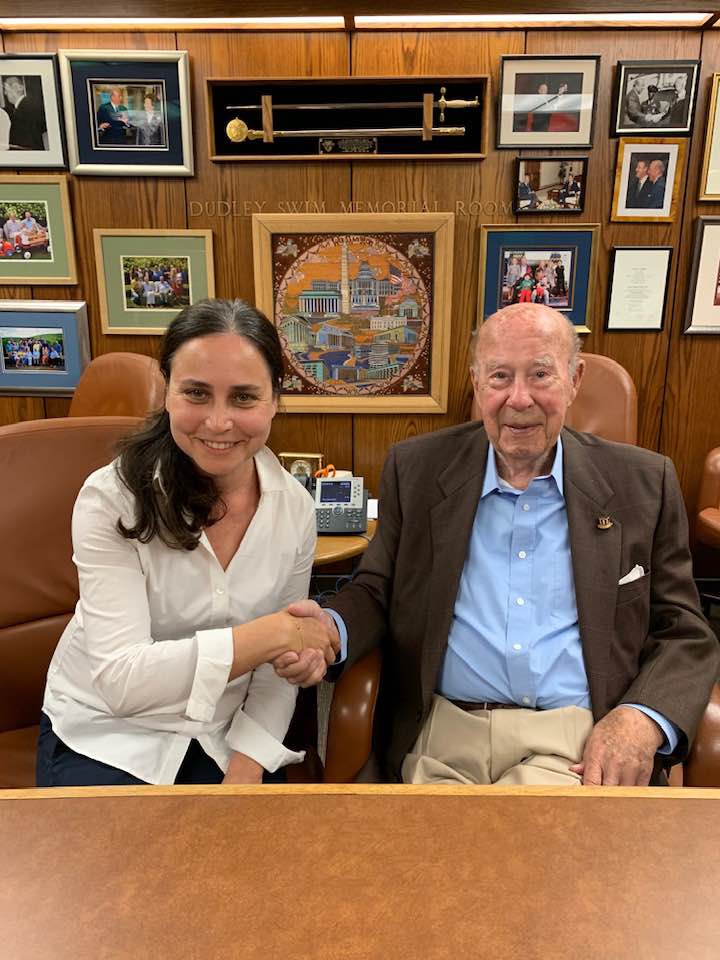
A very exclusive screening with George Schultz

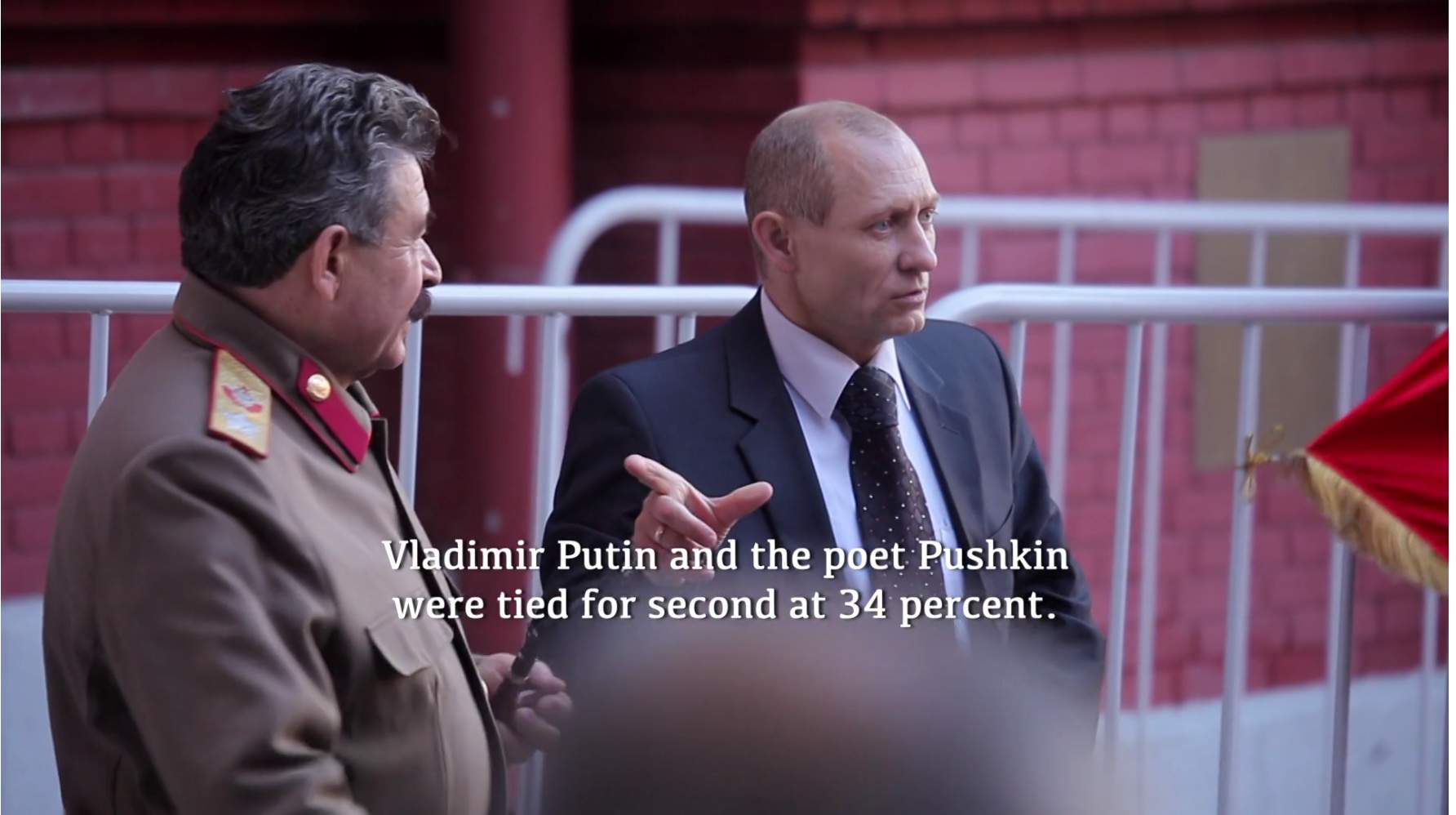
The film tells the compelling stories of six remarkable women – among the last survivors of the Gulag, the brutal system of repression that devastated the Soviet population during the Stalin years. Most stories of the gulag have told of men’s experience. Women of the Gulag is the first account of women in the camps and special settlements.

Women of the Gulag, filmed entirely on location in Russia, turned out to be the last chance to tell the story of women in camps and special settlements. Several of the women featured in the film have died since their interviews.

You can listen to the podcast of the Q&A session from the June 11 screening below – it’s a Book Haven exclusive. Eric Wakin, director of Hoover Library & Aerchives, introduces filmmaker Marianna Yarovskaya and author Paul Gregory, who have a short discussion and answer audience questions.

There’s more to come: The film has been cleared for screening on Russian Channel 2 Russiya – with an okay from the highest government levels. The film will also get Russian screenings at Дом Русского Зарубежья (Solzhenitsyn’s house) and Gulag Museum, as well as Tver and other smaller cities. Other European universities have signed on for a screenings, and so has South Korea.

But the most exclusive showing to date is the one that took place the following morning for 98-year-old former State Secretary George Schultz, who had a private screening at the Hoover Tower. He called Women of the Gulag “an outstanding work,” and praised the strength of character of the women it profiled.

Photos by Igor Runov

The BBC “Les Misérables” is fini! Get over it. Now go read the book.

Share

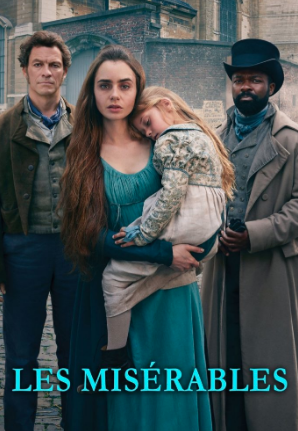
I can tell that the BBC airing of Les Misérables is tout fini. For a month or so now, the Book Haven ratings have shot up into the thousands each weekend. No more. What were people looking for at the humble Book Haven when they could watch the multi-hour BBC splendor?

They were clicking on our all-time highest-ranking post: “Enjoy Les Misérables. But please get the history straight,” illustrated with photos from 16th-century church Église Saint-Merri, where the real-life insurgents staged a desperate last stand, in and around this church at the heart of the district where the fiercest fighting took place. Over the years, the single post has gotten about a million views. It also attracted the record number of comments – 150 – before we had to turn it off because of the relentless spam attacks that defeated even the Stanford techies.

The biggest mistake viewers make: even apparently educated fans refer to this as the French Revolution. Wrong. This is 1832 not 1789. Big difference. Different clothes, different leaders. The biggest difference of all: the revolutionaries won the French Revolution. The insurgents in 1832 lost, big time. Well, read the story here.

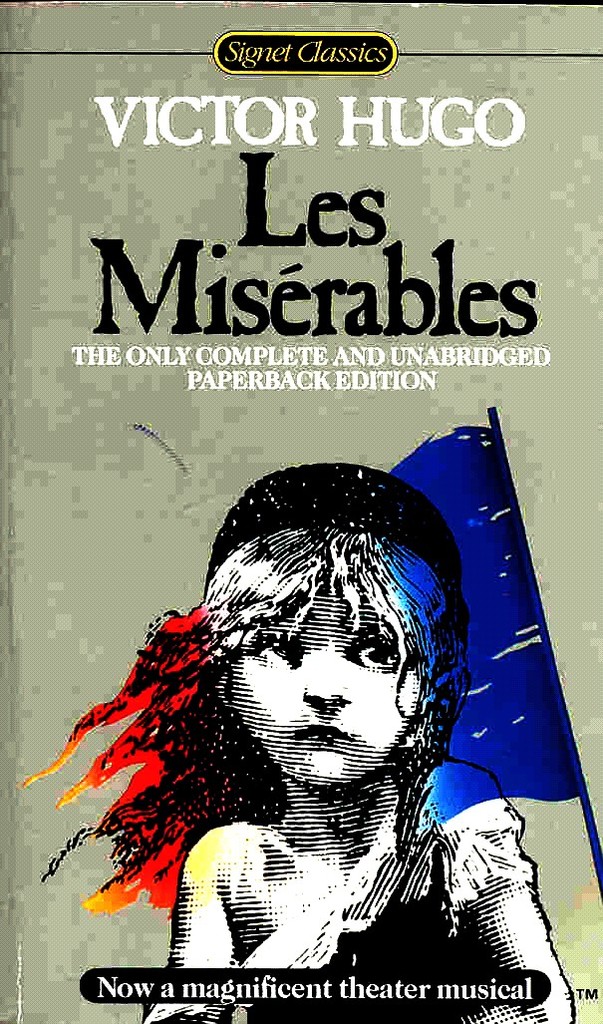
With the BBC film, there seems to be a second mistake: Victor Hugo did not write a musical. He wrote a novel. You can read about that here. Please don’t wait for the songs.

But I’m gratified that the long-ago post is still getting attention. And I still get letters, like this one from Doris Reffner last week:

“I wanted to thank you for your excellent article.  It was just what I needed to explain the musical Les Miserables to my twelve-year-old granddaughter.  Even her grandfather mistakenly thought it was about the ‘French Revolution,’ and we saw the musical at least twice as well as concert videos and the movie.  Perhaps we need to read the book.   If I can read a Russian classic novel, I guess I can work my way through a French one.  You provided great information, easily understood.  Thank you.”

Join Doris and go out and get the book. Hurry, before the next remake!

Tired of angst? Here’s a poem about a happy marriage.

Share

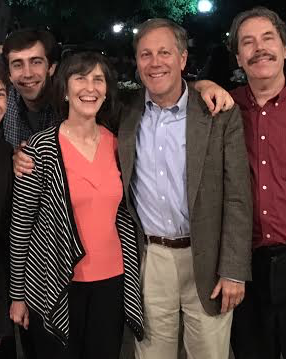
A family reunion at Stanford – with jazz scholar Ted Gioia at right.

Dana Gioia, former National Endowment for the Arts chair and former California poet laureate, met Mary Heicke in the staples department of Stanford Bookstore circa 1977. They have been together ever since – a long marriage indeed, and one of the happiest I know. He commemorated their union recently in a poem, “Marriage of Many Years”:

Most of what happens happens beyond words.
The lexicon of lip and fingertip
defies translation into common speech.
I recognize the musk of your dark hair.
It always thrills me, though I can’t describe it.
My finger on your thigh does not touch skin—
it touches your skin warming to my touch.
You are a language I have learned by heart.

This intimate patois will vanish with us,
its only native speakers. Does it matter?
Our tribal chants, our dances round the fire
performed the sorcery we most required.
They bound us in a spell time could not break.
Let the young vaunt their ecstasy. We keep
our tribe of two in sovereign secrecy.
What must be lost was never lost on us.

In an era that celebrates sturm und drang, poets write of abusive relationships, and the anguish of unrequited love, or the torments of triangular love – but how many write of long and happy fidelity? The late great Richard Wilbur, notably, mocks the romantic conventions and instead praises (read the whole thing here) his marriage

… which, though taken to be tame and staid,
Is a wild sostenuto of the heart,
A passion joined to courtesy and art
Which has the quality of something made,
Like a good fiddle, like the rose’s scent,
Like a rose window or the firmament.

The Gioia marriage has an eyewitness to commemorate it – their son, Mike Gioia – who added it yesterday to his new youtube poetry series, “Blank Verse Films.” (You can subscribe here.)

Dropping acid with Michel Foucault

Share

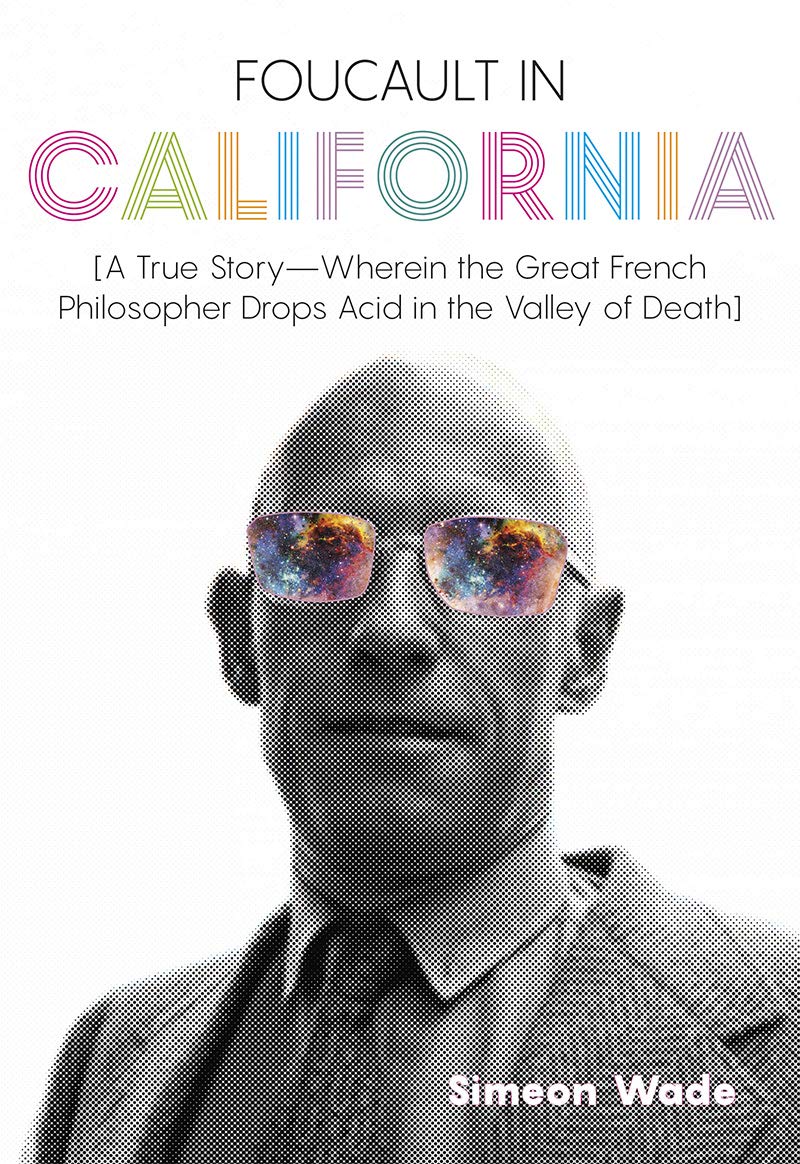
What is it like to drop acid with Michel Foucault? Now there’s a whole book to tell you about the renowned French theorist’s rendezvous with LSD in 1975. From Los Angeles Review of Books‘ review of Simeon Wade’s Foucault in California (Heyday). The location, of all places, is Death Valley:

After picking up Foucault at the airport, Wade drives to his house, where the philosopher is treated to Tequila Sunrises and a small bowl of hashish. After a light dinner, [Wade’s friend Michael] Stoneman “sat down at the Yamaha grand and gave us a spirited reading of Scriabin’s Tenth Sonata, a work of pure sorcery.” The evening’s activities break the ice, making the French guest feel at home. After a few hours of slumber, the trio rise at dawn in order to reach the high desert before midday.

Wade, who has not yet mentioned the idea of taking LSD, finally decides to broach the delicate subject during the drive: “[W]e brought a powerful elixir, a kind of philosopher’s stone Michael happened upon. We thought you might enjoy a visionary quest in Death Valley.” Given that Foucault was not fluent in English, it is unclear if he really knew what Wade was talking about. Wade’s account of the events leading up to the trip has the air of a “kiss and tell” memoir, but in this case the act described is not sex with a celebrity but taking psychedelic drugs in an exotic locale. Every moment leading up to the hallucinogenic climax is described in lavish detail.

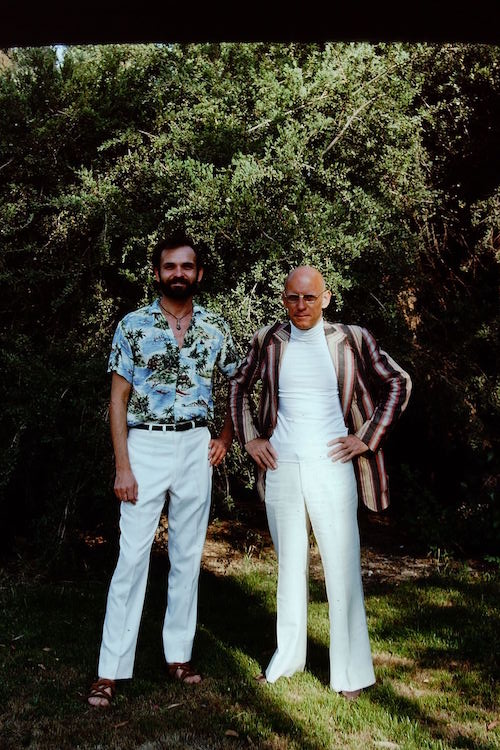
Author and subject.

When the trio finally reach Death Valley, they hike down to the Artists’ Palette, an alluvial fan at the base of a canyon. The moment of truth occurs when Stoneman produces the LSD and Foucault uncharacteristically freaks out: “Foucault appeared troubled and with grim countenance […] walked away.” Wade is forced to admit that his elaborate plan might be ruined; the last thing he and Stoneman wanted was a bad trip under the hot Death Valley sun. “We both knew that the potion taken under any kind of duress can discompose the unwilling. We certainly would not wish to force anything upon Michel.” When Foucault finally returns, he declares “with quizzical eyes that he wishe[s] to take only half as much, since this is his first experience with a potion so powerful.”

This was the response that Wade had feared the most: although Foucault had described the effects of LSD in one of his essays, he had never actually taken the drug. Wade and Stoneman were surprised because Foucault was a follower of Nietzsche who had always expressed a keen interest in all things Dionysian. Perhaps to save face, the philosopher, after a lengthy bout of indecision, asks Stoneman about the proper way of ingesting it. Much to Wade’s delight, the LSD plot is on again.

Read the whole thing here.

#EndowSUP: from crisis to consensus on Stanford University Press

Share

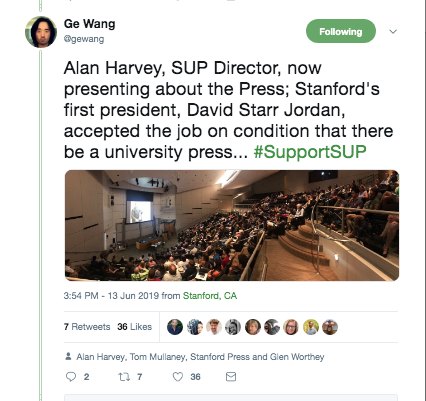
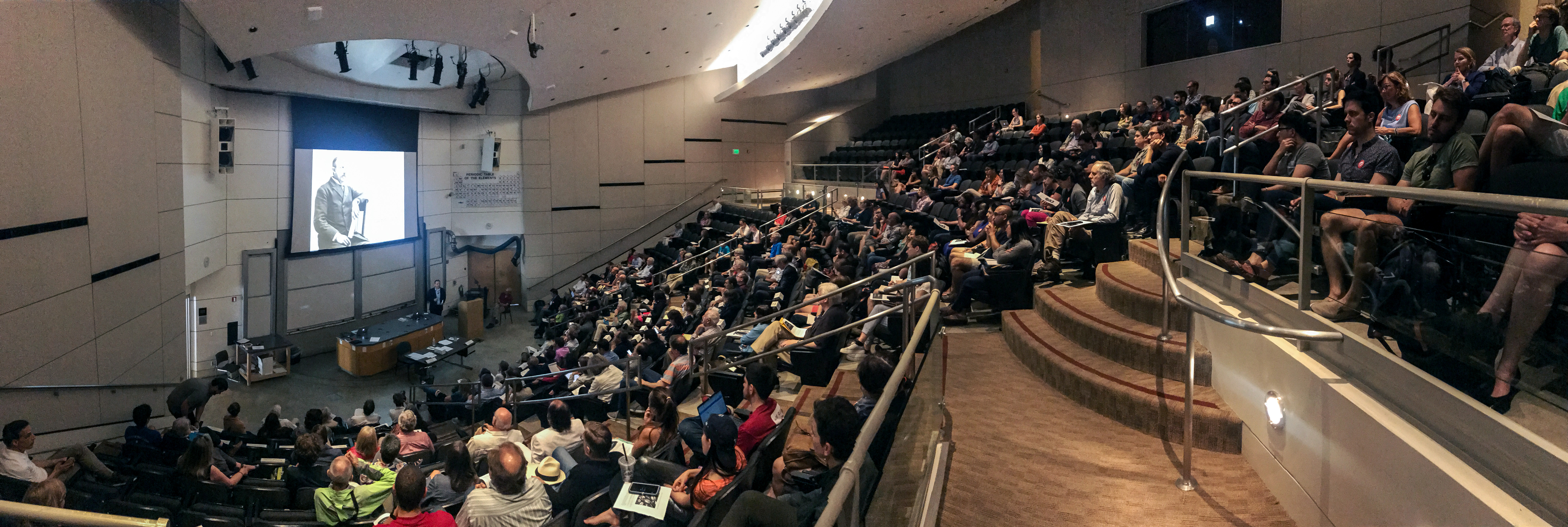
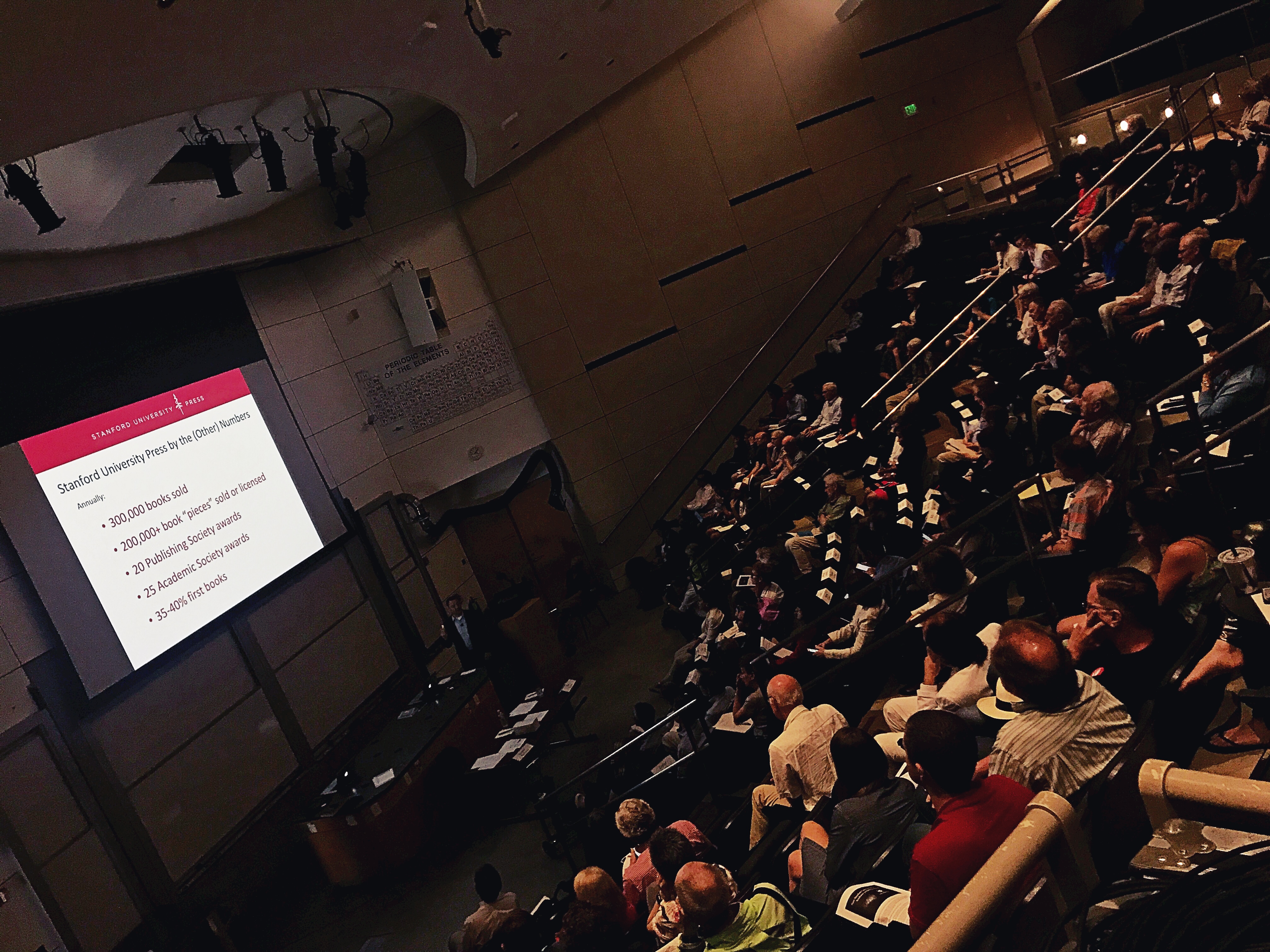
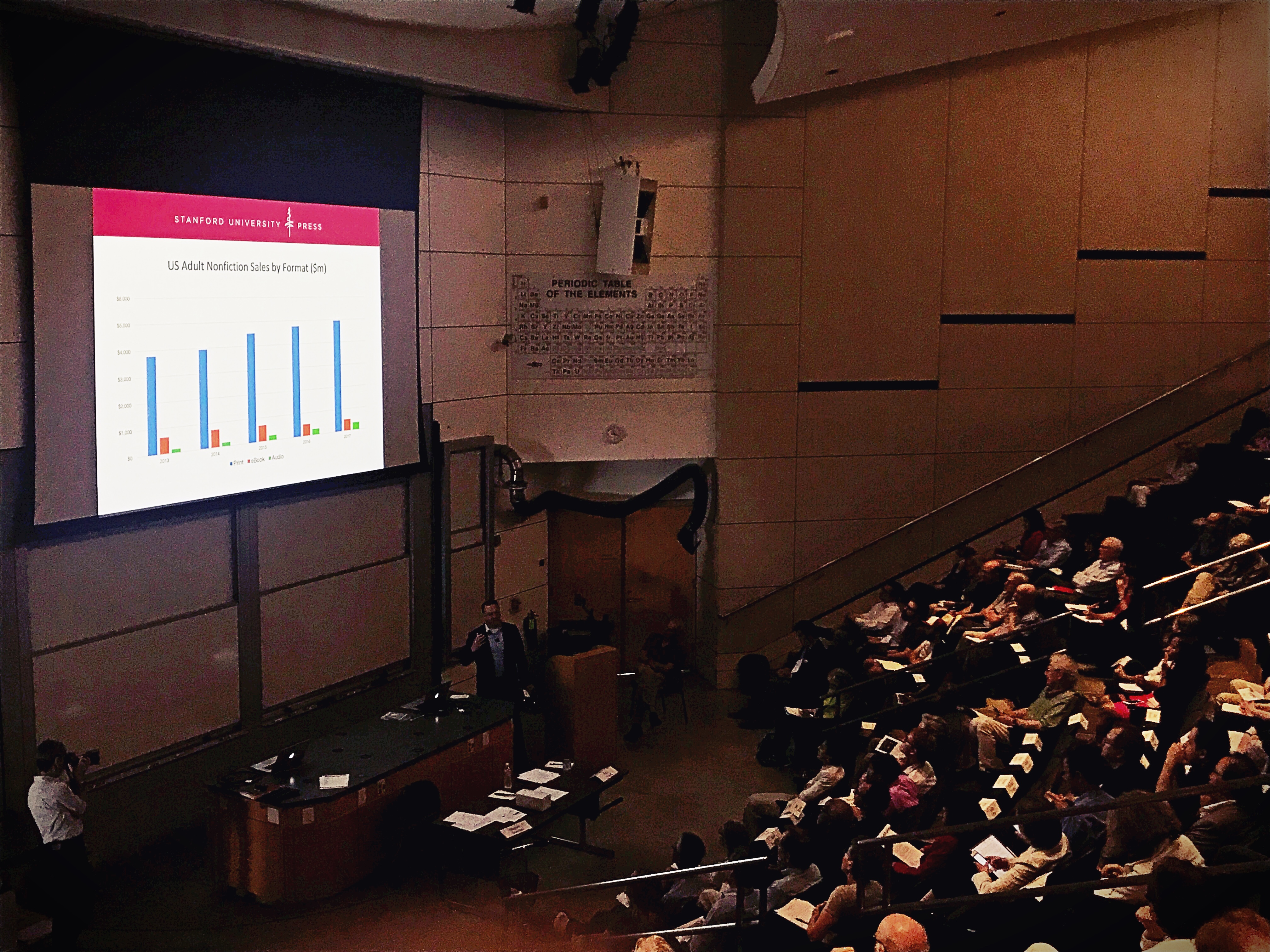
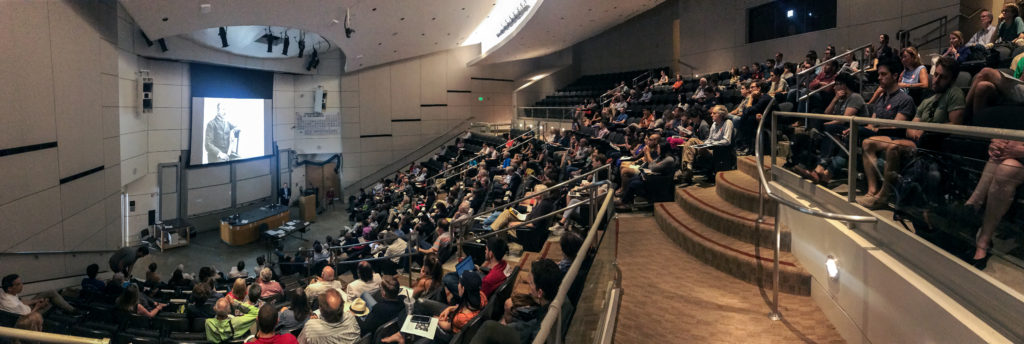
More than 200 people attended yesterday’s Faculty Senate meeting. (All photos by Ge Wang)

Passions ran high and emotions were raw at yesterday’s Stanford Faculty Senate meeting, which had to be moved to a larger venue to accommodate the crowd. One faculty said that the fury around this issue was unlike anything he’d seen at Stanford in more than a decade.

A recap: The university decided to terminate its support of Stanford University Press, which had been given $1.7 million supplements for several years. The amount, as many pointed out at the meeting, is chump change, about .027% of Stanford’s annual operating budget. The move, seeking to make the press “sustainable,” spurred national and international outcry and letters from thirteen Stanford departments, schools, and programs and sixteen letters from national and international learned societies, as well as extensive press coverage (including The Chronicle of Higher Education here). The controversy has been discussed on the Book Haven here and here and here.
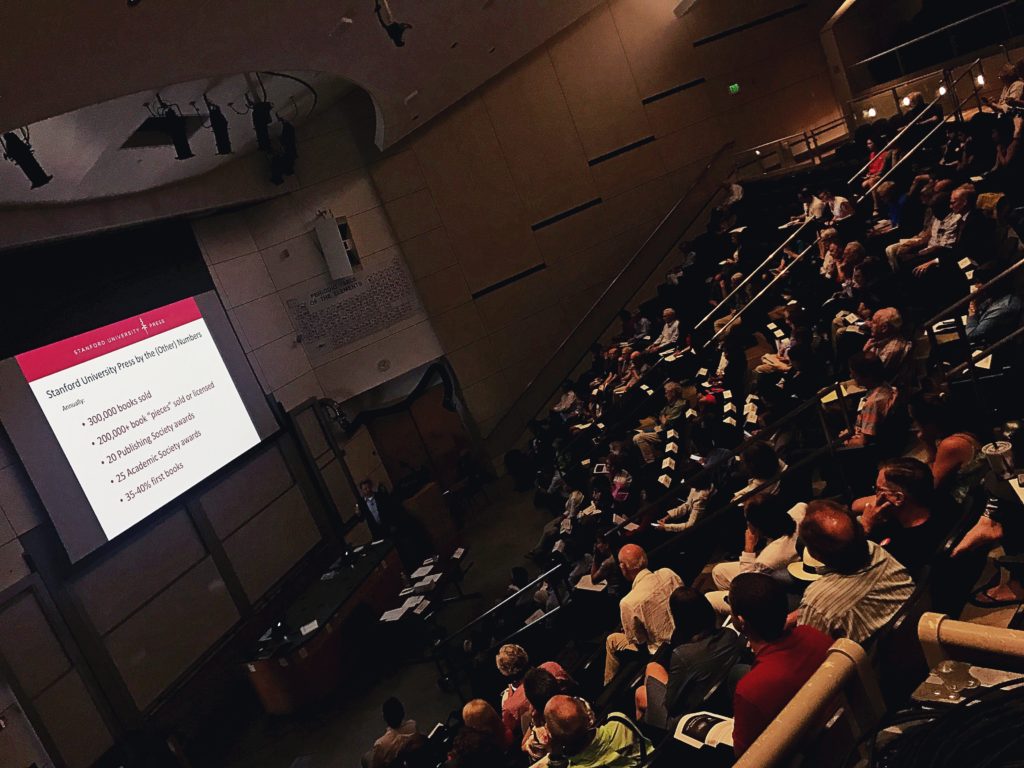
In her brief remarks, Provost Persis Drell, claimed that the way her earlier comments had been interpreted was “totally contrary to my intent” and was “truly, deeply regrettable.” She said that she had held “no intention of closing the press.” She said the use of the word “sustainable” was not meant to be a synonym for “profit-making,” but added that the Press had to move “beyond one-year extensions” to its budget.

Thomas Mullaney, professor of Chinese history, who had spoken on KQED about the future of the press, disagreed sharply: “Although some have since tried to downplay or deny the record on this point, it is established fact that dismissive, insulting, and unfounded statements were made about SUP by our administration – not just once, but repeatedly – and that these statements, when coupled with Stanford’s rejection of Stanford University Press’ budgetary request – set off a chain reaction of criticism of the Stanford administration and support for SUP, in equal measure.”

“I’ve never witnessed this kind of anger and resentment,” he said, recalling “meetings small and large wherein hands have slammed tabletops, voices have been raised, and in some cases, tears have clearly been held back. And of course, the tone of criticism only gets louder and sharper as one listens to the broader scholarly community across the rest of the United States and the world. Truly, this has been such a self-inflicted wound for Stanford, such an unforced error, that the situation feels largely out of control.  It has been remarked that this PR debacle has probably already cost Stanford more money than it would have cost to endow SUP in perpetuity, let alone agreeing to the more modest 5-year package.”

Stanford Prof. David Palumbo-Liu asked Stanford University Press Director Alan Harvey point blank what would have happened without the resistance, what would have happened if the $1.7 million shortfall in their budget had, in fact, gone down as planned.

“I would have had to lay off half my staff,” Harvey replied in a beat. In turn, that move would have reduced the number of books the press could produce, which would have triggered more layoffs, he said. In short, a death spiral.
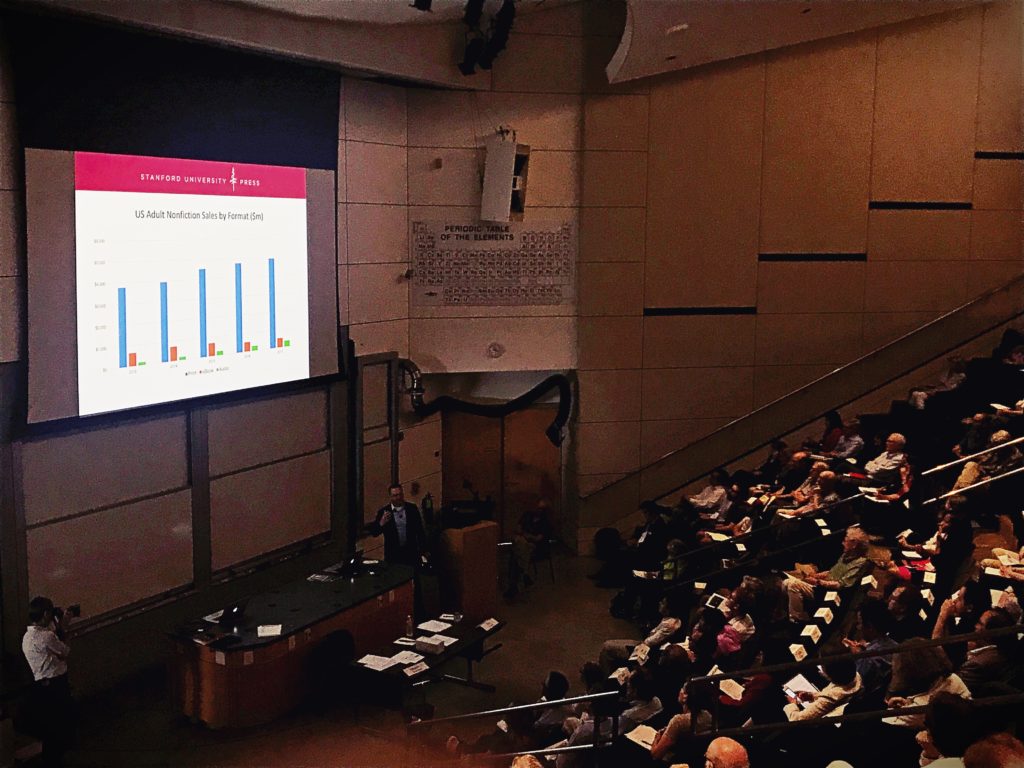
The negative impact are already evident in the current atmosphere of uncertainty, he said, with “hesitation on the part of scholars to submit books” for consideration to Stanford University Press. “The number of proposals has gone down,” and he characterized the pool of potential authors as “nervous.” When the university administration is conveying “a message of a lack of faith, people are going to hold off.”

There was much talk about finding a solution to this intractable problem, but the answer seemed pretty obvious. Harvey stated it upfront: “An endowment is the only thing for a long-term sustainable press.” An endowment is the foundation of other major university presses – Harvard University Press, among others, has a large one. To date, the university has not permitted the press to do its own fundraising.

Comments were poignant and sometimes fiery. Notable among them, graduate student Jason Beckman referred to the stress caused by the decision to axe Press funding to support a few graduate scholarships instead: “Do not threaten to impoverish our futures while making overtures of support for our mental health. We see the repeated attempts by the provost and deans to weigh funding for graduate students against funding for the press and categorically reject this logic as a false choice. Make no mistake that we stand firmly with our faculty advisors and the press on this issue, and will not be used as rhetorical human shields for the administration’s myopic stance towards the Press and academic publishing. If this university did in fact value our mental health and well-being, it would consult us in good faith as actual stakeholders on major issues that may profoundly affect the academic fields in which we hope to establish careers.”

He referred to meeting some graduate students had with Provost Drell on May 2, about how to interpret the standing of the humanities and social sciences at Stanford in the wake of her decision to effectively defund the press. He said she discussed on the two types of degrees that she believes will serve our society going forward. “First, social science degrees buttressed by data proficiency and computer science skills, and second, humanities degrees, which are the ‘best equipped’ to deal with post-human concerns in a world of proliferating robotics and artificial intelligence. Far from assuaging our concerns, such a response only reaffirmed that this institution does indeed marginalize the humanities and social sciences—which seem to have value only insofar as they support STEM fields. A university that stands behind and supports all of its scholars and students, and that values scholarship itself, should not position itself as openly hostile or indifferent to certain kinds of scholarship. We find that bias clearly manifest in the Provost’s initial decision to decline the budget request from SUP, a decision that would devastate the press. ” (His comments are included in full on the “Save Stanford University Press” website here.)

The meeting ended by approving a resolution, along with an additional faculty committee that proponents argued will provide additional transparency and an invigorated role for faculty governance in matters pertaining to the Press.

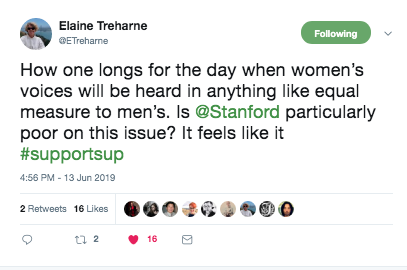
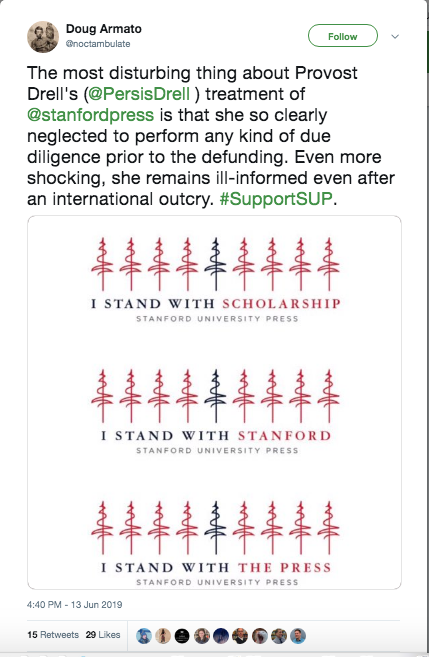
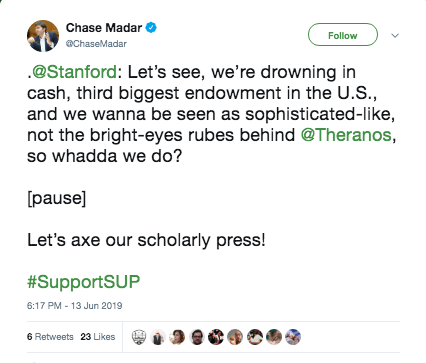
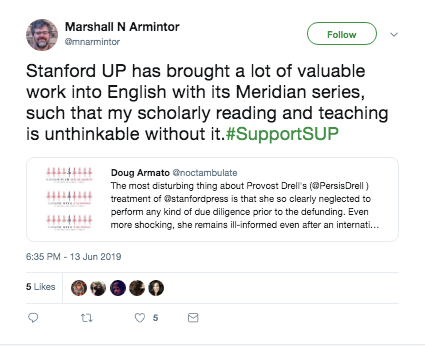
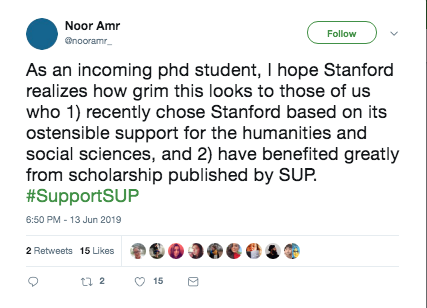
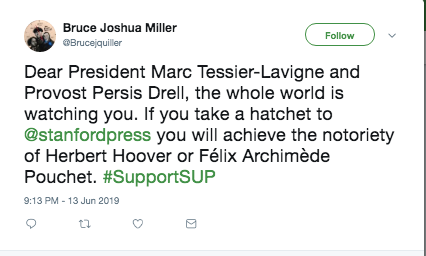
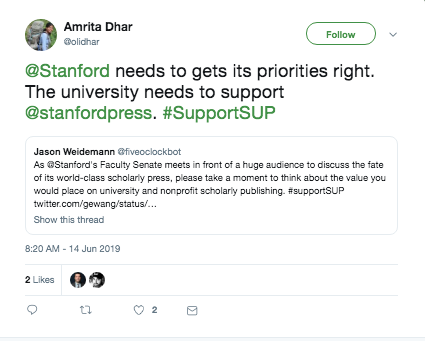
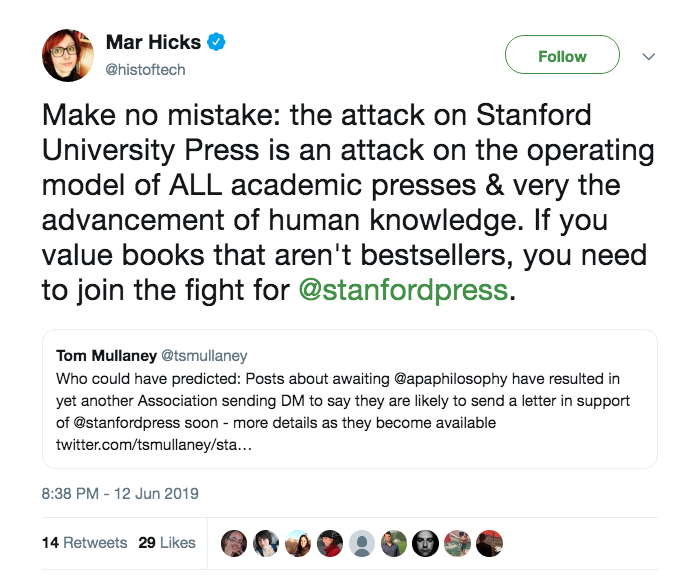
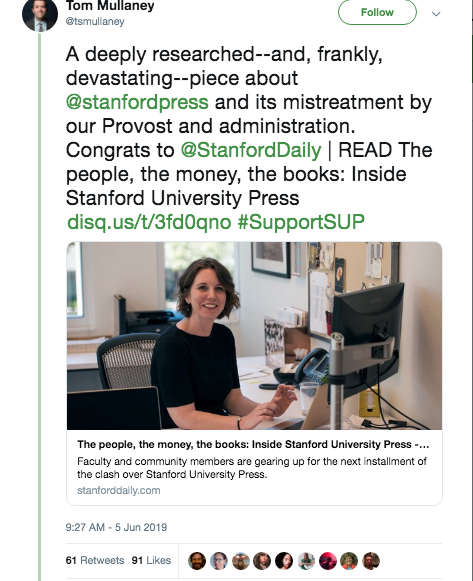
And below: a few samplings from the promised Twitterstorm:
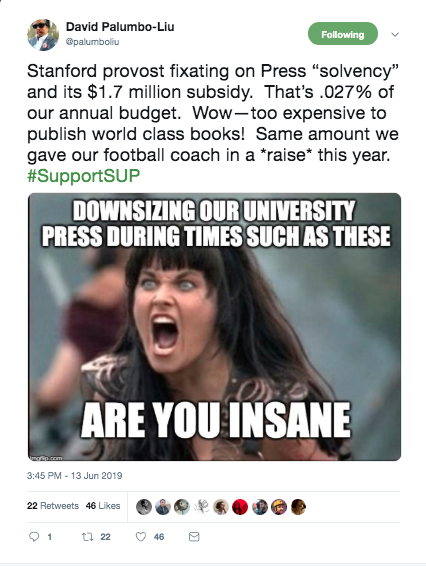
 

Stanford Faculty Senate discusses Stanford University Press on Wednesday – prepare for a Twitterstorm!

Share

The Faculty Senate will discuss Stanford University Press on Thursday afternoon. So many people will be attending the meeting has been moved to a larger venue. PLEASE HELP with our Twitter storm, 3:30 to 5 p.m. PST Thursday. Use the hashtag #SupportSUP.  We’ll be posting the best of the tweets at the Book Haven! (We got a head start on the job with some early arrivals below.)