
Former Baltic president Vaira Vīķe-Freiberga: “Ukraine is being dismembered and torn apart.”

Share
baltickeynote-6

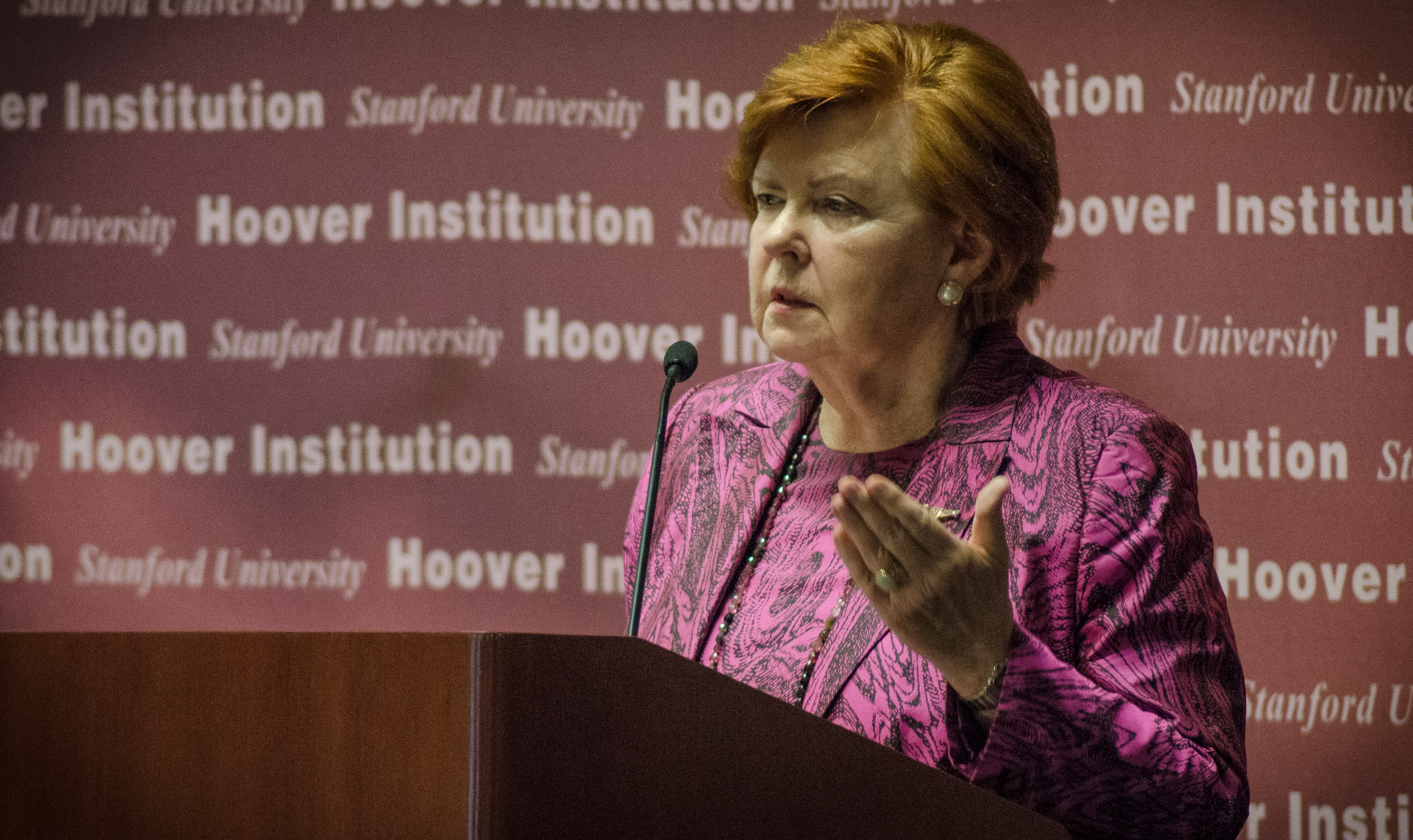
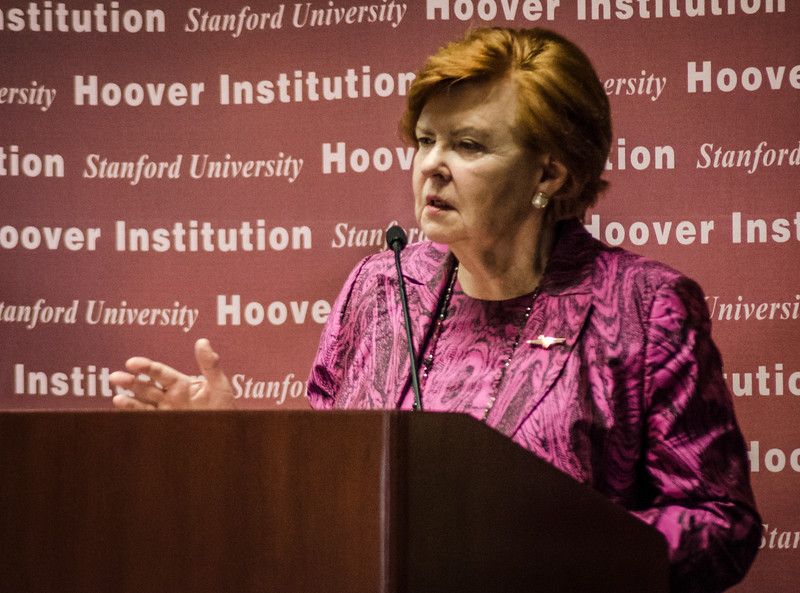
At Stanford, Latvian president recalled the long, hard road to independence. (Photo: Jim Hatlo, EyeDoMedia)

Former Latvian president Vaira Vīķe-Freiberga was in town last week – and, just as I anticipated before my live-tweet session below, she was smart and bold and knew how to throw a punch. She has been an outspoken critic of Russia’s recent incursions into its former Soviet vassal-states and criticized what she called “wobbly” Western resolve to support Eastern Europe. Stanford historian Norman Naimark, who introduced her, said she had provided “the moral straight-shooting that Latvia needed.” Stanford got a taste of it, too.

The woman who shepherded Latvia into NATO and the EU during her term as president (from 1999 to 2004) spoke about recent Baltic history in her keynote address, “Against All Odds: The Path of the Baltic States to the EU and NATO,” for the “War, Revolution and Freedom: The Baltic Countries in the 20th Century” conference sponsored by the Hoover Institution Library & Archives and Stanford University.
naimark3

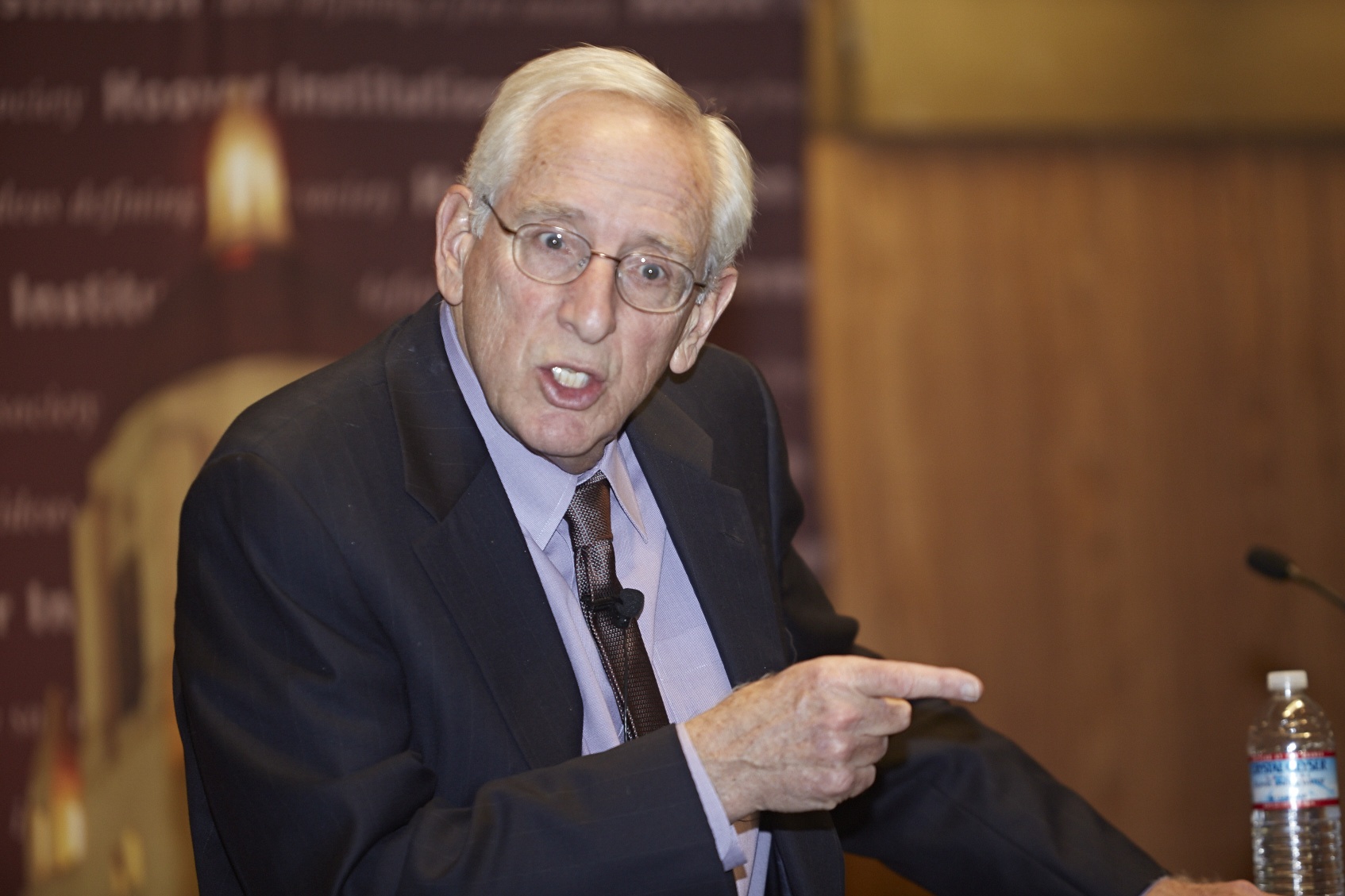
Kind of a straight-shooter himself

During the question-and-answer session, Hoover scholar Paul Gregory asked the question that was on everyone’s mind: what did she predict for Ukraine?

“Ukraine is being dismembered and torn apart – it’s the Russian resolve to get Ukraine in its grips again,” she said. Their diplomatic weapon of choice? “A whole bouquet of arguments.” She took the petals off, one by one. For example, she challenged the Russian claim that “there’s no such thing as a Ukrainian people, it’s just another kind of Russian.” A related argument is that Russia had “brought a life of civilization and culture” to its western neighbor. Yet, she said, Kiev had been the center of the Rus civilization way back when St. Petersburg was still marshlands.

Finally, the Russians contend that the Ukrainians “don’t know how to govern themselves.” Without endorsing the Russian argument, she conceded that Ukraine had not made the “painful reforms” that the Baltic states were required to make for entry into NATO and EU.  She noted the vast amounts of money that had flowed through Ukraine to a few kleptocrats, which had  “polluted and subverted the political system.” However, “that is not an excuse for neighbors saying we’ll do a better job of it.” She compared the situation to a hypothetical one in which Mexico reasoned that, with so many compatriots in the U.S., it had a right to invade, using a  standoff between the president and Congress as proof of U.S. incompetence to manage itself and a reasonable pretext to bring in  tanks. “How would you feel about it?” she asked.
Latvia

Democracy as “an acquired trait.” (Photo: Jim Hatlo, EyeDoMedia)

She remembered Latvia’s history after World War I, when Latvia became a democratic parliamentary republic, and said that “hardly ever was there a nation with less going for it to become an independent nation.” However, democracy “is not an inherited trait, but an acquired trait,” for “anybody who wants to make a go of it.” In 1940, however, the country was forcibly incorporated into the Soviet Union, then invaded and occupied by Nazi Germany the following year, and the reoccupied by the Soviets in 1944. It found freedom at last with the fall of the USSR in 1991.

When she took office, the prospect of Euro-Atlantic integration was not as bright as it might have looked, she said. While some EU/NATO countries thought integration might be a good idea, “very few countries were deeply convinced.” In the end, their consent was a “political decision that had to be taken at political level,” she said. “It was the political leaders who would have the last words …it was very plain and simple as that.”

“There was lots of negative PR about our countries,” she recalled. The Balts were accused of turning their backs on Russia, which was precisely what they had intended to do. “We would be reproached for being Nazis because we did not want to stay within the embrace of Moscow.” She recalled nasty, and untrue, accusations about Latvian collaboration during the Holocaust.
chirac

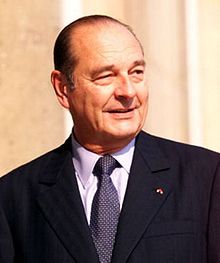
Afraid of bears

The EU worried that the Balts would drain the finances of the organization. They had voiced the same concerns, she said, when considering Poland’s entry, saying “the Polish plumber would be distinct danger to countries in Western Europe.” Now, however, “Poland has one of the highest growth rates in Europe – higher than those countries who sneered at it,” she said. She joked that “any number of Frenchmen ask me, ‘Where are those Polish plumbers? We need them.'”

A major hesitation for political leaders considering Baltic entry into NATO was “the bright idea that, in order not to offend or displease Russia, the enlargement of NATO and EU should proceed cautiously.” French president Jacques Chirac warned, “You must not pull the whiskers of the bear, it’s a very dangerous thing to do.” She battled a prevailing attitude that “whatever we do, must not offend Russia. Such sensitive souls, such delicate violets! Easily humiliated!”

“Their economy is a shambles, their social security systems are in disarray, but the point is we must not upset them,” she said, with a note of exasperation as well as amusement.

As for my first frenetic foray into live-tweeting, you can see the results below – with an occasional assist from my colleague, Lisa Trei.

tweets

Calvino’s Cosmicomics “completely scrambles the readers’ expectations.”

Share
harrison

Go-to guy on Calvino.

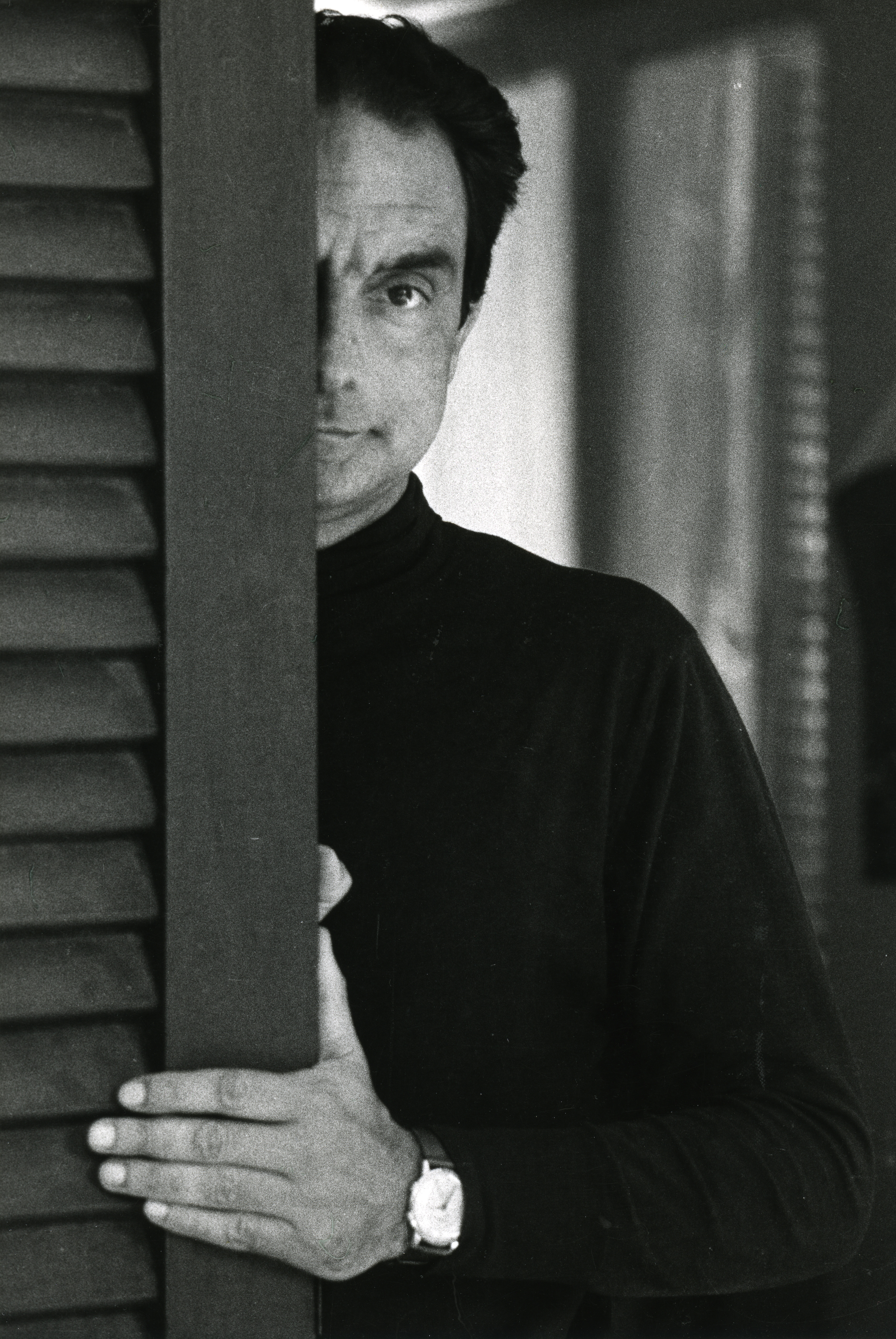
We’ve already announced the October 27 “Another Look” book club discussion here – Robert Pogue Harrison will moderate our conversation about Cosmicomics, a collection of science-inspired fantasies by one of the greatest European writers of the last century, Italo Calvino. Well, you’ve read about Calvino before, if you follow the Book Haven – for example, I’ve written about him here and here and here, among other places. For that matter, I’ve written lots about Robert, too – here and here and here, among other places.

Robert is the author of several acclaimed books – the newest, Juvenescence: A Cultural History of Our Age will be published later this year. Stanford’s Rosina Pierotti Professor in Italian Literature also hosts the popular and cerebral radio talk show, Entitled Opinions, available on iTunes. He contributes regularly to the New York Review of Books. He is a member of the American Academy of Arts and Sciences and was recently named chevalier de l’Ordre des Arts et des Lettres, one of the highest cultural honors France offers.

I interviewed him about Calvino and Cosmicomics for the upcoming event. I hope it will tempt you to join us. Here goes:

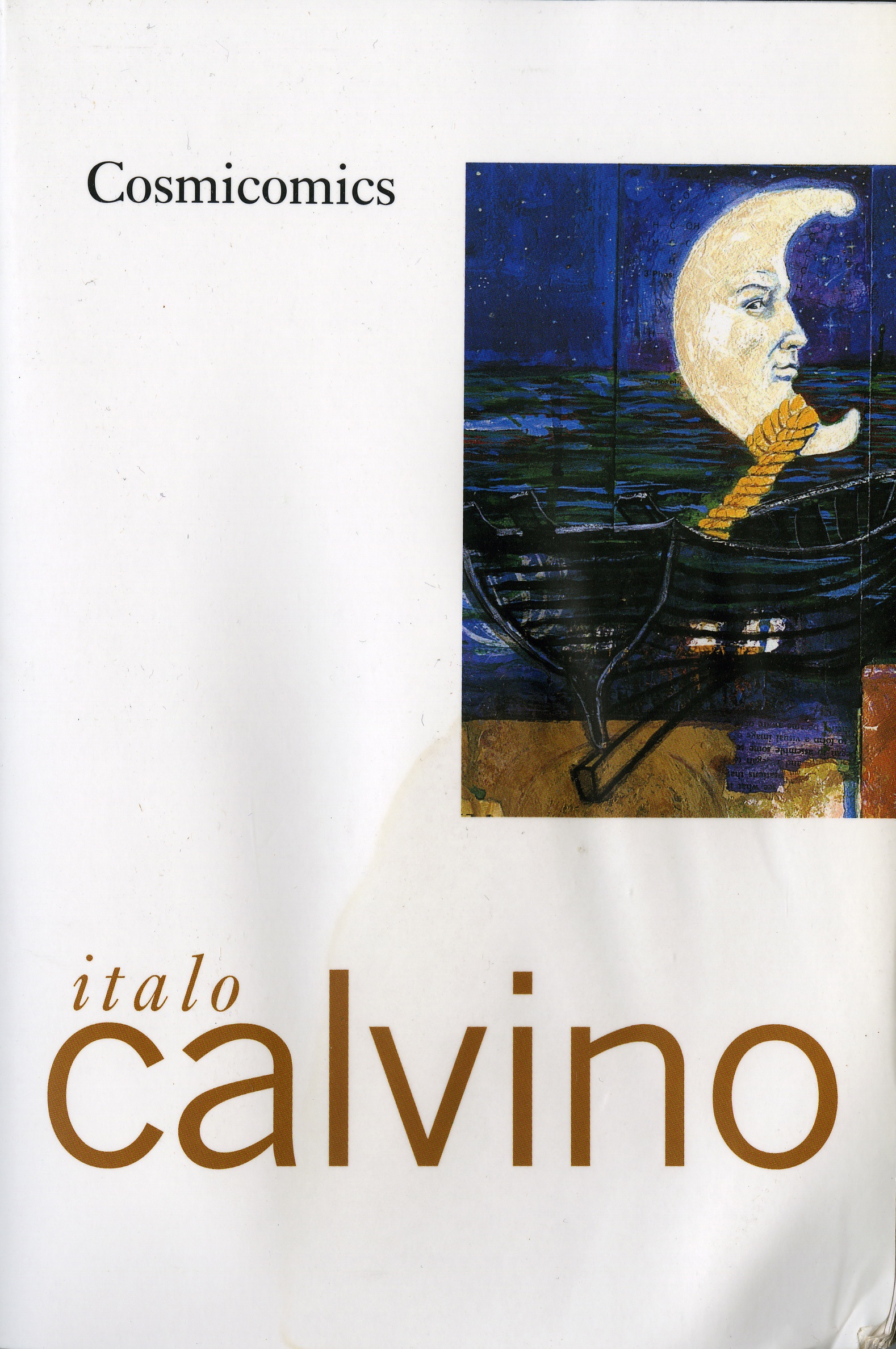
Haven: Calvino once wrote, “I like telling things in cartoon form,” and even suggested that readers try to visualize his Cosmicomic stories as comic strips. Is this a hint about why he is calling this first 1965 collection of the tales Cosmicomics?

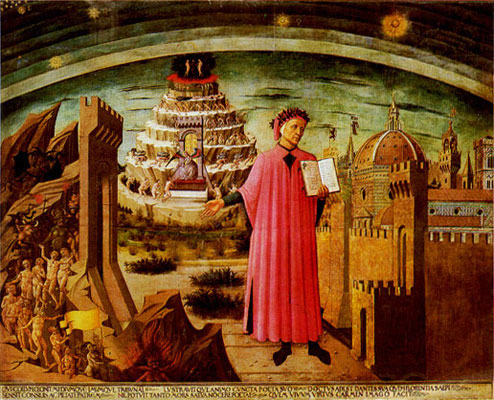
Harrison: Well, there’s a connection with the comic strips, as you mentioned. But I think it’s important to keep in mind that the Italian literary tradition is so rich in comic genres, broadly understood. Just think of Dante’s Divine Comedy, which he called the Commedia. It’s a cosmic comedy that takes Dante through the other world – hell, purgatory, and finally the heavens.

Mystery man.

The heart of a scientist.

One aspect of Calvino’s title has to do with this literary predecessor, Dante. Another has to do with the role that comedy has played in so much of the history of “serious” Italian literature – Dante, Ariosto, Machiavelli, Goldoni, Pirandello, and many others.

Haven: So why are you drawn to these stories, and why did you pick them for “Another Look”?

Harrison: I like them because of their imaginative vitality and flair. I thought it would be a book of the sort that hardly anyone in the group would have read. Frankly, I find that Anglo-American fiction, which is a great tradition, is far too dominated by the genres of realism, with its lifelike characters, plots, setting, and so forth. From that point of view, Cosmicomics completely scrambles the readers’ expectations.

In addition, Calvino’s book deals directly with the whole phenomenon of evolution, which is the huge scientific obsession of our own time. I’m not referring to the debates about evolution versus creation. It’s more that in so many different areas of the sciences, the forces of evolution are more and more being brought in as an explanatory mechanism for understanding anything that is under investigation. The force of evolution, the anthropomorphic imagination that you have in these stories, along with the sheer charm of the book – that’s why I chose it.

Haven: Let’s see. Calvino was born in Santiago de Las Vegas, a suburb outside Havana in 1923, to Italian parents who were both botanists. That’s why Calvino’s friend Gore Vidal wrote that “he instinctively looks to the natural world for illumination of his own interior” – rather as you do in your own book Gardens: An Essay on the Human Condition. But science, as well as nature, was clearly a powerful legacy from his parents.

Harrison: That’s right. Calvino makes it clear in several of his interviews that he’s been interested in science all along. For him, science and fantasy are not two separate things. There’s nothing more fantastical, in essence, than science. So he’s taking these scientific theses, which he prints at the beginning of each story, and then gives them each a story.

Careful.

It all began here.

Haven: In the years since Cosmicomics, we’ve seen an increasing interest in bringing modern science in to the arts. Technology is changing the world, and one could argue that a “realism” that does not change with it is not “realistic.” But I wondered sometimes if Calvino is slyly mocking our attempts. Some of the “scientific” passages he cites at the beginning of each story are outdated science or junk science or even made-up science.

Harrison: But I don’t think the success of Cosmicomics relies on the science being valid. The junk science parts are just as effective as the parts that still have scientific persuasion. The achievement of Cosmicomics lies in the ways it gives anthropomorphic form to otherwise abstract phenomena that one has a hard time even imagining, just conceptually, let alone in anthropomorphic terms.

Haven: You mentioned earlier that Calvino scrambles our expectations. Certainly one way he does this is by abandoning the usual lines of character development. Moreover, most of the names are unpronounceable and we don’t even know what the protagonist Qfwfq actually is. Is he an atom, a dinosaur, a mollusc, that term beloved to science fiction fans, “an entity”?

Harrison: Well, yes, he can be all these things, but he is first and foremost an eyewitness, as it were. He gives us a first-person account of a host of events in the history of the universe – events that, according to the scientific account of them, are inconceivable to us. The birth of color. The initial congealment of matter. The first signs in space.

cosmicomicsHaven: Calvino wrote in a letter, “Man is simply the best chance we know of that matter has had of providing itself with information about itself,” which is what he’s attempting in Cosmicomics. The author is the witness behind the witness in all these stories – a witness for matter itself. Can you tell us a little about us a little about how he came to take on this singular role?

Harrison: Calvino became a writer right after the Second World War. He had participated in it as a partisan on the side of the Resistance. At the end of the war, he wrote his first book, The Path to the Nest of Spiders. He tried to conform to the expectations of the political left in Italy, which expected of writers a certain kind of realism. He wanted to write in a mode that would bring alive the experience of the war and take a side, with good guys against the bad guys, and to have it be politically relevant. Already, at that early point in his career, he was having trouble with the demands of traditional realism, not to mention socialist realism, which was a different thing altogether.

It took him a while, but he finally found a way to bring that book to fruition by making its protagonist a young boy, Pin, a 12-year-old who gets caught up in the partisan warfare and really doesn’t comprehend everything that’s going on. For Pin, what’s happening becomes like some kind of a forest tale full of magic, full of characters that seem to come out of folklore more than reality.

So it’s not an orthodox realist novel, although it did have to do directly with the war and it did take a side, the side of the partisans. But it already had this sort of fantastical quality by virtue of the fact that it was narrated through the perspective of the eyes of this boy, who experiences events really more like magic than history. Subsequently, Calvino found it more and more difficult to conform to the expectations of realism.

Cosmicomics represents a real liberation from any need to ground his narratives in verisimilitude and reality. It becomes imaginative, fantastical. It enables him to bring science into the realm of the imagination and to write a series of vignettes that are fables, or perhaps allegories. His narrative becomes a sort of fairy tale.

At the same time, as Calvino insisted at the end of his life, in his Six Memos for the Next Millenium, he never once lost sight of the historical reality of the time in which the writer was writing.

Continue reading

Gioia-as-librettist and a chorus of rats, bats, and frogs

Share
grimmbros

Author, author!

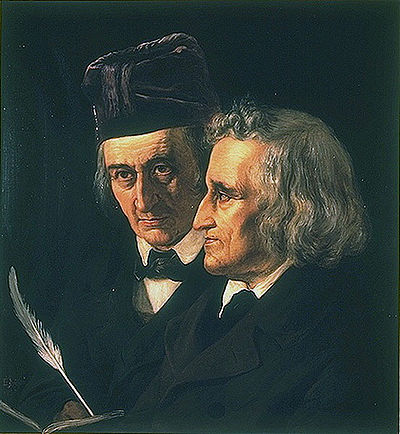
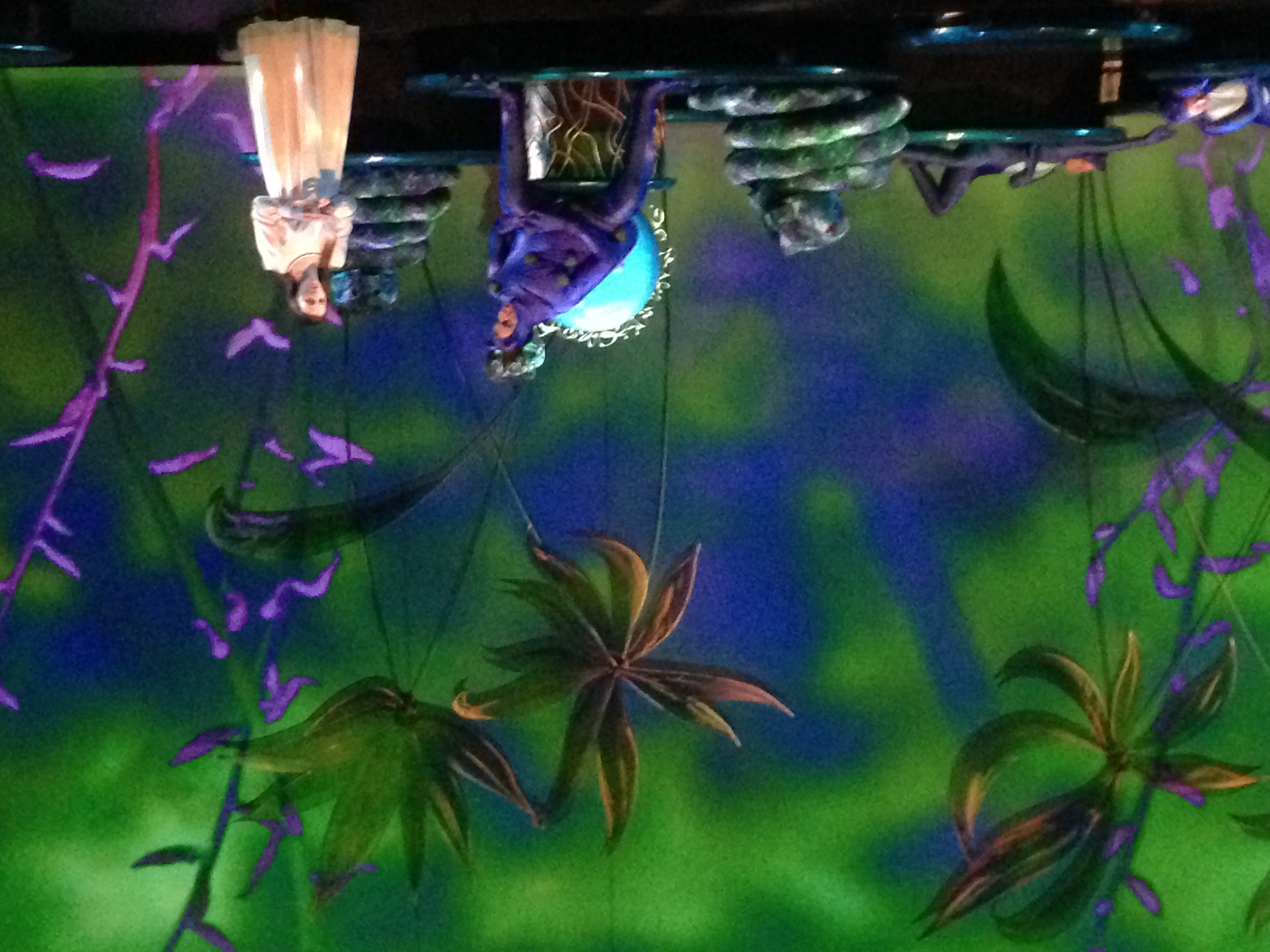
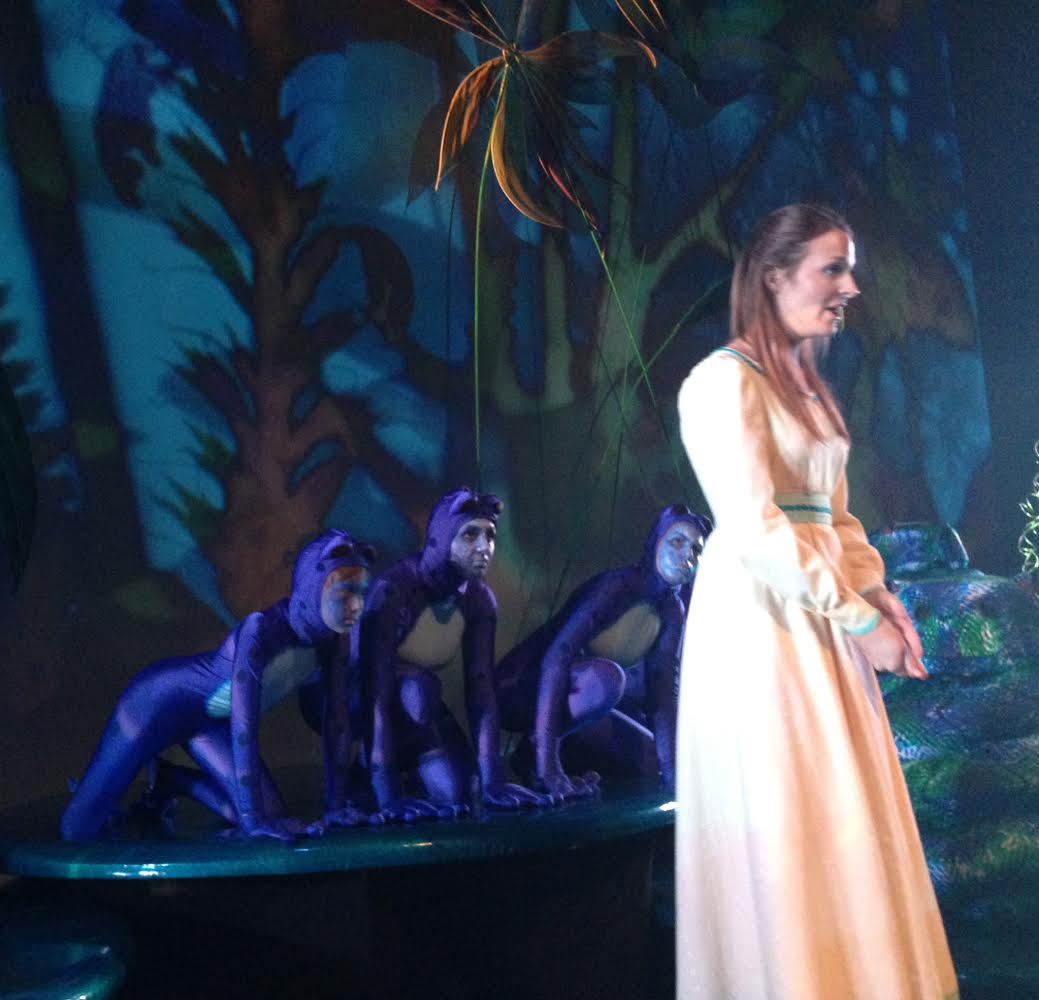
An email from Dana Gioia, poet, professor, and former NEA chairman: “I’m about to fly off to Washington to do a lecture at the Library of Congress and then attend the final rehearsals and premiere of my new opera with Lori Laitman, The Three Feathers. Here is a photo from the rehearsals – the Princess meeting the Frog King in the Underworld.” Librettist Dana retells the Brothers Grimm fairy tale, and Laitman composes the music for the new one-act children’s opera, commissioned by the Center for the Arts at Virginia Tech. As I wrote a dozen or so years ago in an article here, “Gioia-as-librettist isn’t a complete departure. As a Stanford undergraduate, he considered a career in music and spent his sophomore year studying music and German in Vienna.” That was one of my early interviews with him, about the time he was about to debut Nosferatu, his collaboration with composer Alva Henderson. (I’ve also written about Dana here and here and here, among many other places.) According to the opera’s website here: “The Three Feathers creates a mysterious world inhabited by a king, his three princess daughters, and courtiers; and the fantastical underworld kingdom of the Frog Prince and his chorus of rats, bats, and frogs.” World premiere is Friday, October 17, at the new Moss Arts Center in Blacksburg, Virginia.

Meanwhile, photos. The soprano is Nora Cotter. “How nice to have reality rhyme with fantasy,” Dana writes. And another website has cropped up here. And a vimeo clip of an aria here.

Three Feathers_Underworld-1

The Princess meets the Frog King in the Underworld, in “The Three Feathers”

feather2

Soprano Nora Cotter sings in the underworld.

Writ on water: Regina Derieva in this week’s Times Literary Supplement

Share

derieva4I’ve written about the Russian poet Regina Derieva since her death last Decemberhere and here.  According to our mutual friend, the prominent Swedish author Bengt Jangfeldt, she was a poet “who in her best poems achieved that true metaphysical quality which, according to T.S. Eliot, is the alloy of thought and poetry at a very high temperature.” I have been fascinated by this utterly unique and uncompromising poetic voice since I learned of the poet’s existence, a few days after her death, from her husband. Now I am thrilled to announce that her papers have come to Stanford. I tell the story in this week’s Times Literary Supplement:

The Russian poet Regina Derieva was born on the Black Sea in Odessa, and enjoyed the shifting rhythms of the sea: “Water is the ideal apparel. However many times you get into it, it’s the same”. Her passion for water was shared by her epistolary friend, Joseph Brodsky, who grew up alongside St Petersburg’s canals and spent as much time as he could in Venice, where he is buried on the cemetery island of San Michele. Derieva, whom Brodsky called “a great poet”, viewed a very different landscape, however: from the age of six, she lived obscurely in Karaganda, Kazakhstan, “perhaps the most dismal corner of the former Soviet Union – once the centre of a vast prison camp universe, later just a gloomy industrial city”, according to the distinguished Lithuanian poet Tomas Venclova. For him, Derieva’s precise, epigrammatic poems limn “the concentration camp zone, where space is turned into emptiness, and time turned into disappearance”.

A few days after Derieva’s sudden death last December at the age of sixty-four, I received a letter from her husband, Alexander Deriev, and our ensuing correspondence eventually led to the Stanford Libraries’ acquisition of this astonishing poet’s archive. A single cardboard box postmarked Märsta, Sweden, is all that remains of a long and productive literary life, augmented by a few files of unpublished manuscripts, photographs, letters and drawings Deriev brought with him to California in his backpack.

There is a reason for the paucity of papers in a lifetime that should have left a mountain of them. Derieva’s life encompassed the upheavals of the past century, but she added an idiosyncratic twist: at each fork in the road, this outcast among outcasts made a choice – and that choice, or as often necessity, took her even farther from the pack.

I’ll have more about her in future posts – but meanwhile, please read the rest of the story in the TLS here.

Tomas Venclova: the future of the Balts and a “cowardly Leningrad hooligan”

Share
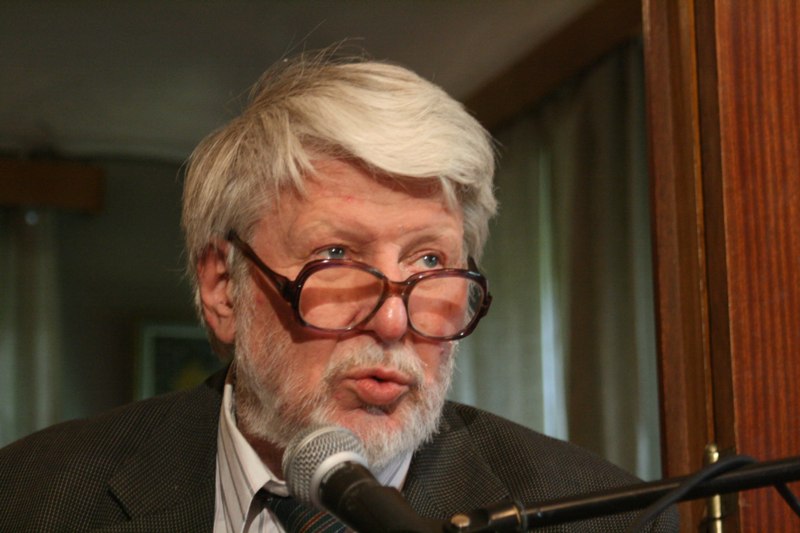
t.venclova

An optimist … but a particular kind of optimist…

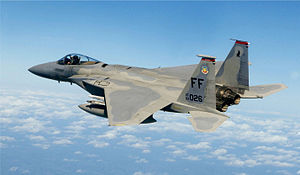
My friend Ramūnas Katilius, who died on Sunday, is still much on my mind. Last March, the physicist and Soviet-era dissident had written to me of his concern about Russian incursions into Ukraine, but added, “Here in Lithuania, however, we feel rather secure, as we are in NATO and our borders are patrolled by international NATO forces, and NATO jet fighters controlling the air space – actually at this time its USA F15s that are doing the job, with six more fighters arriving to Shiauliai air base just today.”

That was some months ago, and I’m a pessimist. I’m on my way today to the Hoover Institution, where I will be live-tweeting a talk by the former president of Latvia, Vaira Vike-Freiberga, who will be giving a keynote address, “Against All Odds: The Path of the Baltic States to the EU and NATO,” in conjunction with the 3-day conference “War, Revolution, and Freedom: The Baltic Countries in the Twentieth Century.”

I’m a pessimist, but the Lithuanian poet Tomas Venclova, who is also a prominent Soviet-era dissident and human rights activist, is not. He was in the Russian press a few days ago here, and earlier in the Gazeta Wyborcza here. (Please make allowances for your humble and inadequate translator.)

“Putin has demonstrated that he is willing to do anything to intimidate others, but in fact he is more rational dictator than many others, and carefully calculates what he actually does, depending on the costs and benefits,” he said.

Can we expect bombs on Vilnius? Tomas thinks not. “I believe that Putin, in the depths of spirit, is a  cowardly Leningrad hooligan who won’t do that, because he knows that then he would die, and lose his children, his money, along with the rest of that nice life that he leads.”

“He goes crazy, and the world fears him, thinking he is a gentleman in the spirit of Hitler. But Putin is a more rational dictator. I do not like spreading defeatist sentiment – that the West is powerless and venal, and that Putin is doing what he pleases, and that here we have a third or fourth world war, which Putin, who is wiser and stronger, will win. This is stupid and facilitates Putin in his game.”

f15

An F15 … if, like me, you hadn’t a clue…

The journalist asked if the Russian regime finally gave up its “vegetarian diet,” using the poet Anna Akhmatova term to describe the Soviet Union’s less warlike moments. Said Tomas: “I wrote a poem about it. A little style in the style of Cavafy or Milosz … Yes, the monster is putting out his tentacles again, although I’m called a historical optimist – I think that everything will end well. Mr. Putin appears to be unpredictable, but he only uses this to enhance his alleged unpredictability.”

Tomas elucidated his philosophy to me in an email a few months ago, as I was fretting about the state of the world, as I am wont: “I’m a so-called historical optimist and do not think jihadists, Mr. Putin or whoever of that kind would prevail in the final account.” Then he defined his terms:  “Historical optimist can be defined as a person who says: ‘All will end well, but I will not see it.’ One Ukrainian writer defined himself as an apocalyptic optimist – a person who says: ‘All will end well, but nobody in the world will see it.'”

Requiescat in pace, Ramūnas Katilius, 1935-2014

Share
katilius

(Photo R.R. Katilius)

Normally, I don’t hang with many award-winning physicists, but the distinguished Lithuanian scientist Ramūnas Katilius was an exception, in that as well as many other things. Our association began with our mutual friend, the poet Tomas Venclova, who suggested – rather, insisted – that I meet the Katilius family during my 2011 swing through Vilnius, one of my favorite cities. It ended yesterday, when he died in his sleep in Vilnius. He would have been 80 next year.

Romas and his wife Elė were generous and hospitable during that 2011 visit – they laid out a splendid brunch for me and their son, the photographer, Ramūnas Jr., and the father gracefully insisted I allow his son to squire me about Lithuania. With  Justina Juozėnaitė of the Venclova Museum, the three of us toured the hidden corners of Lithuania associated with the Polish poet Czesław Miłosz, finally ending at the poet’s birthplace in Šeteniai (we also had a long stopover in Kaunas – I wrote about that here). A day or too later, the three of us took an enchanting moonlight stroll through the Old Town. I wondered why the physicist and his wife didn’t join us on any of our adventures. I don’t know how I was able to overlook that my host was seriously disabled, thanks to a childhood bout with polio. In retrospect, I think he didn’t want me to notice, thinking it might dampen the pleasure of our meeting. He was magnanimous that way.

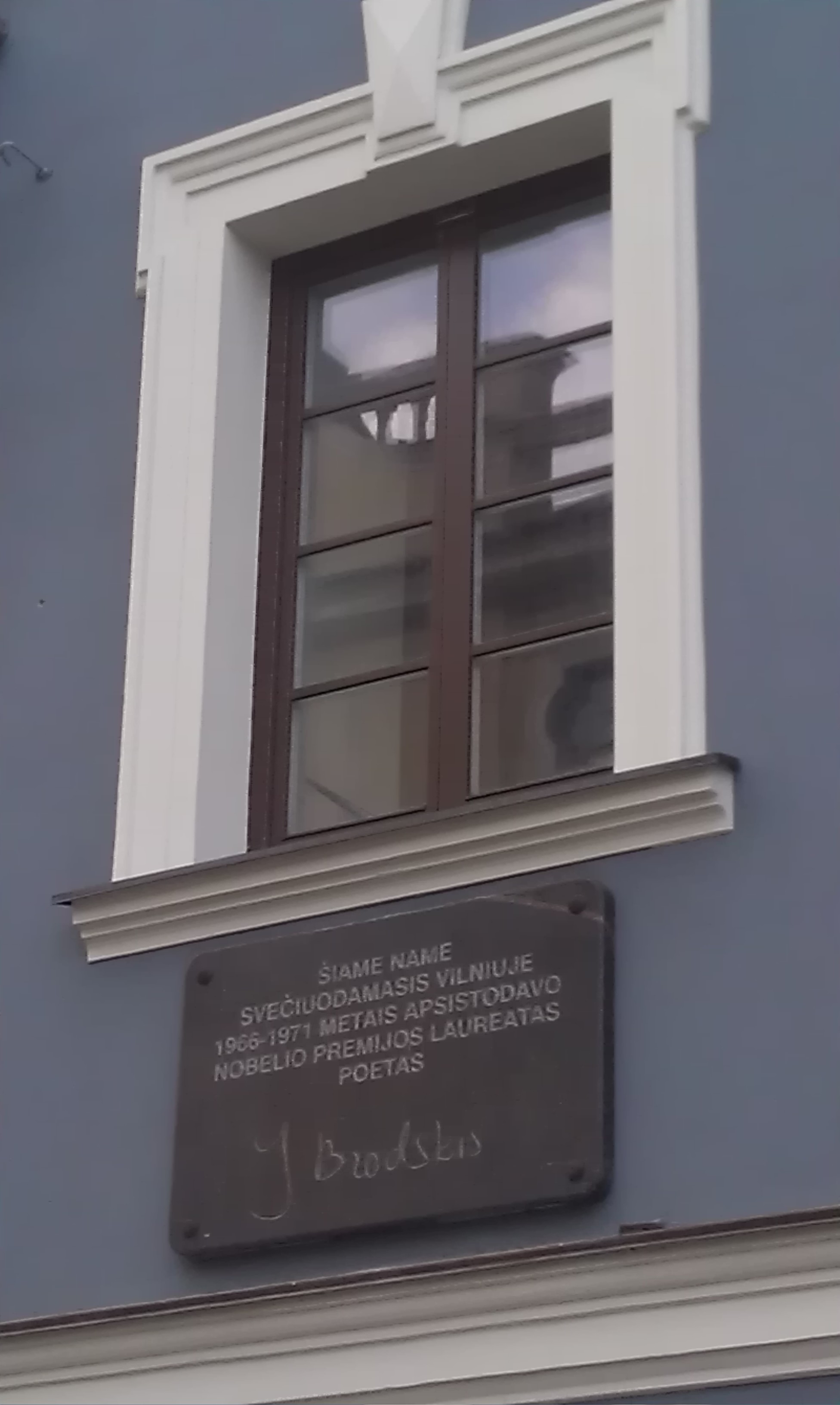
IMAG0148

Liejyklos street. (Photo: Moi)

Certainly the unforgettable moments of those magic days included the afternoon when Romas (père) brought out his collection of Nobel poet Joseph Brodsky‘s manuscripts, doodles, translations, notebooks, photos, sketches, letters, postcards, and more from their decades-long friendship, and placed it on my lap. I never thought I’d see the treasure again – but when Romas later made it clear he was looking for a permanent home for it, I recommended it to the Stanford Libraries. Now it is within a mile of my home. Well, I tell that story here, but also here and here and here.

Romas tells his own story about his long friendship with the Russian poet here.  Brodsky was having personal troubles in Petersburg after his rocky return from internal exile in Archangelsk. He called his friend Andrey Sergeyev daily to complain, using expressions like  “end of the world” or “it’s a total mess” – „конец света“,  „полный завал“).

“Let him come over here. We are all in a good mood here,” said the big-hearted Romas. So began a visit and a friendship, which featured a walk much like the one I had taken:

“Joseph stayed with us for about a week. What did we do in our, so to say, spare time, apart from listening to his poetry? We took long walks in the Old Town, in daytime and at night, often accompanied by some of our friends – Juozas Tumelis, Pranas Morkus, Virgilijus Čepaitis, Ina Vapšinskaitė, as well as my brother Audronis. Joseph made friends with them very quickly.

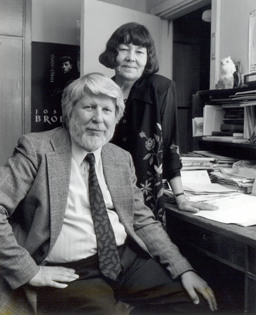
Katiliai

Ramūnas and Elė Katilius (Photo: Arūno Baltėno)

“The Liejyklos Street, where we lived, follows the ancient line of the city wall, so it only takes a leisurely stroll of 15 or 20 minutes to reach almost any place in the Old Town. And we did take advantage of our location. The nearest route started right around the corner and continued along St. Ignatius (Šv. Ignoto) Street, leading to the Dominican monastery, closed a long time ago. The monastery has an inner courtyard that can be reached only through the second floor of the building. The building was inhabited by ordinary people, and Joseph suddenly decided to try and rent a room there for a longer period, and even called at one of the flats. Someone opened the door, but, fortunately, there were no rooms for rent, and Joseph calmed down. Obviously, there was no way he could afford it.

“I also remember our walk along the same St. Ignatius Street one late evening. At the end of that street, turning to the courtyards opposite to the Dominican monastery, one could get on the roof of a corps de garde, a ward-house – a small building with columns, pertaining to a large palace ensemble, the architectural style of which is somewhat alien to the Old Town; it was built in the times of Russian Empire as a residence for the Governor-General (today the palace is used as the President’s office).”

I love Vilnius, and Romas tells a charming and insightful story with the city as its backdrop – I really shouldn’t attempt to excerpt it, especially since it replicates his somewhat uneven English; it’s easier to catch the rhythms of it when you read more than a couple paragraphs.

I remembered the warmth of our meetings, but not the limitations of Romas’s English (which is still far, far better than my Lithuanian) – so it was always a surprise when I telephoned him as his health was failing, and I would suddenly remember that our conversation would be a bit hampered without a translator to mediate. But a few phrases were clear as a bell. In particular, I remember the last phone call, which ended after I told him how I wished to return to Vilnius, and soon. “We will wait for you!” he promised.

***

katilius3

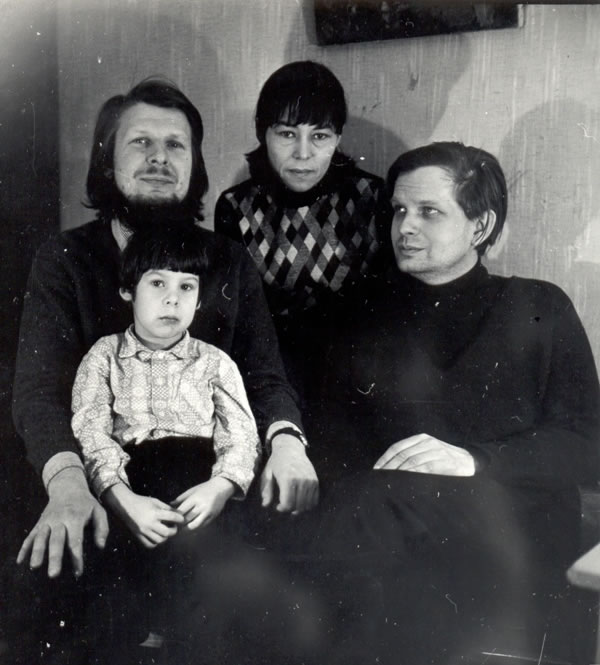
Ramūnas & Elė Katilius with son Ramūnas Jr. and Tomas Venclova in 1977. (Photo: M. Milchik)

Postscript: I didn’t realize that Romas and I had other mutual friends until I posted this on Facebook. Ilya Levin wrote: “I first met Romas and Elia in early 2008 when posted to the U.S. embassy and then was fortunate to enjoy their hospitality on many occasions during my subsequent visits to Vilnius. RIP.” Anna Halberstadt recalled “he and Tomas were romantic figures for us in grade school – good-looking young dissidents.” Anna Verschik added, “I visited them every time I was in Vilnius. It was always a pleasure.”  This from Mikhail Iossel, Founding Director of the Summer Literary Seminars in Vilnius (and, incidentally, a former Stanford Stegner Fellow):

“This is sad news. He was a remarkably interesting and generous man. Uncommonly young at heart, as the saying would have it.

“I met him for the first time in the summer of 2009 (if memory serves me), via Ilya Levin. Along with Ilya and Anna Verschik, I went one evening to his and his joyfully hospitable wife’s small apartment on the outskirts of Vilnius, where the two of them, Ramunas and his wife, Elia, over the extended dinner and for several hours thereafter, proceeded to reminisce about the many years of his close friendship with Brodsky, begun with Tomas Venclova’s participation in late-1950s Leningrad and resulting (among other fortuitous developments) in the KGB-besieged, officialdom-hounded young Leningrad poet’s subsequent frequent trips and lengthy stays in Vilnius, at Ramunas’s old place on Liejyklos Street (where, in 1971, none too incidentally, the famous “Lithuanian Divertissement” was written). Numerous old, Soviet-style, heavy-duty folders were produced by the hosts, full of painstakingly collected and carefully preserved Brodsky’s handwritten notes and drafts of poems, quick pencil sketches and rather elaborate ink drawings. The love the man felt for his famous friend was brightly intense. [This collection is now at Stanford – ED]

“After our next meeting, in the Old Town apartment of a friend of mine, I asked Ramunas to visit our inaugural SLS-Lithuania program and tell our participants about the meaning of Lithuania in Brodsky’s life. He accepted the invitation on the spot, with much eagerness, the considerable difficulty with which he already walked by then notwithstanding.

“His talk was thorough and detailed and informed of the same genuine feeling of deep devotion to Brodsky’s memory. His polite, soft-spoken, English-speaking son served as the interpreter.

“A very good man indeed, noble of spirit and honest of heart and keen of mind. A true mensch.”

romas

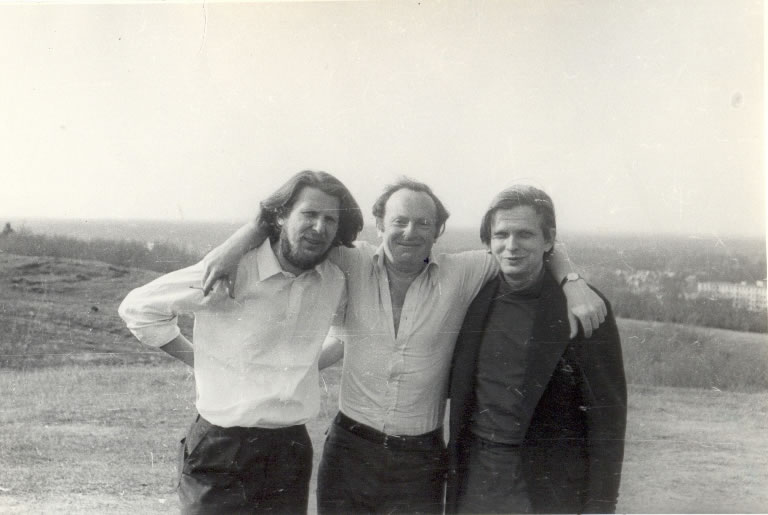
Katilius, Brodsky, and Venclova: Together in Ushkova, near Leningrad, in 1972.