
Loquat lover
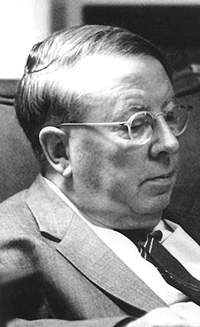
“I have spent my entire life in the remote west, where men are civilized but never get within gunshot of each other,” wrote Yvor Winters (I wrote about him yesterday here). According to poet Kenneth Fields, who was also Winters’s gardener for four years as a graduate student, “It’s usual to think of Yvor Winters as a Chicago poet who came west and spent most of his life in California — at Stanford, where he received his PhD and taught until his retirement. This is true enough, but his actual journey is more complicated and is reflected in some of his best poems. In some ways everywhere he lived before he got to Stanford was wild — even Stanford, but that’s another story.” The incomparable Ken tells them all in “Winters’s Wild West,” in the current Los Angeles Review of Books, based on a talk he gave last April at Claremont McKenna College. Ken traces his Winters’s path from Chicago, to Southern California, to Seattle, to Chicago again, to New Mexico (where he not only taught, but also spent a couple years recovering from tuberculosis in a Santa Fe sanatorium), to Boulder and then to Moscow (Idaho, not Russia), and eventually (and finally) to his Los Altos home with the loquat tree in back. I had never eaten a loquat before my visit to Winters’s widow, Janet Lewis. Winters said “loquats are one of the finest fruits I know, but they deteriorate rapidly after picking and so are never marketed,” which explains why.
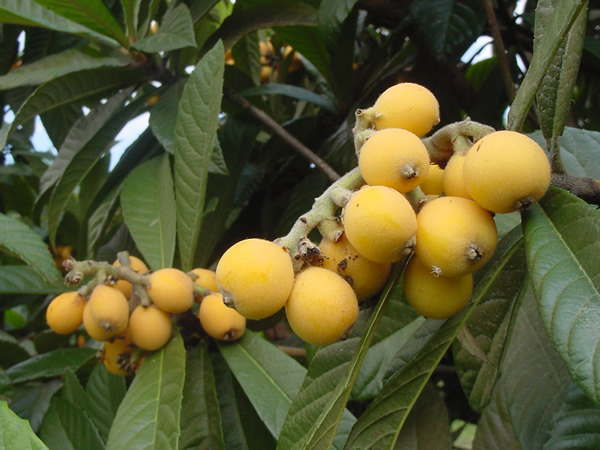 Ken compares Robert Frost‘s late-life “To Earthward” with Winters’s “A Summer Commentary”: “As delicate sensations diminish with age, Frost craves stronger and more painful feeling until, at the end of the poem, he wishes for death; Winters does not. Winters contrasts his youth with middle age — always earlier in those days than it is for us. (I’m counting on all those 146-year-old men to keep me middle-aged.) With the loss of sharpness of sense comes something else, especially for a writer who looks for meaning. In his youth he was a spectator — he said once that free verse was a state of mind. With age, he is a participant. His point comes home through a kind of synesthesia, a blending of the senses — the dove makes two different sounds, one in its cry, the other in flight. The repetition of soft and sweet sets the tone of the poem, as does the oxymoron “rich decay.” Winters said the brandy of the fallen fruit was no metaphor. “You could almost get drunk on the smell.”
Ken’s piece is about as good an introduction to the legendary Winters as one will find anywhere. Read it here.