


He knew.
If a messy desk is a sign of a messy mind, what’s an empty desk a sign of?
Finally, there are a few studies to back me up. While working on several projects at once this weekend, I ran across this article in Time Magazine:
In the dystopian future, there will only be two tribes: those with messy desks and those with orderly ones. The messy desk people will live unhealthy and inefficient lives but come up with interesting new ideas. The organized desk people will be fit and get all their work done. At least, that’s one possibility if the results of a new study hold up.
In the study, researchers wanted to discover not whether people are inherently messy or tidy, or whether the thinking is different between the two. They wanted to find out how people react to cluttered versus clean desks:
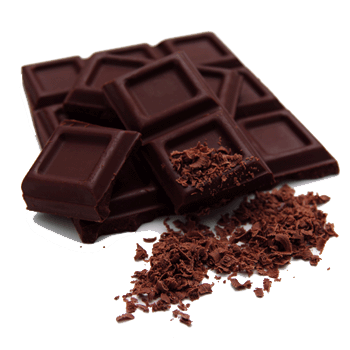 “In a series of experiments, the researchers plopped a set of volunteers down in front of messy desks and a different set in front of tidy ones and tested how they behaved. In one trial, participants had to do some busy-work, then choose between a chocolate bar and an apple when they left. In another they had to devise new uses for a ping pong ball. In a third, they had to look at a menu and choose whether they wanted a vitamin boost in their smoothie, and whether that boost should be ‘classic’ or ‘new.'”
Read the results here. Meanwhile, pass the chocolate.
Funny how there wasn’t a category for those of us who have tidy desks, but hide the mess in cabinets and drawers, and who would never ever turn down the opportunity to eat chocolate.
I just had a bar of noir de noirs myself, with coffee. That’s how I got the most recent blog post done.