

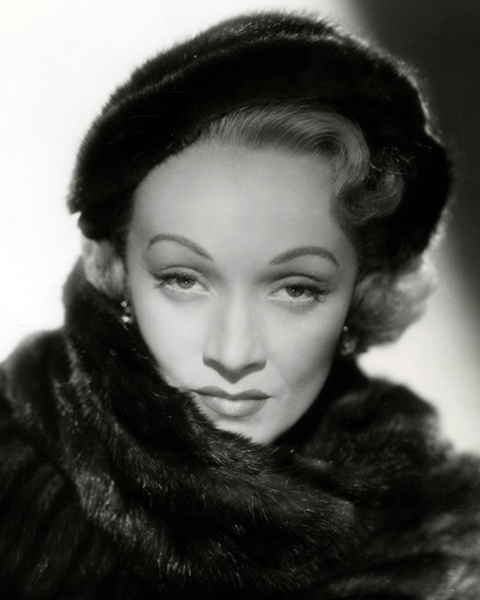
Her finest moment.
I remember decades ago, back in Ann Arbor, Joseph Brodsky whistled “Lili Marlene,” and asked me if I recognized the song. I didn’t. How many would of my generation? He, of course, had been a toddler during the Siege of Leningrad, and retained a lifelong fascination with World War II.
The song came up again today, in a conversation I had this morning with George Kline, who mentioned how much the Nobel poet had liked the song. Naturally, it’s been running through my mind today, and so I looked up a little of the song’s history.
The catchy sentimental tune was written in 1915, by Hans Leip, a schoolteacher who had been conscripted into the Imperial German Army. The song survived into World War II.
Joseph Goebbels tried to put a stop to it. But Axis soldiers all over Europe kept asking them to play to play the sweet, sentimental ditty again, and Goebbels had to relent. The tune was used to sign-off the broadcast at 9:55 p.m., and the soldiers waited to hear it. The soldiers on both sides, as it turned out.
The British soldiers in north Africa adopted it from the Germans, and both sides listened to it again and again. But none sang it better than the German actress Marlene Dietrich.
While in London, Nazi officials had offered her big contracts if she would agree to return to Germany as a ffilm star for the Third Reich. The actress, staunchly anti-Nazi, turned them down flat. She applied for U.S. citizenship instead.
She had a great career, before and after the war, but she said her finest moment was during the World War II. She sang for U.S. soldiers, and she also sang for German POWs. She performed for Allied troops on the front lines in Algeria, Italy, England, and France – and she even went into Germany, with Generals James Gavin and George Patton, putting herself in danger within a few kilometers of German lines. When asked why she had risked her life to sing, she famously replied, “aus Anstand” — that is, “out of decency.”
I’d never heard the English version before. It’s below. The husky, lilting German is below that. See which you like best. And see if you can recognize the language of the third version, recorded in 1943 (but not, alas, by Marlene…)
What a great post! I am of a generation even more removed from this song, but my father loved it (being born soon after the war) so I heard it many times growing up–it’s even my name and a rose bush I have outside my house. Thanks for including all the history behind it.
Thanks, Mattie!
Dear Cynthia,
I liked your post very much. I am a Spanish writer and I have written myself a book about the story of the Lili-Marleen.song, undergoing a research at many European private and public archives. Since you seem to be truly interested on the fascinating story of this song, I would be delighted to send you a free download of my essay. If you are interested, please send me a short notice at mail@rosasalarose.com.
Here you can find some aditional information about me and my fascination for Lili: http://rosasalarose.com/about-lili-marlene/
I hope to hear from you! Kind regards,
Rosa Sala Rose
Sure, Rosa, send it on. Can’t promise to get to it anytime soon, though, I’m waayyyyyy swamped.