

Over at Lithub, an hour-long phone conversation with Pulitzer prizewinning Junot Díaz, a MacArthur “Genius” Fellow, and Paul Holdengraber. We always find the Dominican American author intriguing – here are a few excerpts:
On writing slowly…
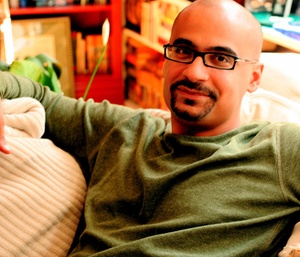
Looking for the stories that death tells us.
Part of it is bad habit. But part of it is an attempt at a different kind of methodology. I have noticed that what matters to me is to reflect very, very long on what I might call my materials or very, very long on what I might call the sources of inspiration. Lately I’ve been thinking of my writing as—what interests me more than anything—is grinding these slow lenses. What I mean is giving events, giving history, giving people the time to unfold, the time to mean—to give forth their meaning.
On pain…
Often our pain encourages us to isolate ourselves. The truth of it is our pain is a badge for how we are members of this larger community. Recognizing this and recognizing our shared humanity is not a small insight. The ego pushes us towards individual, pushes us towards fantasies of achievement of power… and all of those things pull us away from our common link, our common clay… We are made of a common clay, and among the most prevalent minerals in that clay is our fragility.
On stories from the dead…
There’s also the stories that death tells us. What are the stories that the dead tell us? That’s not a language that’s easy to crack. It’s a language that I’m trying to master—that I’m trying to become sensitive to the nuances, sensitive to the phonemes, but it has been resisting me.
Go here for more.