Gwyneth Lewis on John Milton and The Twilight Saga
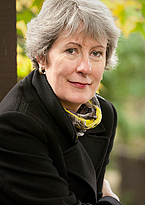
Gwyneth (Photo: L.A. Cicero)
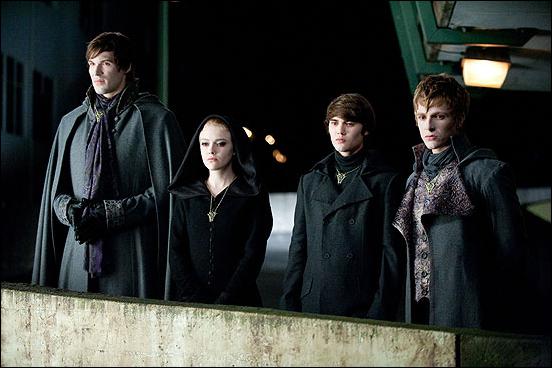
Who matches John Milton in modern letters today – at least in tracing the “drama of democracy right back to its first theological principles?” Welsh poet Gwyneth Lewisnominates Stephanie Meyers, author of the Twilight Saga, and Philip Pullman. The Welsh poet Gwyneth finds the Saga to be “a profound meditation on incarnation and its hazards as well as a moving love story.” A stretch, perhaps. Can’t say I’ve watched the Twilight Saga, but I find it hard to believe it’s any kind of match for Milton, even in a moment of whimsy.
Gwyneth studied Milton with Geoffrey Hill, and the 17th-century bard became her hero, once she’d read his Paradise Lost: “No one ever lobbied more eloquently for permissiveness combined with the moral discipline not to be deceived by facsimiles of the good.” She marveled at the way he “melded theology with politics and human psychology.”
Her “Letter to Milton” was published in the online summer edition of the U.K.’s Poetry Review. While Milton is “not fashionable at the moment and neither is the epic,” she thinks he’d have much to say about political discourse today, and has a few questions to ask:
Would Milton turn over in his grave? And would that be entirely appropriate?
“You would be interested in the way religion has become a contentious issue at the centre of intellectual debate. I’d like to see your arguments contra Dawkins and, equally, against advocates of Intelligent Design. As Marilynne Robinson (a Calvinistic novelist) has written, ‘Creationism is the best thing that could have happened to Darwinism.’ Your moral clarity on the pitfalls of loose thinking would be of great value to us now.
“So, you’re not forgotten. And if you could speak to us from the dead, I’d have one other question to ask, aside from guidance about contemporary attacks on religious faith, free speech and democracy.This one’s personal: you were married three times and, though an advocate of divorce, you were widowed twice. How does the wife thing work in the afterlife? I’d love to know.”
Cynthia Haven has written for The Times Literary Supplement, The Nation, The Virginia Quarterly Review, The Washington Post, The Los Angeles Times, The San Francisco Chronicle, World Literature Today, and other publications. Her work has also appeared in Le Monde, La Repubblica, The Kenyon Review, Quarterly Conversation, The Georgia Review, Civilization, and others. She has been a Milena Jesenská Journalism Fellow with the Institut für die Wissenschaften vom Menschen in Vienna. Peter Dale in Conversation with Cynthia Haven was published in London, 2005. Her Czestaw Mitosz: Conversations was published in 2006; Joseph Brodsky: Conversations in 2003; An Invisible Rope: Portraits of Czestaw Mitosz was published in 2011 with Ohio University Press / Swallow Press. She is currently a visiting scholar at Stanford. Her biography René Girard, A Life will be published next year.
Join me at twitter: @chaven
View all posts by Cynthia Haven